Two weeks ago, Lebanon took a new center stage in the current Middle East war when, on March 2, scores of Hezbollah rockets came raining down on northern Israel. It was the first major Hezbollah attack on Israel since 2024. Israeli officials presumed that Hezbollah was acting in solidarity with the regime in Tehran — the group’s political, military, and financial sponsor — after the joint U.S.–Israeli air strikes in Iran on Feb. 28 killed the Iranian Supreme Leader Ali Khamenei.
Hezbollah’s leadership, however, denies these claims and affirmed its decision to attack Israel was long in planning, and the Israeli provocation in Iran opened a new window of opportunity. Either way, the Israeli-Lebanon front has erupted into a major theater of the war that could drag on longer than either side anticipated. Hezbollah leadership has called this an “existential battle” — one that could be their last. Over the weekend, the Israeli Chief of Staff, Eyal Zamir, ordered substantial reinforcements along the northern border in preparation for what could be a major Israeli ground invasion into Lebanon.
The last time Israel and Hezbollah engaged in major, continuous clashes was in the fall of 2024. Between September and November of that year, daily tit-for-tat exchanges occurred as Hezbollah rocket barrages wreaked havoc across northern Israeli towns and cities, as the Israeli Air Force (IAF) targeted the terrorist group’s leadership and military sites in southern Lebanon, the Beqaa Valley, and Beirut. Hezbollah suffered major losses at that time, including significant losses to its rocket arsenal, and an Israeli precision strike that killed the group’s leader, Hassan Nasrallah.
The 2024 clashes ended with a ceasefire deal that called for Hezbollah militants to withdraw north of the Litani River and give up their military capabilities. However, the consistent rocket fire on Israel since March 2 — including the alarming 100-rocket barrage on March 11 — has shown that, if anything, Hezbollah used the ceasefire to reorganize and rearm.
According to the Institute for National Security Studies, Hezbollah has carried out roughly 380 separate waves of attacks against Israel since March 2, including more than 400 rockets fired at northern Israel and several long-distance barrages targeting Tel Aviv. Over the weekend, the IDF assessed that Hezbollah still has between 10,000 and 23,000 rockets remaining, 1,000 of which are believed to be long-range precision rockets.
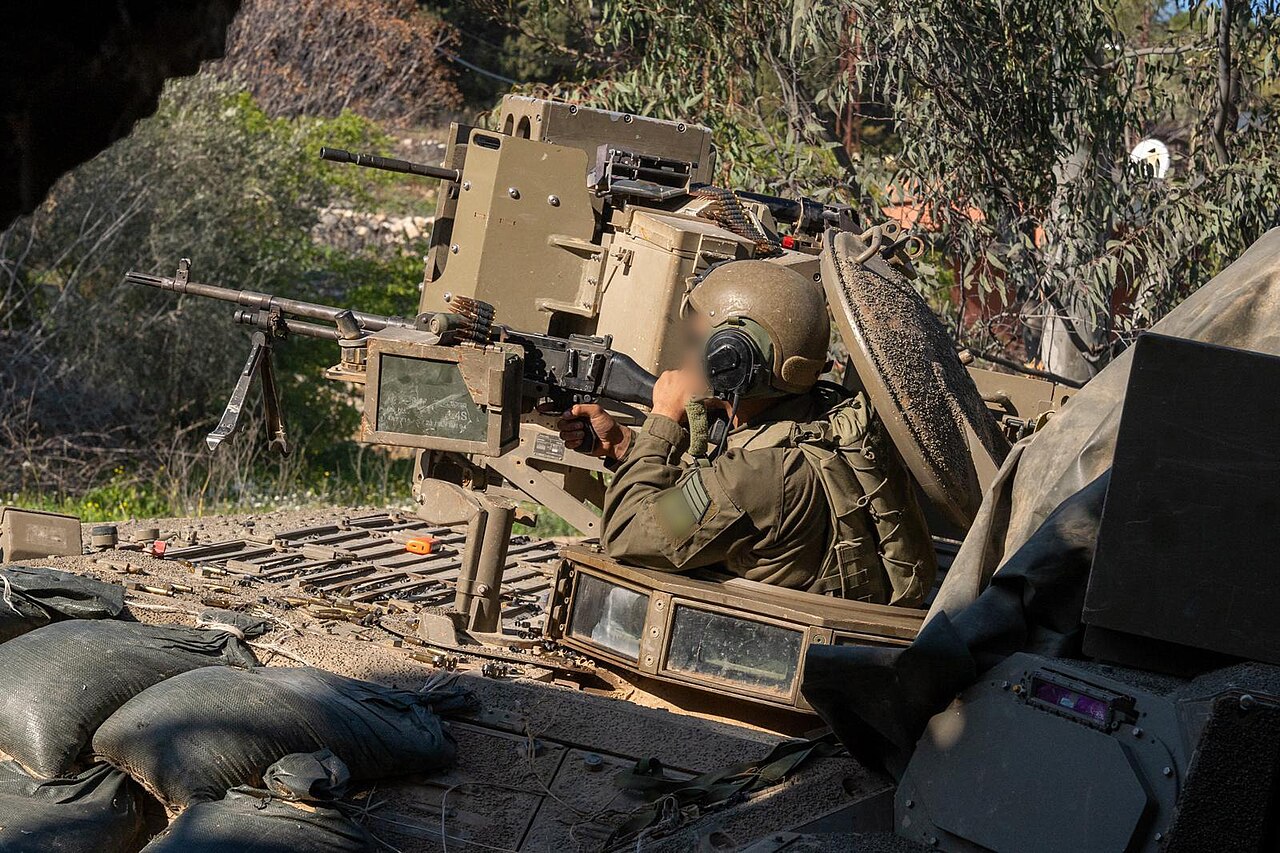
Since the new clashes erupted two weeks ago, the IAF has carried out more than 1,100 strikes across Lebanon targeting Radwan Special Force units, rocket arsenals and launch sites, and pounding the Beirut suburbs where the Hezbollah leadership operates command centers. The Israel Defense Force (IDF), likewise, has sent five ground divisions across the border into southern Lebanon. Two divisions in particular — the 146th Division operating in the western sector and the 91st “Galilee” Division in the eastern sector — have been deployed to southern Lebanon as a defense posture to dismantle Hezbollah and protect northern Israel.
On Friday of last week, Lebanese media reported that Israeli planes dropped leaflets over Beirut, calling on civilians to act out against Hezbollah. “If you want to be part of real change and contribute to the prosperity and defense of your country, we are here to listen,” the leaflets read in Arabic.
That same day, the IDF destroyed the Zrarieh Bridge over the Litani River, which served as the main crossing point for Hezbollah to transfer personnel, arms, and rockets to the south, in range of Israel. Rocket launchers had been placed near the bridge, using its civilian infrastructure as cover.
Over the weekend, Zamir announced a major campaign to reinforce Israel’s northern border with Lebanon in preparations for various offensive and defensive scenarios. Additional standing army units, combat teams, and engineers from the 98th Division were relocated to the north, and reservists were called up to replace the standing army units in the Gaza Strip that are now being redeployed to the northern border. Zamir’s announcement came following deeper IDF troop movements into Lebanon last week to establish a forward defensive line and buffer with northern Israel. Iran and Lebanon, Zamir noted, are now coequal fronts.
According to Israeli officials speaking to Axios over the weekend, the rapid reinforcements in northern Israel are in preparation for an expansive ground operation to seize control of southern Lebanon and drive Hezbollah further away from Israel’s northern frontier. Israeli Channel 12 news reported that the preparation for a large-scale ground operation is to establish a buffer zone inside Lebanese territory.
If carried out, it will be the IDF’s largest ground operation in Lebanon since 2006, and it has the potential to drag Israel and Lebanon into a prolonged and devastating conflict similar to the ground war in Gaza over the past two and a half years.
A senior Hezbollah official told Al Jazeera: “The resistance is ready to confront any attempt by the enemy to launch a ground offensive. We will engage in a ‘Battle of Karbala,’ and any ground invasion will be costly for the enemy.” On Friday, Hezbollah chief Naim Qassem said the group is ready for a long confrontation. “This is an existential battle… we will not allow the enemy to achieve its goal of eliminating our existence.” Other voices in Hezbollah are seeing the rapidly unfolding events as the long-awaited “final war” with Israel. “There won’t be another one after this. Either we win, or they win,” noted one Hezbollah source.
While the situation in Lebanon escalates, the French government has drafted a proposal to end the conflict. Most of the stipulations in the new French proposal are similar to past U.N. resolutions and the recent 2024 ceasefire terms. This calls for Hezbollah to disarm, strict Lebanese oversight in the dismantling of Hezbollah forces, and the demilitarization of the region between the Israeli border and the Litani River — all stipulations that failed to be upheld in the past. The most striking addendum to Paris’s new proposal calls for the Lebanese government to officially recognize Israel, and for Jerusalem and Beirut to hold direct talks backed by Paris and Washington. According to Axios, officials in Beirut have accepted this as a basis for new talks, while Israel and the US are reviewing the proposal.
READ MORE from Bennett Tucker:
Adjusting to War in Israel, Again
US–Iran Talks Only Lead to Uncertainty
Image licensed under Attribution-ShareAlike 3.0 Unported.




![Donald Trump Slams Chicago Leaders After Train Attack Leaves Woman Critically Burned [WATCH]](https://www.right2024.com/wp-content/uploads/2025/11/Trump-Torches-Powell-at-Investment-Forum-Presses-Scott-Bessent-to-350x250.jpg)

![Kamala Comes Unglued, Makes Bogus Claim About Her Landslide Loss to Trump [WATCH]](https://www.right2024.com/wp-content/uploads/2025/10/Kamala-Comes-Unglued-Makes-Bogus-Claim-About-Her-Landslide-Loss-350x250.jpg)