A discussion during a Minnesota legislative hearing has renewed debate about voter identification requirements and election safeguards after state officials addressed how voter registration and identity verification currently function in the state.
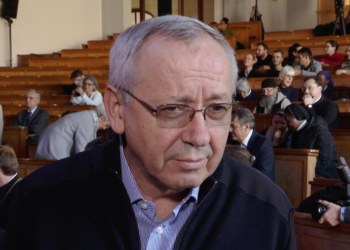
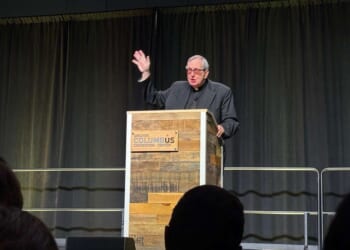
The exchange took place during a hearing involving Rep. Patti Anderson, a member of the Minnesota Legislature, and Minnesota Director of Elections Paul Linnell.
The discussion focused on how identification documents such as driver’s licenses are used during the voter registration and voting process.
Here’s What They’re Not Telling You About Your Retirement
For years, debates about election laws in the United States have centered on whether stricter identification requirements are necessary.
Critics of expanded voter ID laws have argued that election systems already contain safeguards and that additional identification requirements could create barriers to voting.
Supporters of stronger ID laws argue that proof of identity and citizenship is necessary to ensure that only eligible voters participate in elections.
During the hearing, Anderson questioned Linnell about how individuals register to vote and what safeguards exist to ensure voter eligibility.
This Could Be the Most Important Video Gun Owners Watch All Year
“They get their driver’s license, because again we give them to anybody here, they register to vote, it doesn’t match with the Social Security number so they’re flagged, but they come in and as long as they have an ID, which is the driver’s license, and they sign that they’re—ya know—eligible to vote, they can vote and they’re no longer flagged, is that correct?” Anderson asked during the hearing.
Linnell responded to the question by explaining aspects of how identification documents are used in the election system.
According to his explanation, a driver’s license serves primarily as a confirmation of identity rather than as proof of voting eligibility.
During the exchange, Linnell acknowledged that the presence of identification alone does not necessarily determine whether someone is eligible to vote.
He also indicated that suspected cases of fraudulent voting are not automatically investigated unless a challenge is filed.
In those situations, reports can be created and forwarded to county prosecutors for potential review.
Linnell explained that the system relies in part on whether concerns about eligibility are formally raised.
When that occurs, the matter can be documented and referred to a county attorney for further action.
Following Linnell’s explanation, Anderson summarized what she interpreted as the answer to her question.
“So the answer to my question is yes,” Anderson said.
WATCH:
The hearing discussion drew attention to broader national debates about voter identification laws and election integrity measures.
Supporters of additional voter ID requirements argue that proof of citizenship and identity should be required before a ballot is cast.
They contend that such measures are necessary to ensure public confidence in election systems and to prevent individuals who are not eligible from participating.
Opponents of stricter requirements have argued that existing systems already include safeguards and that additional measures could create unnecessary hurdles for eligible voters.
The debate over voter identification laws has been ongoing in Congress as well as in state legislatures across the country.
One piece of legislation currently at the center of the discussion is the SAVE America Act. The proposal would require documentary proof of U.S. citizenship in order to register to vote in federal elections.
Supporters of the bill argue that the measure would strengthen election integrity by requiring proof of citizenship before individuals are allowed to register.
Critics have raised concerns about the practical effects of the proposal and how it would be implemented nationwide.
In Congress, the Republican-controlled House of Representatives has passed legislation related to the SAVE America Act. However, the proposal has not yet advanced through the Senate.
Some Republican lawmakers have expressed frustration that the bill has not been brought forward for a vote that could send it to President Donald Trump’s desk.
The Minnesota hearing involving Anderson and Linnell has become part of the broader conversation about election procedures and whether additional safeguards are needed to verify voter eligibility.
As lawmakers continue to debate election policy at both the state and federal levels, questions about identification requirements, voter registration procedures, and proof of citizenship remain central to the ongoing national discussion about election security.




![Donald Trump Slams Chicago Leaders After Train Attack Leaves Woman Critically Burned [WATCH]](https://www.right2024.com/wp-content/uploads/2025/11/Trump-Torches-Powell-at-Investment-Forum-Presses-Scott-Bessent-to-350x250.jpg)