Catholics around the world celebrate St. Patrick’s Day with special Masses, parades, festive gatherings, and Irish favorites like corned beef and cabbage. While the festivities may seem contradictory to the penitential season of Lent, they provide an opportunity for the faithful to honor and celebrate the life of one of the Church’s most beloved saints.
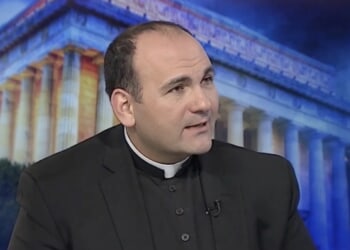
“Sometimes Lent is viewed as a ‘gloomy’ season. However, the Preface for Lent (I) states: ‘for your faithful await the sacred paschal feasts with the joy of minds made pure,’” Bishop Stephen Parkes of Savannah, Georgia, told EWTN News. “This is a time for reflection, repentance, and renewal, which should inspire us to be joyful, not dour.”
On St. Patrick’s Day, many enjoy the opportunity to celebrate the gifts of Irish culture and heritage, but “in Savannah, we don’t stop with just a day and a parade … but rather celebrate a whole ‘season of St. Patrick,’ which encompasses many different events over a two-week period,” Parkes said.
There are many reasons to celebrate the great saint’s life.
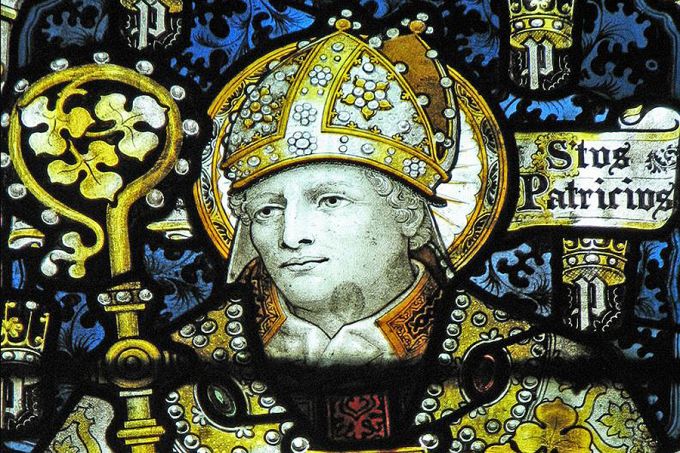
The patron of Ireland was born in Scotland to Roman parents around 385. When he was a teenager, St. Patrick was kidnapped by an Irish raiding party and taken to Ireland as a slave.
Throughout his captivity, St. Patrick fervently prayed to God and at the age of 20, inspired by an angel in a dream, he escaped and journeyed across the sea back to his family. He then studied for the priesthood and was ordained, later becoming a bishop.
Pope Celestine instructed St. Patrick to return to Ireland to bring its people into the Catholic Church. St. Patrick arrived at Ireland’s shores around 433 on the feast of the Annunciation. There, he transformed the pagan society by converting thousands, baptizing converts, ordaining clergy, and establishing hundreds of churches across the country.
“My advice to anyone who is celebrating St. Patrick for a whole season, or just a day, is to ask this beloved saint to intercede on our behalf, that we may follow his holy example in embracing missionary discipleship,” Parkes said.
We can ask St. Patrick “to help us to provide a spirit of welcome and hospitality to those who come to our country seeking opportunity, safety, and peace,” he said. “We can also embrace a spirit of gratitude, giving thanks for the many Irish priests who ventured to the United States to serve our growing Church.”
Dispensations for feast days
“This is a time to honor this great missionary saint through a lens of faith, friendship, and community, all of which can bring great joy,” Parkes said. “Even though St. Patrick’s Day falls during Lent on the calendar, we put this into perspective by honoring our Catholic guidelines for the season.”
During Lent, Ash Wednesday and Good Friday are obligatory days of fasting and abstinence from meat, and Fridays during Lent are obligatory days of abstinence from meat “unless a solemnity should fall on a Friday,” according to the Code of Canon Law.
Catholics are also strongly encouraged to take on additional practices of prayer, fasting, and almsgiving during the Lenten season.
When St. Patrick’s Day falls on a Friday during Lent, a dispensation may be given by the local bishop so that a traditional Irish meal containing meat may be enjoyed. This year, this is not a concern as it falls on a Tuesday.
As many Catholics celebrate the saint with parades, parties, and friends, some may wonder whether they can partake in what they personally gave up for Lent on the feast day — similar to how some choose to do so on Sundays during Lent.
As it is left up to the individual to what extent they take on additional Lenten practices, if they decide to enjoy the drink, food, or treat they have given up on St. Patrick’s Day, it is not against the Catholic Church’s guidelines for the season. But the faithful can always ask their archdiocese or diocese to find out more.
Other ways to celebrate
Enjoying a treat or meal to honor St. Patrick’s Day is not the only way to observe the feast. Catholics can take the time to learn about the saint’s life, attend Mass, and connect with the Irish-American community.
“I would hope that everyone, whether Irish-American or ‘Irish for the day,’ would honor St. Patrick by beginning his feast day with Mass, as we do in the grand cathedral on Fifth Avenue that bears his name,” Archbishop Ronald Hicks of New York told EWTN News.
“Like so many others in this archdiocese, I am proud of all that the Irish have given to our city and country, including, most importantly, a deep love of the faith,” Hicks said. “There can be no better way to celebrate this great saint while still maintaining reverence for the beautiful season of Lent.”
The faithful can use the feast day and nature of the Lenten season as an opportunity to spend time in prayer, including reciting “St. Patrick’s Breastplate.” The fifth-century Irish hymn is a powerful prayer that calls upon the Trinity and invokes divine protection against spiritual and physical dangers.
Catholics can also take time to reflect on the Holy Trinity using the Shamrock as St. Patrick himself is said to have done.
St. Patrick’s own words in his “Confessio” also offer a great reflection for the faithful. His words, “I am a sinner, a simple country person, and the least of all believers,” are a reminder of his humility and relatability to us today.