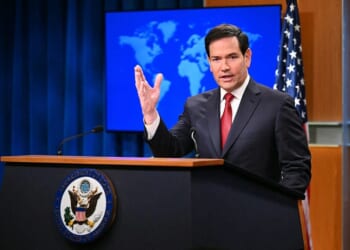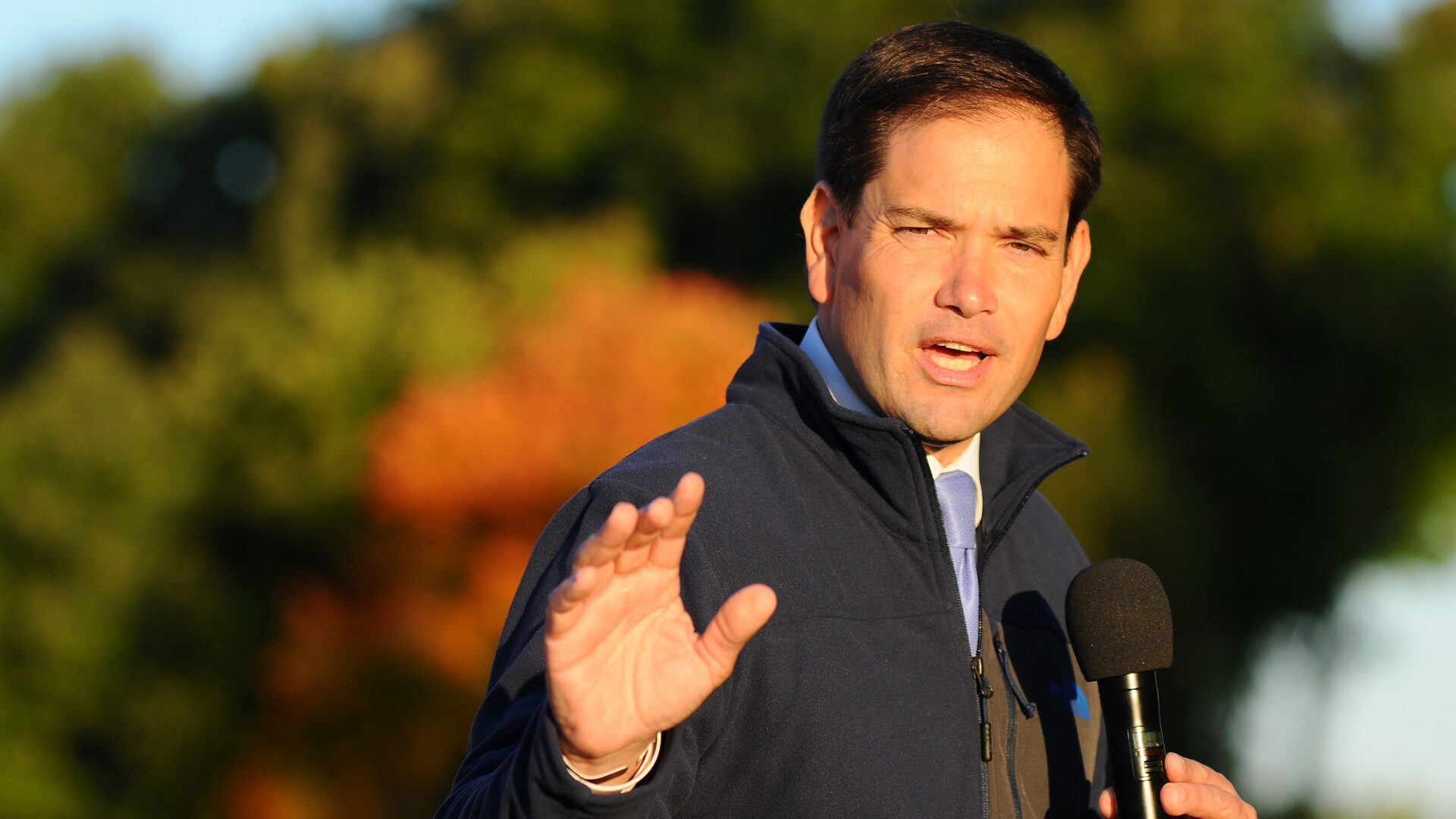
Secretary of State Marco Rubio said Tuesday that U.S. policy toward Cuba remains tied to political change on the island, as the country faces widespread blackouts, economic instability, and growing unrest affecting millions of residents, as reported by Fox News.
Speaking at the White House, Rubio addressed questions about U.S. sanctions and the deteriorating conditions in Cuba, where recent power grid failures have left large portions of the population without electricity.
Here’s What They’re Not Telling You About Your Retirement
“Suffice it to say that the embargo is tied to political change on the island,” Rubio told reporters.
“The law, it’s been codified. And, but the bottom line is their economy doesn’t work. It’s a nonfunctional economy. It’s an economy that has survived.… That thing they have, has survived on subsidies from the Soviet Union and now from Venezuela. They don’t get subsidies anymore. So they’re in a lot of trouble. And the people in charge of them don’t know how to fix it. So they have to get new people in charge.”
Rubio’s remarks come as Cuba experiences a deepening energy crisis.
This Could Be the Most Important Video Gun Owners Watch All Year
A nationwide collapse of the power grid has left approximately 10 million people without electricity, according to statements from the U.S. Embassy and Cuban authorities.
The outages have contributed to protests and instability across the island.
President Donald Trump also commented on the situation, indicating that his administration is actively engaged in developments involving Cuba.
“Cuba right now is in very bad shape. They’re talking to Marco,” Trump told reporters. “We’ll be doing something with Cuba very soon.… We’re dealing with Cuba.”
Trump further escalated his rhetoric Monday, stating he expected to have the “honor” of “taking Cuba in some form” and adding that “I can do anything I want” with the neighboring country.
A senior State Department official rejected claims that U.S. sanctions are responsible for the humanitarian conditions on the island, pointing instead to long-term systemic issues within the Cuban government.
“Widespread blackouts have sadly become common for many years in Cuba — a symptom of the failing regime’s incompetence and inability to provide even the most basic goods and service for its people,” the official said.
“This is the tragic result of over 60 years of Communist rule,” the official added. “An island that was once the crown jewel of the Caribbean has plunged into extreme poverty and darkness.
“As President Trump has said, what is left of the regime should make a deal and finally let the Cuban people be free and prosperous, with the help of the United States,” the official told Fox News Digital.
Cuban human rights activist Rosa María Payá also pointed to internal factors driving the crisis, describing the blackouts as evidence of systemic failure.
“The blackout is the regime’s collapse made visible: 65 years of totalitarianism finally consuming itself,” Payá told Fox News Digital. “The protests are Cubans refusing to disappear into that darkness.”
She rejected the argument that U.S. sanctions are the primary cause of the current conditions.
“Cubans are not suffering because of American policy,” she said.
“They are suffering because of a dictatorship. Pressure on the regime works. What hurts the Cuban people is legitimizing it.”
“The only way to end the humanitarian catastrophe is to end the regime,” Payá added. “That’s the demand of the Cuban people.”
Recent infrastructure failures have been linked to problems at key facilities, including the Antonio Guiteras thermoelectric power plant.
Fuel shortages have also been cited, particularly following U.S. actions aimed at limiting oil shipments from Venezuela, one of Cuba’s main energy suppliers.
At the same time, Pentagon officials told lawmakers there are no plans to invade Cuba.
During a House Armed Services Committee hearing Tuesday, Joseph Humire, performing the duties of assistant secretary of defense for homeland defense and Americas security affairs, said he was “not familiar with any plans on Cuba.”
Humire described Cuba as “one of the strongest intelligence adversaries that we’ve had in the United States,” adding that Cuban officials have operated across the region and were “defending Nicolás Maduro… in Caracas” during past operations.
Cuba’s government has blamed U.S. sanctions for worsening the crisis, while U.S. officials maintain that decades of economic mismanagement and reliance on foreign subsidies have driven the current conditions.
The opinions expressed by contributors and/or content partners are their own and do not necessarily reflect the views of LifeZette. Contact us for guidelines on submitting your own commentary.



![Donald Trump Slams Chicago Leaders After Train Attack Leaves Woman Critically Burned [WATCH]](https://www.right2024.com/wp-content/uploads/2025/11/Trump-Torches-Powell-at-Investment-Forum-Presses-Scott-Bessent-to-350x250.jpg)