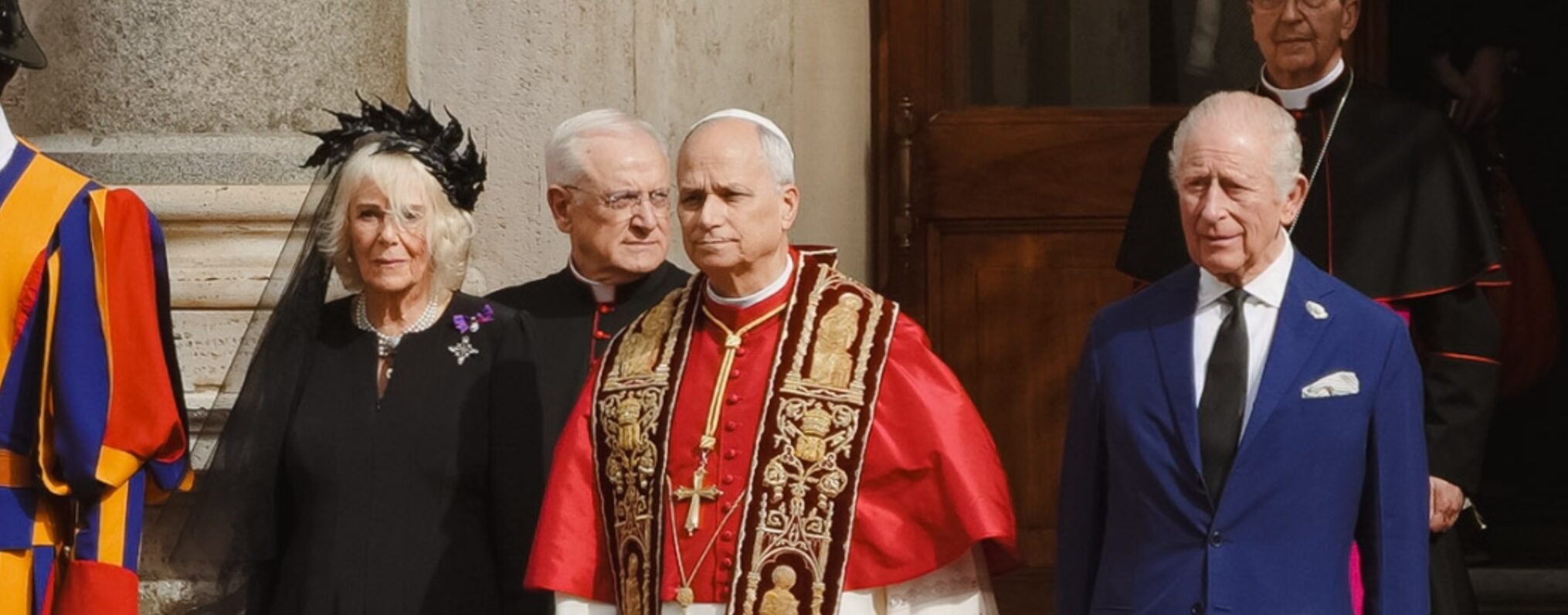
Pope Leo XIV has been issuing frequent prayers for peace in the Middle East. That shouldn’t be a surprise. Popes pray for peace. If the presiding pope isn’t pleading for peace, then he’s failing in a basic papal duty. The pope is known as the Vicar of Christ, and it was Jesus Christ who was the Prince of Peace.
That said, amid his calls for “ceaseless dialogues of peace,” a recent statement by Leo made quite a splash, and rightly so.
In a papal audience with priests and seminarians — that is, confessors and future confessors — the pope invited Christians who bear responsibility for war to make a serious examination of conscience. “One might ask,” proffered Leo, “do those Christians who bear serious responsibility in armed conflicts have the humility and courage to make a serious examination of conscience and to go to confession?”
The pope’s remarks dealt with the Catholic sacrament of Confession/Reconciliation, a requirement of faithful Catholics, one of their seven core sacraments. In Confession/Reconciliation, penitents undergo an examination of conscience to consider where, when, and how they are falling short of living a Christian, moral life. A Christian with warmaking abilities should undergo such an examination with the utmost care.
“The dynamic of unity with God, with the Church, and within ourselves is a presupposition for peace among peoples,” said Leo. “Only a reconciled person is capable of living in an unarmed and disarming way!”
I’ve been asked about this quote a lot lately, given the release of my new biography on Pope Leo. Some of the questioners interpret the American pontiff’s plea as a not-so-veiled nudge to Catholic policymakers in the Trump administration. One surmises that this would include Vice President JD Vance and Secretary of State Marco Rubio, who Leo actually met with on his very first day on the job after his formal installation last May 19. The meeting of the three was very friendly, warm, impressive. The three Americans, none of whom could have imagined being where they were at the Vatican a year earlier, really hit it off.
Catholic policymakers aside, Leo’s exhortation applies to all men and women of faith, especially right now, during Lent. And especially so if the individual is a policymaker who can affect decisions of foreign policy, national security, and war. Lent is a penitential time for all Christians. Or at least it should be.
That said, this specific message from Leo carries extra weight with this particular pope for two reasons:
First, his very first word as pope was “peace.” When he stepped onto the Loggia overlooking St. Peter’s Square on May 8, 2025, after being announced as the next head of the Roman Catholic Church, a pensive Robert Francis Prevost — now Leo XIV — composed himself to speak, prayerfully folded his hands under his chin, and said in Italian: “La pace sia con tutti voi!” Translation: “Peace be with all of you!”
The throng below, which had been stunned into silence by the choice of this unknown American as pope, roared its approval. This was a good greeting. They understood.
Indeed, the new pope proceeded to explain the Scriptural meaning of those words: “Dear brothers and sisters, these are the first words spoken by the risen Christ, the Good Shepherd who laid down his life for God’s flock. I would like this greeting of peace to resound in your hearts, in your families, among all people, wherever they may be, in every nation and throughout the world. Peace be with you!”
As Christ had done with the Apostles some 2,000 years earlier, Leo XIV twice repeated the greeting to the faithful, “Peace be with you.” Overall, his opening statement echoed the word “peace” 10 times. It’s a word that has reigned throughout his pontificate, whether praying for an end to war between Russia and Ukraine or the latest blowups in the Middle East. It has been a theme of his papacy.
Another theme established by Leo on the Loggia that May 8 is worth underscoring right now given the war with Iran. In his opening remarks, the new American pontiff described himself as a “son of Augustine.” He has since quoted the 4th–5th century saint more than any other figure, with the exception of Jesus Christ. As the onetime head of the Augustinian order, this pope knows an enormous amount about Saint Augustine (354–430). And of course, Augustine is known as, among other things, the author of “just war” doctrine, which has been a go-to guide for theologians and many politicians and diplomats for centuries. For public officials, whether presidents or prime ministers or kings, whether vice presidents or secretaries of state, who seek to determine whether a decision to go to war is morally just, Augustine’s guidelines have been the standard for 1,600 years.
And they should remain so today, in 2026. Pope Leo XIV is urging policymakers to consider whether the war they wage is just — is it moral? Is it acceptable?
Those questions should be the highest priority as they pause to examine their consciences this Lenten season. These men have in their hands the power to kill — to wipe out the lives of human beings. That’s an awful burden. It should not be dispatched lightly and without the most serious moral consideration.
The pope is right to remind them.
READ MORE by Paul Kengor:

![Donald Trump Slams Chicago Leaders After Train Attack Leaves Woman Critically Burned [WATCH]](https://www.right2024.com/wp-content/uploads/2025/11/Trump-Torches-Powell-at-Investment-Forum-Presses-Scott-Bessent-to-350x250.jpg)