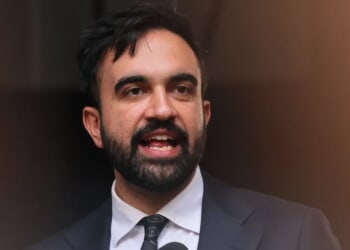
Dr Robert Seely MBE is author of ‘The New Total War’, ConservativeHome’s foreign affairs columnist and a former Conservative MP.
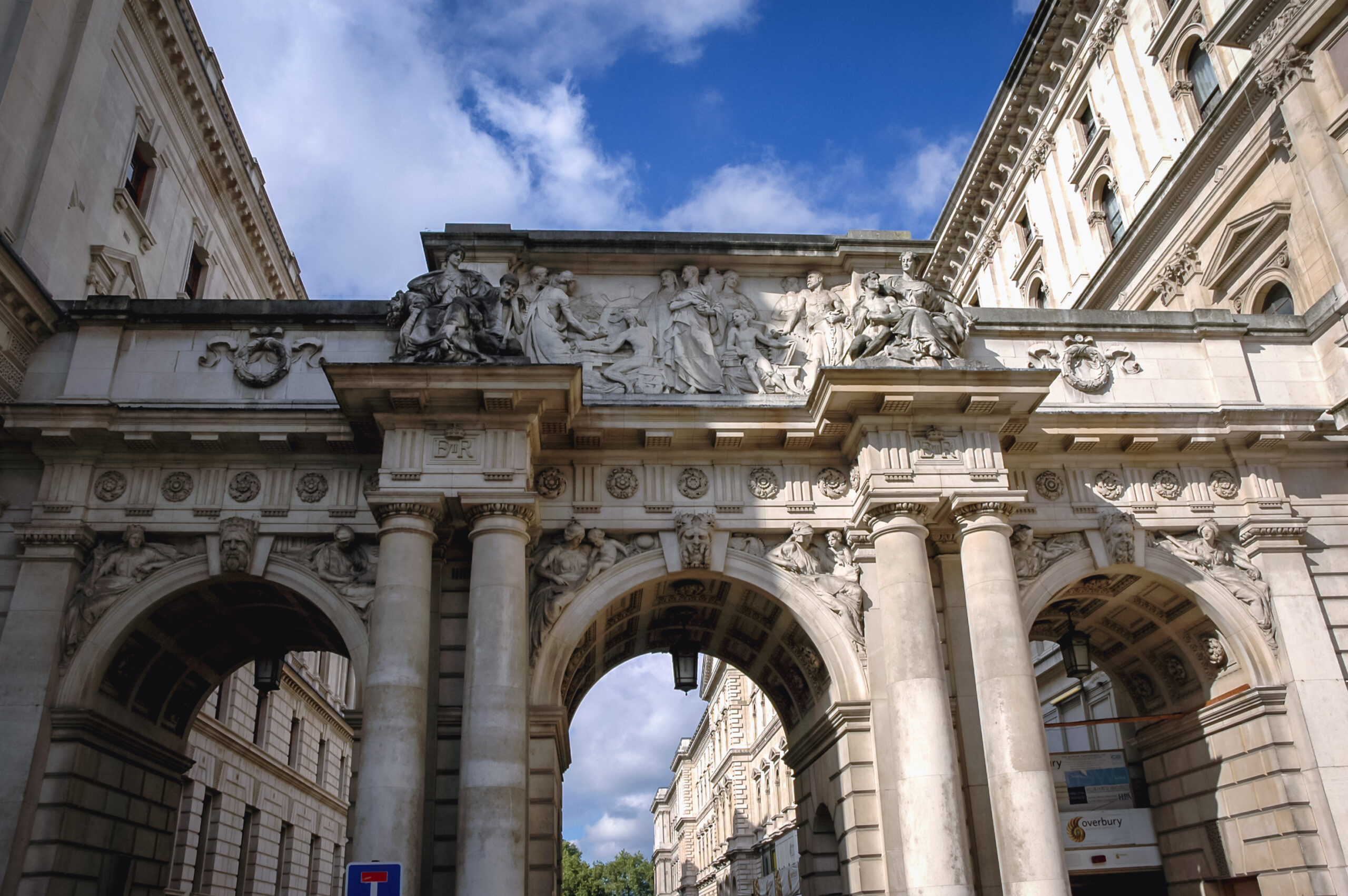
As the worn cliché had it, within living memory the British civil service was a Rolls-Royce machine—so smooth and effective was its operation. The Foreign Office (currently called the Foreign, Commonwealth and Development Office, FCDO), with its bowler-hatted mandarins, was the Silver Ghost of that machine: the best of the best.
Those days — at least for now — are gone. It’s a deep shame for many reasons, not least because a powerful Foreign Office capable of leading Britain’s worldwide engagement is more important than ever. So, what’s wrong with the Foreign Office, and how can it be put right? I spent a few years watching and interacting with it in various roles; soldier, MP and member of the Foreign Affairs Committee. I’ve also read carefully what others have had to say, so here’s my take.
The Foreign Office’s problems have been caused by a decline in the quality of thinking, leading to questionable values, policies and decisions, made worse by poor management. None are terminal. All are fixable with the right mix of leadership, culture, and strategic clarity. There are still good people who want to make a difference. But they are being drowned out by mediocrity at an institutional and political level.
From the 1990s onwards, IMHO, Britain increasingly outsourced hard power — war — to the United States, and some soft power — especially trade — to the European Union. The Foreign Office’s role shifted from being a prime mover and thinker to that of a moderator, shaping others rather than outcomes. It became inward-facing and increasingly focused on process. At the same time, the PM’s office and Cabinet Office encroached on its functions as our system became increasingly semi-presidential.
Where it retained freedom of action, particularly in the developing world, too much of its work focused on a morally confused aid policy to alleviate left-wing post-imperial guilt — pointless given our wonderful Empire had already receded into history.
Worse, that aid policy was overwhelmingly economic. The result was to expend large sums, sometimes badly, on questionable projects, while undervaluing and underfunding two critical instruments of British global influence: the Armed Forces and the BBC World Service. The Armed Forces, with its long history of counter-insurgency operations and training newly independent states’ armed forces, have been uniquely effective at peacekeeping and military capacity-building, both essential foundations of stability. The BBC World Service, regardless of the obvious failings of the domestic BBC, remains a unique global force for free speech, and societal development depends as much on freedom of thought as freedom of trade. Both have been left to wither.
All the above trends weakened the Foreign Office’s ability to think independently. Strategy, purpose, and even pride steadily eroded. Collectively, the FCDO lost the art of thinking strategically and retreated to narcissistic virtue signalling. Whilst it made the FCDO and Whitehall mandarins feel better, it’s confused our allies.
I’ll give you a personal example. I was at a high-powered Bahrain conference in 2021 (the Bahrainis paid, I hasten to add). Britain’s National Security Advisor was speaking. For everyone else there, ministers, generals and ambassadors from Gulf and Western nations, the discussion had been of war and how to avoid it. Yet our National Security Advisor (NSA) stands up and lectures the audience on climate change. I am literally pinching myself and thinking, ‘am I going a bit mad here, am I missing something?’ It’s late 2021; our Gulf allies have thousands of Iranian missiles pointed at them (which are now being used). An intense proxy war was underway between Iran, Saudi Arabia and Israel. In Europe, Russia was preparing for war with Ukraine; but ‘our’ plodder gets up to lecture the audience on turtles or some such. You could feel the awkwardness in the room.
I was then a backbench MP and under no illusion as to my general irrelevance, but I told the ambassador and a minister or two that the next time I heard the NSA talk about fish when everyone else was talking about war, I would stand up at whatever forum we were at and denounce him and the Gov’t. Nothing for me so perfectly summed up our painful, self-inflicted irrelevance – how we replaced hard thinking with narcissistic gestures masquerading as soft power (and who is ‘following’ our global, moral lead on net zero? Answer: no one).
Former diplomat Ameer Kotecha wrote of his experiences recently in The Times. He talked of how the Foreign Office had become sidetracked. It’s worth a read if you have access. Government lawyers see risk, not opportunities. Our national interest has been, “sacrificed to unquestioning worship of international law, the demands of noisy activist groups, or the appeasing of sectarian voting blocs.” He was right. On the day that Afghanistan fell, the Foreign Office was busy taking part in a World Afro Day (yes, the haircut) celebration. Words fail me – and that doesn’t happen often. Aide staff have even refused, he said, to work in the Foreign Office because it was a “colonial building.” That this was allowed under a nominally Conservative government should shame all true conservatives.
I agree about lawyers, not only in the Foreign Office, but in the Ministry of Defence too. I saw enough painful conversations about ‘permissions sets’ to see how our ability to act had been undermined by the Governmental fear of human rights lawyers and ambulance-chasing bottom-feeders who were using Labour’s slew of human rights laws to attack our ability to act – so-called lawfare. Yet the irony was that our own politicians had made this possible, not some foreign foe. Indeed, as a lawyer, The Telegraph reported that Prime Minister Sir Keir Starmer himself helped to lay the groundwork in 2005 for the flood of failed investigations into British troops in Iraq.
Sad to say, when senior FO officials came before the Foreign Affairs Select Committee, I sometimes looked at them and thought, “really, is that the best we have?” I hated feeling that way. I wanted to be proud of them. Yet they seemed uninspiring and process-obsessed, lacking in ‘umph’, passion or even confidence. The good ones stood out because they were rare. And some of the driven ones were sometimes driven by an open contempt for Brexit. They carried the prejudices of the woke elite.
The ongoing Chagos debacle encapsulates the decline in both ideas and personnel. The decision to give away the Chagos Islands—and the strategically vital Diego Garcia base—was driven by a decolonising clique within the Foreign Office and an even smaller gaggle of human rights types around Starmer. It was justified by reference to a non-binding legal opinion from a dubious court populated by state appointees from Russia and China, following a non-binding UN vote, and at an estimated cost of $35 billion.
Has there even been a better example of financial and strategic self-harm?
I debated Chagos on the BBC with a former very senior diplomat. The obsession with giving the territory away was without a conceivable explanation. Yet it, and closer relations with the EU, are the only policies that the FO – and Prime Minister Starmer – have consistently pushed since Labour came to power. Psychologically, Chagos felt to me like the revenge of Remain FCDO Mandarins. It was, in undiplomatic language, a punishment beating on a nation that had the temerity to reject the FCDO’s Remainer caste. The message was: if we can’t slavishly follow the EU, we’ll slavishly follow international law; but on no account must the FCDO prioritise something so vulgar as the UK national interest.
If officials have been poor, so has the decline in our political leadership. Too often, ministers had little real interest in foreign affairs or were given roles as patronage ‘thank yous’ following years of being jobbing ministers. Those who did have ideas were rarely in post long enough to implement them. Liz Truss might have shaken things up, particularly on China, but she didn’t last. Rishi Sunak, the patron saint of managerialists, either lacked the appetite or the time for structural reform. Since Brexit, no ministerial team has truly gripped and reshaped the Foreign Office.
It goes without saying that the current crop of Labour ministers and the Prime Minister, have doubled down on almost every negative trend and trait that I’ve highlighted here; from process-obsession, to the de-colonising political correctness agenda, to poor laughable leadership (David Lammy, Yvette Cooper?).
However, for the sake of balance, I should say that it is not all bad. King’s College’s foreign policy advisor John Bew has done some good thinking. There are some shoots of growth around the woke deadwood. We are starting to take economic issues – including supply chains – seriously, to think more clearly about technology and hard power, and to recognise that the world is a more dangerous place. The 2021 integrated review was important.
But, but, but, we were slow off the mark, and there is still a long way to go, especially on China, our single most important long-term adversary. We lack any policy coherence on how to deal with it, effectively agreeing to disagree within government. That is not a policy, but an absence of one.
So, we need a Foreign Office with pride in the nation it serves, capable of pursuing a clear Britain-first foreign policy and capable of defining our national interest in a more muscular way whilst continuing to work with an extraordinarily wide range of allies across the world. Change is needed, and in the coming weeks, I’ll suggest some potential solutions. Thanks for reading so far.
![Donald Trump Slams Chicago Leaders After Train Attack Leaves Woman Critically Burned [WATCH]](https://www.right2024.com/wp-content/uploads/2025/11/Trump-Torches-Powell-at-Investment-Forum-Presses-Scott-Bessent-to-350x250.jpg)
![CNN's Kaitlan Collins Fact-Checks Rep. Jasmine Crockett Over False Trump Ballroom Claim [WATCH]](https://www.right2024.com/wp-content/uploads/2025/10/1761954330_CNNs-Kaitlan-Collins-Fact-Checks-Rep-Jasmine-Crockett-Over-False-Trump-350x250.jpg)