A huge transition in global climate patterns is now ongoing, with the tropical Pacific shifting from a weakening La Niña and potentially heading in the direction of an El Niño later in 2026.
Certain forecast models are indicating the possibility of a powerful or very powerful El Niño, potentially carrying substantial consequences for hurricane season in the Atlantic Basin.
The most recent Climate Prediction Center (CPC) and International Research Institute (IRI) outlook suggests that La Niña is dissipating. Within the next month, neutral conditions are likely to become dominant.
An El Niño Watch has been issued by NOAA, signaling that conditions will likely evolve into El Niño within the coming six months.
A substantial pocket of warm water is shifting eastward beneath the Pacific surface — a classic precursor that often leads to rapid warming at the ocean surface in the next few months. (RELATED: Hurricane Season ’26: Here Are Storm Names For Weather’s Most Powerful Force)
Current guidance assigns roughly a 62% probability that El Niño will establish itself between the months of June and August. However, a number of global models make the suggestion that it could strengthen into a robust event by late summer or early fall.
A few longer-range models are more aggressive in forecasting a powerful outcome, with some projections estimating an 80–90% chance of an El Niño on the stronger side, and a number pointing towards a very powerful event.
The outlook is reinforced by the ongoing weakening of the trade winds in the Pacific. Typically, that assists in confining warmer water to the western ocean basin.
When the winds diminish or change direction, the warm water can potentially spread eastward, further amplifying the warming trend.
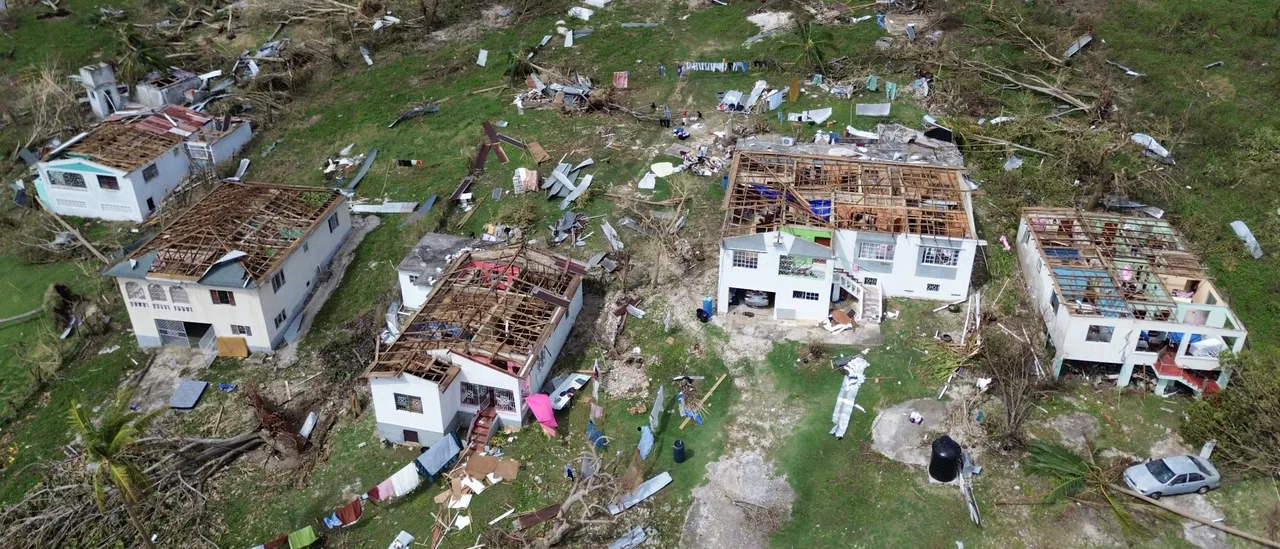
The possible shift holds significant implications for hurricane season in the Atlantic Basin. In the majority of El Niño years, stronger upper-level winds increase wind shear across the Atlantic, disrupting tropical cyclone formation and intensification.
El Niño is increasingly likely to return later this year, bringing potentially significant impacts to our weather, the upcoming hurricane season and global temperature trends, though its timing and strength remain uncertain, experts told ABC News. https://t.co/2CL2uTFVf7
— ABC News (@ABC) March 15, 2026
Also, El Niño has a tendency to stabilize the atmosphere, making it more difficult for storms to organize and strengthen, according to the FOX Forecast Center.
In 2026, however, the situation may be more complicated. Atlantic sea surface temperatures are still around or moderately over the average mark, providing ample fuel for tropical development.
The season could therefore feature a tug-of-war between El Niño’s suppressive wind shear and the supportive warmth of the ocean waters.
A comparable dynamic played out during the 2023 hurricane season, where record-warm waters largely offset the typical dampening effects of El Niño.
While the patterns appear similar, hurricane seasons are influenced by far more than just an El Niño-Southern Oscillation (ENSO) phase. Even in powerful El Niño years, the threat of tropical activity never drops to zero. (RELATED: Four Great White Sharks Ping Off Florida As Spring Break Begins)
Throughout history, the conditions are linked to less tropical storms and hurricanes, but Mother Nature only needs one well-organized system to produce devastating impacts.
With that being said, if a number of models on the more aggressive side play out, the season could see named storm and hurricane counts fall under the average threshold.
The timing will be critical. A rapid onset of El Niño by the middle of the summer could potentially suppress activity in the peak months, while a slower transition could leave a window open for development early in the season through June and July.
The IRI — which has almost 20 different climate forecast models aggregated from across the globe — published a visual summary of their most recent forecast March 19.
As spring progresses and confidence in forecasting increases, a more clear picture will emerge regarding the potential strength of El Niño in 2026 and its possible effects on the upcoming hurricane season.





![Donald Trump Slams Chicago Leaders After Train Attack Leaves Woman Critically Burned [WATCH]](https://www.right2024.com/wp-content/uploads/2025/11/Trump-Torches-Powell-at-Investment-Forum-Presses-Scott-Bessent-to-350x250.jpg)



![James Carville Admits Democrats Had No Shutdown Endgame, Mishandled Strategy [WATCH]](https://www.right2024.com/wp-content/uploads/2025/11/1763070634_James-Carville-Admits-Democrats-Had-No-Shutdown-Endgame-Mishandled-Strategy-350x250.jpg)