Mike Newton was Conservative parliamentary candidate for Wolverhampton West, and worked for the Bank of England during his career in the financial markets.
This past week has seen the greatest level of financial market chaos in this country since the Great Financial Crisis of 2008. This is partly the fault of the Iran war, but more broadly represents a massive political and economic policy failure on behalf of those who we trust to run the economy.
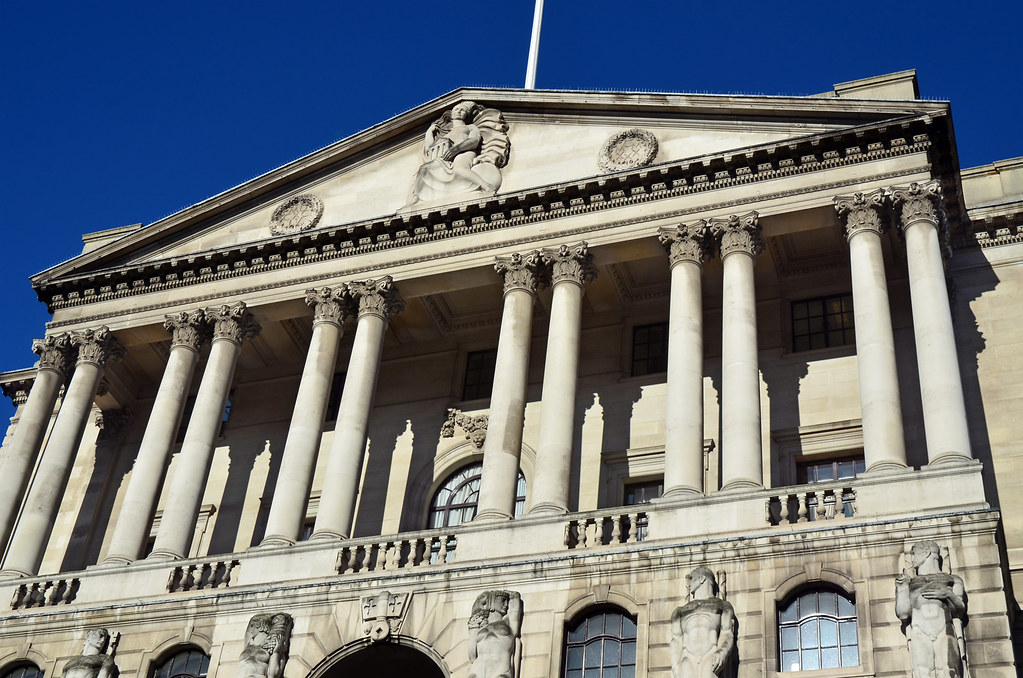
As a former Bank of England staffer, who was there at time of Eddie George and Mervyn King, I am mortified by the lack of a policy response.
The danger we face is serious and affects the stability of everyone’s finances: from you and me to the small businesses we use every day, and to the government. Anyone who borrows or wants to borrow is about to get much poorer. And lenders will worry if their loans are still ‘money good’.
This attitude leads to a credit crunch. Mortgages are being pulled by the bucketload. Private credit, where borrowers and lenders face each other directly to finance things like infrastructure and property, is in a huge mess. No one quite knows how much the banks are exposed to these risks. How long before there is a wider banking system problem?
Short-term interest rates have gone through the roof with Bank Rate hikes now being priced for the Bank of England this year and next with a 60 per cent chance of a 25bp (quarter of a percent) hike next month. 88bp (nearly a full percent) of hiking in Bank Rate is now priced for the full year.
The benchmark ten-year gilt, the price at which the Government borrows, has shot up to levels not seen since the height of the 2008 panic. It closed up nearly 20bp on Friday: a huge one day move.
While the Iran War has been the catalyst, the outcome has been significantly worse for Britain than in the US, Germany, Japan or even Italy and Spain, due to combination of short-term policy mistakes and the UK’s particularly weak fiscal foundations.
The main culprits here are the Chancellor, the Secretary of State for Energy and the Bank of England. But also guilty are the enablers, the Labour backbenchers, willingly blind to the laws of economics in pursuit of open-ended public spending on their client vote. And Reform has gone along with this fashionable fiscal incontinence with its calls for unfunded tax cuts, welfare largesse and strategic stakes in industry.
So, what exactly has happened? I will keep it as readable as possible.
When the US and Israel attacked Iran, the price of oil and gas rose very rapidly. The UK is particularly dependent on energy imports, largely due to poor policy decisions which have been exacerbated by Ed Miliband’s political choices.
This has led to expectations that inflation would rise sharply, which caused what is known as ‘repricing’ in interest rate markets. Interest rates are usually thought of as a ‘curve’ with a different rate of interest for each time point being joined together to form on a graph what looks like a curve.
The ‘short end’ of the interest rate curve, which is the cost of borrowing for two years or less and is heavily affected by expectations of Bank of England policy, blew up as traders abandoned views that the Bank would cut and moved to price hikes for 2026 and 2027. This is a huge reversal and appears to have been also driven by a technical issue of traders being ‘caught short’ in the options market (more on this later as it is important).
The ‘long end’, which is the benchmark n-year gilt, hit levels on Friday not seen since 2008 at just shy of 5.00 per cent. This is very important as much corporate credit, home mortgages and of course government borrowing take the lead from this part of the curve.
So far, readers might wonder why I am blaming the Chancellor and the Bank of England for this? Isn’t it the fault of Mr Trump, Mr Netanyahu and the now departed Ayatollah?
Not really. That is just the catalyst. The Chancellor’s destruction of growth and wasteful spending has left the public finances on a weak footing. The OBR commented on this in its Spring Statement analysis noting the ‘structural vulnerabilities’ from the excessive tax and spend mix in the public finances.
I doubt whether the OBR thought these would be revealed quite so quickly. The Government has done nothing but tax and spend, and over-regulate, since it was elected and it is no surprise that the country is now skint and unable to cope with events several thousand miles away.
The Debt Management Office (DMO) is responsible for arranging the funding of UK government debt and in recent months decided to be ‘cute’ with the markets by moving more funding to the ‘short end’ where it was notionally cheaper to borrow. This looked like a clever wheeze at the time, designed to buy Reeves fiscal headroom.
However, this strategy was more dangerous than the DMO let on given that short-term debt by definition has to be rolled over sooner, and if interest rates are then higher, the taxpayer is on the hook to pay more, and more quickly. It was also reliant on the Bank of England cutting interest further: but the fact that the Bank is now priced for hikes means this particular stout party has collapsed. The Chancellor should never have agreed to such an ill-judged high-risk strategy, nor should officials have suggested it.
On Friday it was reported in The Times that Cabinet had discussed loosening the fiscal rules to allow it to spend more. This was a pointless thing to do anyway, going against a basic law of economics at a time when it was least appropriate to do so with gilts under huge pressure. It would be rather like turning on the taps when your house is flooding.
But the leaking of this discussion by a Cabinet member was irresponsibility of the highest order and almost treasonous for the impact it has had on the country’s ability to borrow money cheaply. It has cost taxpayers a huge amount of money because it pushed interest rates on gilts higher.
Furthermore, where has the economic leadership been during this? Has the Chancellor done anything to try and reassure the markets and public? If so, I must have missed it. Where is she when markets need her most? Why is the Energy Secretary not looking at temporary measures to boost the supply of ‘dirty energy’ from the North Sea? His views are one thing, and we must respect them as political opponents, but his inaction is unforgivable.
The Bank of England held its regular Monetary Policy Committee meeting last Thursday. It meets every six weeks to set interest rates and offer guidance to the market.
The meeting on Thursday was a disastrous failure of communication that frightened already scared markets further. Rather than take a very cautious approach to future decisions, the markets perceived the Governor and Committee to have done a full 180 degree turn from the previous meeting and started pushing interest rates higher, increasing market volatility.
It has also been suggested been suggested by some market participants that the Bank may have failed to appreciate the depth of the exposure of investors to the short-selling options strategy outlined above, which would be a major failure of supervision and surveillance if true.
Indeed, the Bank has form for missing these important technical details with the Liability Driven Investments (LDI) affair.
Last Saturday I was listening to Andrew Griffith MP talk to Nick Robinson on his Political Thinking podcast (outstanding advocacy for Thatcherite values by the way). The Shadow Secretary of State, speaking about his time as City Minister, made it clear that the Bank was not fully cognisant of the risks from LDIs, and needed private sector help before it got up to speed on this existential issue.
I remember similar being said after the collapse of Barings when I worked at the Bank. It will never learn unless it meets more regularly with practitioners and hires more people who understand the details of markets.
So, what is the Conservative response to all this?
Politically, we need to ensure that the guilty parties are held to account for the errors made so far, and in doing that be mindful of the fact that Labour cut us absolutely no slack whatsoever for the economic impact of the COVID and Ukraine shocks.
They have sown the wind and now must reap the whirlwind. Their failure to prepare and manage will likely lead to recession, and soon. And with gilt yields now way higher than when Liz Truss was PM, we have an opportunity to nail that tired piece of ‘whataboutery’ for ever. We should play the hardest of hardball politics with them.
Strategically, the case for fiscal consolidation and pro-growth deregulation is now stronger than ever. A higher bar for welfare, including a review of all expenditure including the Triple Lock, and repeal of anti-business measures such as the Employment Rights Bill must feature prominently. The public finances must be strengthened and hard decisions on priorities taken.
Policy coordination needs to be improved. The Bank of England must be more accountable and aligned with broader macroeconomic objectives. It needs to do its job better.
There is no alternative to the above measures. Under Kemi, the party has shown it is willing to go to the root of a problem and find solutions. These desperate economic circumstances require hard-edged small state policies. We can no longer afford to be stranded on the economic middle ground.
![Donald Trump Slams Chicago Leaders After Train Attack Leaves Woman Critically Burned [WATCH]](https://www.right2024.com/wp-content/uploads/2025/11/Trump-Torches-Powell-at-Investment-Forum-Presses-Scott-Bessent-to-350x250.jpg)