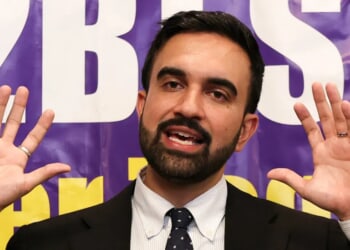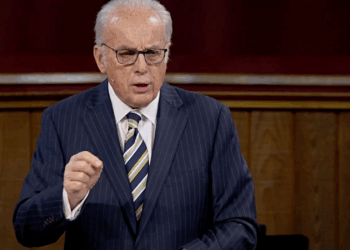
Rabbi Jonathan Guttentag is a UK representative of the Coalition for Jewish Values and a communal rabbi based in Manchester.
When a European government sends soldiers onto its streets to protect synagogues and Jewish schools, it is tempting to describe the move as a tough law-and-order response.
It is not.
It marks a more serious shift: from policing a society to defending it.
That distinction matters.
Police operate within a functioning civic order. Their presence assumes that public life, however imperfect, is broadly governed by law, consent, and deterrence.
Soldiers are different. Armies are not instruments of civic management; they are instruments of defence. They are deployed when the threat is no longer simply criminal, but organised, ideological, and resistant to the normal authority of the law.
When soldiers stand guard outside synagogues, a line has already been crossed.
I have seen this before.
In France, following the attacks on a kosher supermarket and the murders at a Jewish school in Toulouse, troops were deployed to protect Jewish institutions. I encountered this directly a year later, attending a gathering of the Conference of European Rabbis in Toulouse. The synagogue and community buildings were guarded by young soldiers, barely out of training, cradling automatic weapons.
It was, in one sense, reassuring.
But it also raised a more troubling question: how had things reached the point where even armed police were no longer sufficient, and the state had to reach for the army?
For decades, attending such gatherings across Europe, security had always been present — police outriders on motorcycles, flashing blue lights, traffic briefly halted, the visible choreography of the state in control. But that was policing. This is something else.
For years, rising antisemitism across Europe has been treated as a social problem to be managed rather than a threat to be confronted. The response has been familiar: statements of concern, educational initiatives, intermittent enforcement — accompanied by a marked reluctance to address the sources of hostility directly.
The result is a recognisable pattern: hesitation, escalation, and then emergency measures.
We are now seeing elements of this closer to home.
In recent days, even Hatzola ambulances — volunteer emergency responders whose sole purpose is to save life — have come under attack. When those providing medical assistance become targets, it is no longer credible to describe the problem as marginal.
Last Yom Kippur in Manchester, my colleague Rabbi Daniel Walker was forced to defend his synagogue from a violent attacker. The outer gates had already been rammed and breached before the confrontation reached the entrance itself. This was not a distant or abstract threat. It was immediate and physical.
In the days that followed, King Charles III visited the site and later became patron of the Community Security Trust — a welcome and important signal of national support.
But it also reflects a harder truth: that protection is increasingly required where once it was assumed.
The lesson for policymakers should be clear.
If threats of this kind are treated merely as issues of community relations or low-level disorder, the response will always lag behind reality. By the time soldiers are required, the failure has already occurred.
The task is not only to respond at the point of crisis, but to restore the conditions in which ordinary policing is sufficient.
That means:
- enforcing the law decisively
- confronting sources of incitement without hesitation
- and reasserting that public space in Britain is governed by law, not intimidation
A society in which people can worship freely without armed protection is not a luxury. It is a basic test of civic health.
Once that assumption begins to fail, restoring it is far harder than preserving it.