CNN commentator Scott Jennings challenged claims about rising gas prices during a segment in which a progressive activist argued that voters would react negatively to recent increases, as reported by The Gateway Pundit.
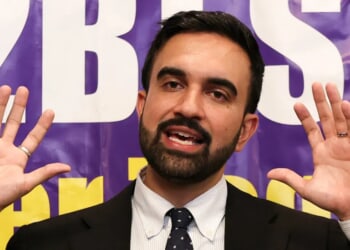
The exchange took place during a discussion involving Adam Mockler, a member of the Meidas Touch group, who raised concerns about a temporary increase in fuel prices and its potential political impact.
“This is going to be a big blue wave,” Mockler said. “It already was going to be before the war in Iran. And this is the most like visceral change that we’ve seen so far.”
Here’s What They’re Not Telling You About Your Retirement
Mockler cited personal observations, saying, “When I drove to the airport today, I passed by two gas stations, and I was paying attention. American families are paying attention to this.”
Jennings responded by referencing prior Democratic policy positions on energy and fuel costs, arguing that higher gas prices had previously been supported as part of broader environmental goals.
“I’m old enough to remember when Democrats were advocating for higher gas prices to bring about the end of the internal combustion engine,” Jennings said.
He added, “NOW, all of the sudden gas prices are a big deal.”
This Could Be the Most Important Video Gun Owners Watch All Year
Mockler questioned the claim, asking, “Wait, which Democrats said they want higher gas prices?”
Jennings responded, “Literally ALL of them.”
Mockler followed up, “They said I want higher gas prices?!”
Jennings replied, “Yes! That was the stated policy, to drive prices up to get rid of the internal combustion engine.”
Scott Jennings just made a 23-year-old MeidasTouch commentator look like a fool on live television.
Adam Mockler tried to attack Trump over gas prices, and Jennings nuked his narrative mid-roll with a BRUTAL reminder about Democrat policy.
MOCKLER: “This is going to be a big… pic.twitter.com/Tu1PteBjZQ
— Overton (@overton_news) March 25, 2026
The discussion comes amid broader debates about energy policy, fuel prices, and the economic impact on American consumers.
“YOU ONLY HAVE TO BE FIVE NOW:” @KenCuccinelli and @ScottJenningsKY give MeidasBro @adammocklerr a history lesson on Democrats historically favoring higher gas prices pic.twitter.com/EetzGmEhlF
— Jorge Bonilla (@BonillaJL) March 25, 2026
You guys remember the BIden administration pitch?
“High gas prices are good for climate change” https://t.co/Qro9HRUheL pic.twitter.com/rmEuXI4QgK
— HelioWave (@heliodown) March 25, 2026
Why does CNN have children on their panels?
— Tennessee.Jed (@TennesseeJed20) March 25, 2026
Gas prices have experienced fluctuations in recent months, with analysts pointing to geopolitical factors, including tensions tied to the war in Iran, as contributing influences.
Jennings’ comments reflected ongoing political divisions over energy strategy, particularly regarding fossil fuels and efforts to transition toward alternative energy sources.
Mockler’s remarks also highlighted concerns among some political commentators that fuel costs remain a visible issue for voters, especially during election cycles.
The exchange circulated online following the broadcast, drawing attention to the differing perspectives on energy policy and its role in shaping voter sentiment.
The segment also underscored how discussions about gas prices continue to intersect with broader debates over environmental policy, economic priorities, and national security considerations.
The opinions expressed by contributors and/or content partners are their own and do not necessarily reflect the views of LifeZette. Contact us for guidelines on submitting your own commentary.



![Two Dead, 14 Injured After Gunfire Erupts Following College Football Game in Alabama [WATCH]](https://www.right2024.com/wp-content/uploads/2025/10/Two-Dead-14-Injured-After-Gunfire-Erupts-Following-College-Football-350x250.jpg)