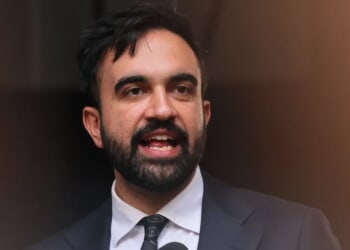
Dr Igor Merheim-Eyre is a political strategist and advisor who has worked with conservatives across the transatlantic space.
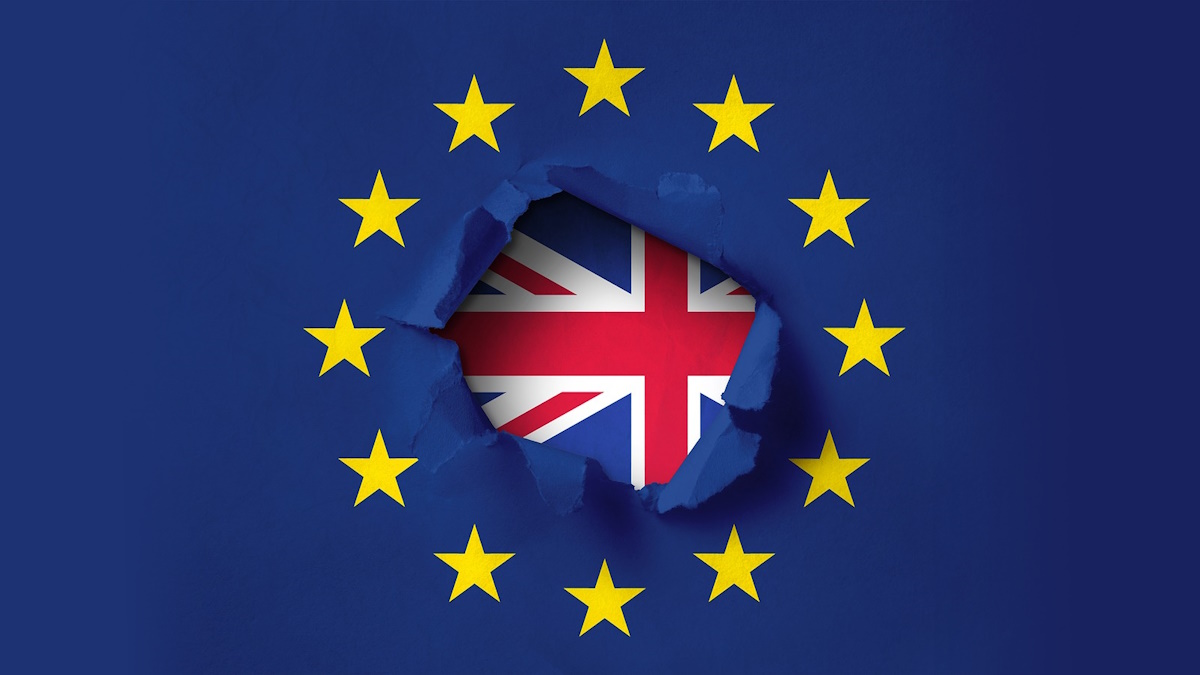
Having returned back to Blighty last year after ten years in Brussels, I’m increasingly shocked by the failures of Brexiteers to develop a positive vision for Britain as well as their readiness to avoid accountability by finding scapegoats.
Do not get me wrong, even in Brussels, I always sought to defend the democratic will of the British people, irrespective of how unpopular that opinion may have been or however many people it alienated. I wished nothing but a bright future for Britain as it was able to chart a new course outside the European Union. But it’s time to face an uncomfortable truth.
Attending a recent event with the Bruges Group, and reading posts, letters and columns of leading Brexiteers, I’m increasingly shocked by their failure to develop a positive vision of Britain.
Even worse, after winning an unexpected referendum victory in 2016, solidified with a historical General Elections win in 2019, they blew their chance at transforming Britain for the better, leaving it even more socially divided and economically weaker.
Lord Frost in a recent letter to the FT wrote that the current government’s efforts, instead of realigning with the EU, should be expended ‘on using the benefits of British national independence, while we still have it, to deregulate and improve the business environment here in the UK’. There’s little point at finger-pointing, but I had expected such government agenda from the Brexiteers, not from Labour. At least, to Lord Frost’s credit, he has been consistently critical of the Johnson Government’s delivery of post-Brexit ‘benefits’ such as net zero, overregulation, crippling taxation or the replacement of skilled nurses with Uber drivers.
The trouble is that Brexiteers had thirty years to develop a vision of Britain ‘the day after’ and they failed spectacularly. Moreover, where they spent thirty years blaming Britain’s ills on eurocrats in Brussels, they now found new scapegoats in the Whitehall bureaucracy. There is no self-reflection nor a long-term vision for Britain. There is only scapegoating and endless calls for an illusory ‘proper Brexit’ that would solve the country’s problems.
Ironically, in this, they are increasingly behaving like the euro-federalists they hate.
For euro-federalists, Europe’s problems can only be solved by a more Federal Europe: migration? More Europe; deindustrialisation? More Europe; housing crisis? More Europe. They never consider that some issues might be better solved at a national or regional level, let alone that they should be left up to individuals, civil society or markets. For euro-federalists, the failures lie with those who simply refuse to transfer an ever-growing list of competencies to Brussels and refuse the paradise of an ‘ever closer Union’; they engage in scapegoating on one hand, and conceptual day-dreaming on the other rather than securing borders or addressing economic woes.
I have studied European politics, taught European politics, worked with and in European institutions, which is why I find it curious to see that Brexiteers are, after all, increasingly behaving like euro-federalists. Perhaps, they even go further. Calling for a ‘proper Brexit’ after all those that have been tried and failed over the past decade, is reminiscent of those Marxists arguing that their ideology was never properly tried in practice and next time will be different.
I have bad news: it won’t.
The globalisation era of trade is over while the EU remains the UK’s largest trading partner by the very fact of geography. It’s also a fact that a bloc of 27 sets its own rules for trading with others, irrespective of whether we like it or not.
Lord Frost criticises the Labour government’s ‘reset’ with the EU as constituting ‘the partial re-entry to the EU’s single market…applying EU laws without any say in them, and paying for the privilege too.’ Well, yes. It should hardly come as a surprise to a man like Lord Frost who has spent considerable time in Brussels that, having left the EU, the UK is no longer able to influence key decisions.
Lord Cameron, for all his faults, already tried to explain in 2016 that the UK is too much of a large economy to be a norm-taker within a Customs Union. However, it is also not large enough to dictate to a simply larger bloc without being a full member.
Unfortunately, the Labour government is either naïve or disingenuous about this too. They cannot claim to be pursuing a membership of the EU’s single market while avoiding the freedom of movement. The EU’s four freedoms (of goods, services, capital and people) always go together, and the EU will insist on some form of free movement.
So, where does that leave Britain ten years after the Brexit referendum?
The UK now essentially has three choices: the status quo, joining the single market as a norm-taker and accepting the EU’s four freedoms, or return to full membership. This decision has to be made in a world that is once again moving towards protectionism and geopolitical blocs.
Brexiteers have proved that the status quo does not work, while a ‘proper Brexit’ is simply an illusion. They’ve had the chance to prove otherwise and they cannot hide behind Brussels or Whitehall. That leaves two other options, and I find it hard to believe that Britain, even under a Labour government lacking all ambition, would want to remain a simple norm-taker.
As for the third option, the conservative leaders of Germany and Italy are energetically pushing a new agenda that is reshaping the harmful net zero policies, cutting red tape and regaining control of external borders. Every step of the way they are proving the continued relevance of sovereign and confident states within the European Union. This will please neither Brexiteers nor euro-federalists.
Brexiteers have become like the euro-federalists they hate so much: dreaming of a fictional future without a vision for solving real-life problems, and quick to shift blame to avoid accountability. Perhaps, this should come as no surprise. Frost, Farage and Johnson are, after all, Brussels men.



![James Carville Admits Democrats Had No Shutdown Endgame, Mishandled Strategy [WATCH]](https://www.right2024.com/wp-content/uploads/2025/11/1763070634_James-Carville-Admits-Democrats-Had-No-Shutdown-Endgame-Mishandled-Strategy-350x250.jpg)