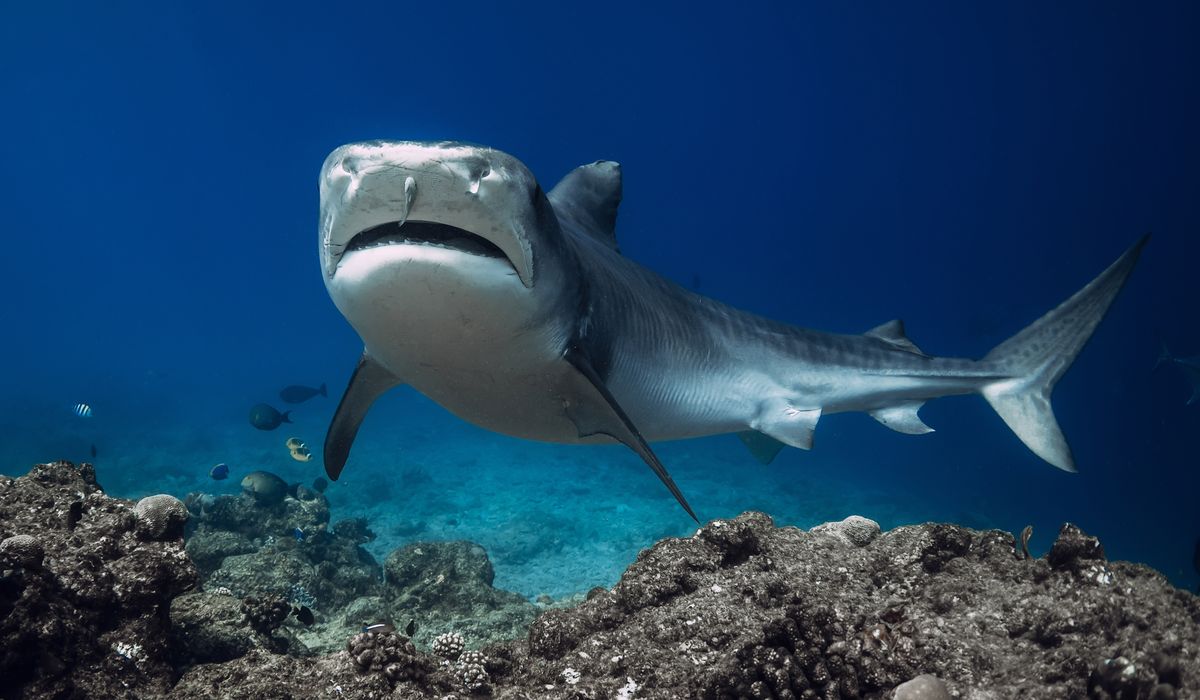
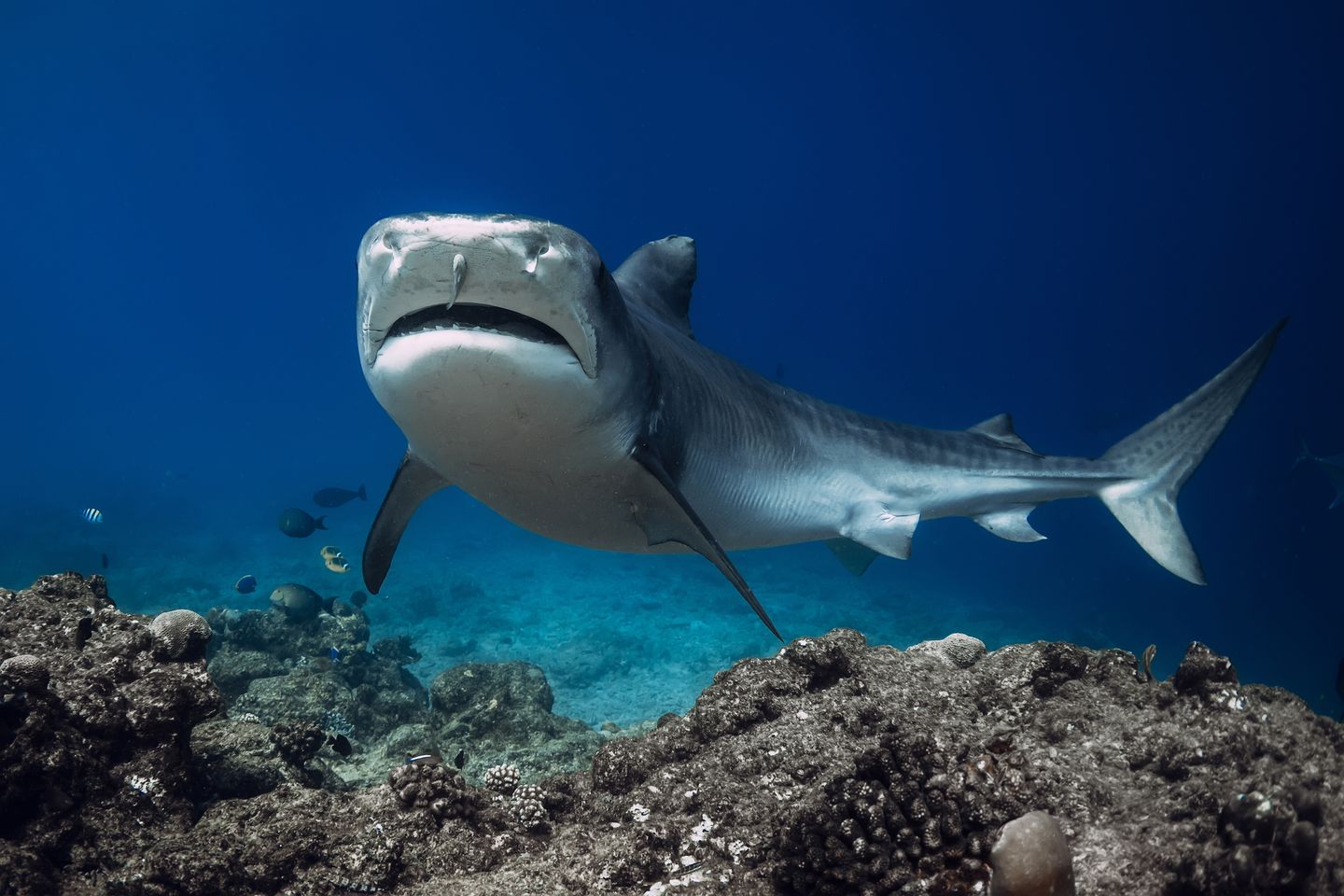
Some sharks living near the Bahamas show signs of contamination by caffeine, cocaine and painkillers, according to a recent study.
For the study published in the journal Environmental Pollution, researchers from Brazil, Chile and the Bahamas took samples from 85 sharks across five species found in waters off the island of Eleuthera: 33 adult and nine juvenile lemon sharks, eight adult and two juvenile Atlantic nurse sharks, eight blacktip sharks, 23 Caribbean reef sharks and two tiger sharks.
Out of those 85, 28 sharks were found to be contaminated from among the sampled Atlantic nurse, Caribbean reef and lemon sharks. The only four contaminants found at detectable levels were caffeine and cocaine, along with the painkillers acetaminophen, the active ingredient in Tylenol, and diclofenac, the active ingredient in Voltaren.
The study authors said that “to the best of our knowledge, this is the first report of caffeine and acetaminophen detected in any shark species worldwide, and the first report of diclofenac and cocaine in sharks from the Bahamas, an environment commonly described as pristine.”
People diving in the waters near Eleuthera are the primary suspects for how the contaminants got into the water and thereby into the sharks.
“It’s mostly because people are going there, peeing in the water and dumping their sewage in the water,” author Natascha Wosnick told Science News.
The researchers are worried about how the contaminants could affect the sharks.
“Our primary concern is not an increase in aggression toward humans, but rather the potential implications for the health and stability of shark populations. Chronic exposure to these anthropogenic compounds, many of which have no natural analogue in marine systems, may lead to negative effects that are still poorly understood,” Ms. Wosnick told CBS News.









![CNN's Kaitlan Collins Fact-Checks Rep. Jasmine Crockett Over False Trump Ballroom Claim [WATCH]](https://www.right2024.com/wp-content/uploads/2025/10/1761954330_CNNs-Kaitlan-Collins-Fact-Checks-Rep-Jasmine-Crockett-Over-False-Trump-350x250.jpg)