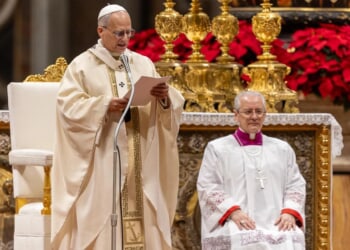
![Pete Hegseth Calls for Unyielding Action in Pentagon Prayer Service [WATCH]](https://www.right2024.com/wp-content/uploads/2026/03/Pete-Hegseth-Calls-for-Unyielding-Action-in-Pentagon-Prayer-Service.avif.avif)

During a recent Christian prayer service at the Pentagon, remarks from the War Secretary stirred intense debate in Washington and beyond. Critics seized on a few lines, while supporters argued the moment reflected longstanding traditions of faith, resolve, and moral clarity in times of conflict.
The controversy highlights a broader conversation about leadership, religion, and the language of wartime determination.
According to reporting, the War Secretary addressed attendees during the Pentagon’s monthly prayer gathering and recited scripture as part of what he described as a historical “premission reading” given to troops in a prior military operation.
Here’s What They’re Not Telling You About Your Retirement
He read, “I pursued my enemies and overtook them. I did not turn back til they were consumed. I thrust them through so that they were not able to rise. They fell under my feet.”
He continued with additional verses, saying, “And those who hated me, I destroyed. They cried for help, but there was none to save. They cried to the Lord, but he did not answer them. I beat them fine as dust before the wind. I cast them out like the mire of the streets.”
These passages, drawn from the Book of Psalms, have historically been interpreted by many as expressions of divine justice and perseverance during hardship.
Supporters argue that invoking such language is not unusual in military settings because service members often rely on faith for strength. At the same time, critics contend that the tone risks being misunderstood when taken out of its biblical context.
This Could Be the Most Important Video Gun Owners Watch All Year
This disagreement underscores how deeply language matters, especially when national security issues are involved.
The War Secretary then offered a prayer that became the focal point of controversy. He asked God to behold the “wicked who rise against your justice and the peace of the righteous” and to “break the teeth of the ungodly.”
He continued, “Let every round find its mark against the enemies of righteousness and our great nation. Give them wisdom in every decision, endurance for the trial ahead, unbreakable unity, and overwhelming violence of action against those who deserve no mercy.”
He further prayed that “let justice be executed swiftly and without remorse, that evil may be driven back, and wicked souls delivered to the eternal damnation prepared for them.”
To supporters, this language reflects the harsh realities of warfare rather than a call for indiscriminate force. They argue that leaders must clearly articulate the seriousness of defending the nation because hesitation in dangerous situations can cost lives.
Therefore, the emphasis on unity, wisdom, and endurance resonated with those who believe moral conviction strengthens military effectiveness. At the same time, the prayer also included appeals for discernment and protection, which proponents say demonstrates balance rather than recklessness.
The context of ongoing military operations added weight to the moment. The War Secretary encouraged those present to pray for service members currently in harm’s way, particularly those involved in active conflict.
Because the military often faces difficult missions, leaders frequently draw upon faith traditions to provide comfort and clarity. This practice has deep historical roots, dating back to chaplains accompanying troops in every major American conflict.
Criticism from advocacy groups quickly followed. Organizations concerned about the separation of church and state argued that such religious rhetoric in official settings could blur institutional boundaries. The War Secretary has previously faced scrutiny for hosting worship ceremonies and openly discussing his faith.
However, supporters counter that service members themselves represent a wide range of beliefs and that voluntary prayer services respect freedom of religion rather than undermine it.
They note that many troops appreciate opportunities for spiritual reflection, especially during times of heightened tension.
The discussion also touches on broader reforms within the military chaplain community. The War Secretary has emphasized a renewed focus on ministry, stating that chaplains should prioritize spiritual care. This approach aligns with his belief that moral and spiritual resilience contribute to readiness.
Because military service places extraordinary stress on individuals, proponents argue that strengthening faith support structures can improve morale and cohesion.
Data cited in the report shows that a large portion of the military identifies as Christian, while smaller percentages identify as atheist, agnostic, or unclassified. This demographic reality helps explain why religious language often appears in military settings.
At the same time, leaders must ensure inclusivity so that all service members feel respected regardless of belief. Balancing these priorities remains an ongoing challenge.
Ultimately, the controversy reveals how quickly a moment intended for prayer can become a national debate. Some see strong language and view it as inappropriate, while others see conviction and interpret it as necessary leadership.
Because national defense involves life and death decisions, emotions run high on all sides.
Yet one point remains clear. The role of faith in public service continues to shape conversations about leadership, responsibility, and the moral foundations of military action.
WATCH BELOW:
The opinions expressed by contributors and/or content partners are their own and do not necessarily reflect the views of LifeZette. Contact us for guidelines on submitting your own commentary.


![Kamala Comes Unglued, Makes Bogus Claim About Her Landslide Loss to Trump [WATCH]](https://www.right2024.com/wp-content/uploads/2025/10/Kamala-Comes-Unglued-Makes-Bogus-Claim-About-Her-Landslide-Loss-350x250.jpg)