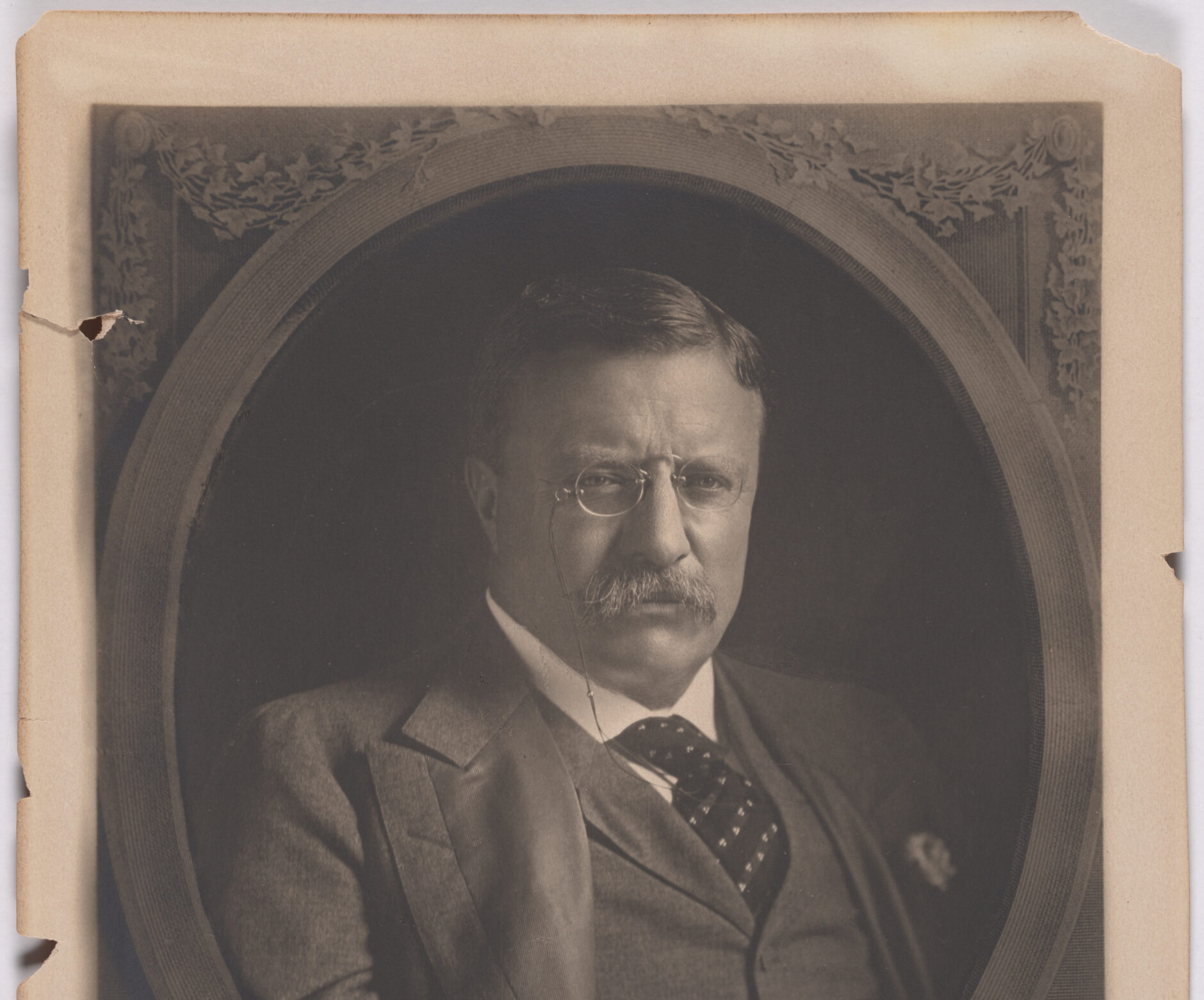
Some presidents define their political party for generations. Even today, nearly four decades after he left office, you’ll still find many who self-identify as “Reagan Republicans.” While President Franklin Delano Roosevelt once had that sway over Democrats, one cannot say the same of his cousin and predecessor, Theodore Roosevelt, for Republicans.
Why, then, do so many young conservatives look to the Bull Moose as a guidepost?
I went to the America First Antitrust Forum to find out. Hosted by The (fittingly-named) Bull Moose Institute, the forum sought to elucidate what “America First antitrust action mean[s] in practice?”
The question is a fair one. Like “tariffs” and “protectionism,” one might have been forgiven in the pre-Trump era for considering “antitrust” as another progressive-era oddity without any relevance in modern policy. As with so much else, the rise of President Donald Trump in 2016 shattered the existing political consensus and ushered in an era of new possibilities. Or, in this case, old possibilities.
How are the new antitrusters going to fare after the Trump administration?
Unusually, though, the rise of the conservative antitrusters was driven not so much by Trump, but by his adversaries. After the shock of Hillary Clinton’s defeat wore off, liberal conventional wisdom curdled around an explanation of what happened. It was not that a critical mass of voters in key swing states, having considered both candidates, had found the Democrat wanting. The left writ large concluded, instead, that Americans had been tricked by Russian disinformation and social media “fake news,” a term that would later be appropriated by Trump as an invective against the mainstream media.
Liberal institutions, therefore, resolved to never let that happen again. A previously laissez-faire approach to content moderation began to tilt further and further to the left. Conservative viewpoints as such became subject to censorship, and those who regularly espoused them were often banned. It can be easy to forget now, but back then, “cancellation” meant being banned simultaneously from most or all of the big platforms such as YouTube, Facebook, and, as it was called at the time, Twitter. Payment processors often followed suit. You were, effectively, unpersoned.
Conservatives were caught flatfooted. On the one hand, it was plain that liberal institutions were coordinating to push them out of public life. On the other hand, support for limited government and free markets had been a cornerstone of the American right for a generation. Intense debate followed about what should be done.
The answer that won out was “something” — be that reforming or repealing Section 230 of the Communications Decency Act, designating certain social media sites as public utilities, a prohibition on the Biden administration’s “jawboning” of social media sites over purported misinformation, or more vigorous antitrust enforcement. It became difficult to see the point in having a First Amendment if, in practice, it was becoming almost impossible for conservatives to exercise it where many of the most important conversations were happening.
The reply, mostly facetious from liberals and mostly naive from libertarian-minded conservatives, was often “build your own Twitter.” However, the dominance of liberal institutions and their willingness to act as an ideological cartel meant that that proves difficult. The case in point was that of Parler, a Trump-friendly social media network that exploded in popularity amid a series of “deplatformings” after the 2020 presidential election. The site’s launch was derailed when Amazon Web Services, the internet’s premier web-hosting service, blacklisted them, citing the Jan. 6 U.S. Capitol Riot. Parler eventually found a new web hosting service, but they had missed their lightning in the bottle moment. The damage had been done.
It’s in this context that one needs to consider the trust busters of the new right. Even after Elon Musk’s acquisition of Twitter in 2022, the reelection of Trump in 2024, and the associated “vibe shift” against cancel culture, many conservatives have not forgotten how things had been allowed to get to that point. Aiden Buzzetti, President of the Bull Moose Project, told The American Spectator that “more conservatives are becoming familiar with the argument that market power and corporate consolidation can be just as big a threat to liberty as ‘big government.’” While it may have started with speech and tech, the new antitrusters are fully prepared to apply that philosophy consistently throughout the economy.
These are not the marginal figures that once debated social media censorship. In Trump 2.0, they’re making policy. One of the speakers was Andrew N. Ferguson, the chairman of the Federal Trade Commission, the government body tasked with enforcing antitrust law. Mark Meador, another FTC commissioner, also addressed the room.
But for all of that history, Ferguson and the other speakers seemed oddly understated. The message seemed, at once, ultra-MAGA and anodynely centrist. They championed a muscular, America-first outlook that would prioritize American citizens above all others … by charting a course in-between those who wanted unbridled markets at the expense of justice, and those who would strangle economic prosperity in the name of unfairness. They touted an aggressive strategy of enforcing existing antitrust law by combatting deceptive business practices and monopolies. Substantively, it was the sort of thing it wouldn’t have been out of bounds to hear a moderate Republican or even a moderate Democrat say.
Or, perhaps, not even a moderate Democrat. One lawmaker singled out for praise at the forum was California state Sen. Scott Wiener. While Wiener might be considered a moderate by San Francisco standards, by any other metric, he reads as far to the left. What garnered him this praise was his Blocking Anticompetitive Self-preferencing by Entrenched Dominant platforms (BASED) Act. The creatively-named proposal would curb anti-competitive behavior by big tech by forbidding companies over a certain size from favoring their own products over those of competitors.
How are the new antitrusters going to fare after the Trump administration? The most plausible Republican 2028 presidential hopefuls, Vice President J.D. Vance and Secretary of State Marco Rubio, are both sympathetic to the new right’s economic vision; Buzzetti told The American Spectator that Vance was “the closest, if I had to pick one.” By contrast, there are other Republicans “like … Mike Pence, who are in denial about how the right’s view of antitrust has shifted, but if you look at the 2028 polls, you can see that they’re relatively marginal.”
But what if the Democrats retake power in 2028? At first glance, that might prove an opportunity for the Pences of the world to reassert themselves. But unless liberals have recanted the “deplatforming” craze by then, they might well recreate the censorship-industrial-complex that gave rise to the new right’s new trust-busters in the first place.
READ MORE from Stephan Kapustka:
Why Are Virginia Democrats Suddenly Nervous About the Redistricting Amendment?

![Two Dead, 14 Injured After Gunfire Erupts Following College Football Game in Alabama [WATCH]](https://www.right2024.com/wp-content/uploads/2025/10/Two-Dead-14-Injured-After-Gunfire-Erupts-Following-College-Football-350x250.jpg)