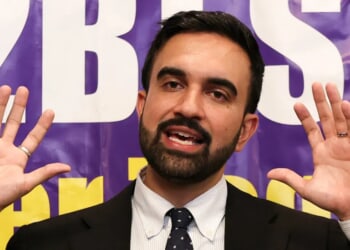
Cllr Will Calverley represents Tiptree Ward on Colchester City Council.
I welcome the principle of local government reorganisation into unitary councils. Streamlining the current two-tier system has the potential to simplify decision-making, reduce duplication, and deliver clearer accountability for residents across Essex. However, while the principle is sound, there are serious concerns about the proposed scale of the new authorities and the way electoral wards will be structured.
The government has now confirmed that Essex will be reorganised into five unitary councils: North East Essex, West Essex, Mid Essex, South West Essex and South East Essex, alongside a Greater Essex Mayoral Combined Authority. In theory, this structure could provide a coherent framework for strategic decision-making across the county while enabling strong local leadership within each authority.
However, the details matter enormously. Local government reform should strengthen councils financially and democratically; it should not create authorities that begin life burdened by structural weaknesses or financial instability.
One of the most pressing concerns relates to the financial situation in Thurrock. The scale of Thurrock Council’s debt is widely known and remains one of the most significant financial crises faced by any local authority in the country. If Thurrock were placed within a new South West Essex unitary authority as currently proposed, the new council would effectively inherit this enormous liability from day one.
That raises a fundamental question: how can a newly created authority succeed if it begins its existence carrying such a substantial financial burden?
Starting a council with a balance sheet dominated by inherited debt risks paralysing the authority before it has even begun delivering services under the new system. Instead of focusing on economic growth, infrastructure and improved public services, leadership would be forced into immediate financial crisis management. Residents across the wider South West Essex area would inevitably feel the impact through constrained budgets, delayed investment and pressure on frontline services.
This is not a sustainable foundation for a new authority.
For that reason, the current five-council model deserves reconsideration, particularly in the south of the county. A more sensible approach would be to merge the proposed South West Essex and South East Essex authorities into a single South Essex Council.
Creating a unified South Essex authority would spread financial risk across a larger economic base and population, providing the resilience needed to manage inherited liabilities while still investing in the future of the region. It would also better reflect the economic and geographic reality of the South Essex area, where transport links, housing markets and employment patterns already operate across existing council boundaries.
A single South Essex authority would also allow for stronger strategic planning across key issues such as transport connectivity, coastal resilience, regeneration of town centres, and support for local businesses. Fragmenting these responsibilities across two smaller authorities risks duplication and inconsistent planning.
Beyond the financial structure of the councils themselves, ward boundaries are another critical issue. Effective local democracy relies on councillors being able to represent communities clearly and consistently. Large or complex multi-member wards can weaken accountability and reduce the connection between residents and their representatives.
A more effective solution would be to establish two-member wards across the Essex unitary authorities. This strikes the right balance between strong local representation and manageable council sizes. Two-member wards allow residents to have more than one representative while still ensuring that councillors remain closely connected to the communities they serve.
Such a structure would also provide stability across the wider system of governance. With four or five well-structured unitary councils working alongside a Greater Essex Mayoral Combined Authority and hopefully one day, an Essex Assembly, the county would have a layered but coherent system of leadership capable of delivering long-term growth.
The mayoral combined authority could focus on strategic issues such as regional transport, economic development and investment, while the unitary councils deliver high-quality local services. An Essex Assembly would provide democratic oversight and ensure that the mayor and combined authority remain accountable to residents across the county.
But structures alone are not enough. For any system of local government to succeed, it requires competent, pragmatic and forward-thinking leadership.
Essex has enormous potential: a strong economy, thriving communities, excellent transport links to London and international gateways through its ports and airports. With the right governance arrangements and decisive leadership, the county can continue to grow, attract investment and improve the quality of life for its residents.
That is why the new councils must be led by competent and bold-thinking Conservative leaders who are prepared to think strategically, manage finances responsibly and champion growth. Reorganisation should not simply redraw boundaries; it should create councils that are confident, financially stable and focused on delivering results.
Local government reorganisation is a once-in-a-generation opportunity to reshape how Essex is governed. Getting the structure right from the outset is essential. If the financial realities of Thurrock’s debt are ignored, the new South West Essex authority risks beginning its life in crisis.
A unified South Essex Council, combined with well-designed two-member wards and strong leadership within a Greater Essex governance framework, would provide a far more stable and effective foundation for the future.
But only Conservative leaders will deliver it.





![Two Dead, 14 Injured After Gunfire Erupts Following College Football Game in Alabama [WATCH]](https://www.right2024.com/wp-content/uploads/2025/10/Two-Dead-14-Injured-After-Gunfire-Erupts-Following-College-Football-350x250.jpg)