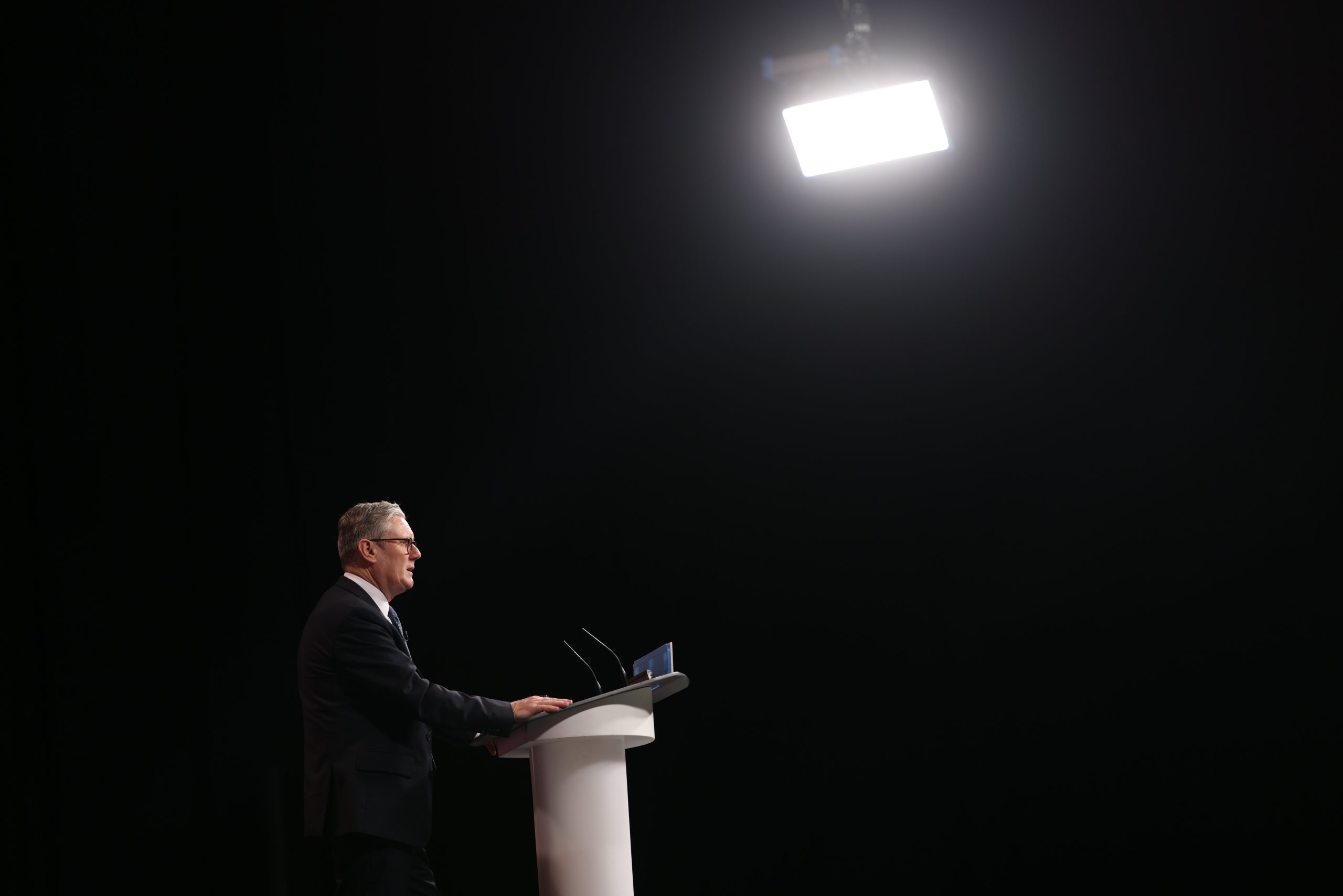
At the Prime Minister’s final appearance in front of the Liaison Committee – a group of House of Commons select committee chairs – last year, he made a complaint. The most frustrating thing about Government, Sir Keir Starmer said, was the sluggish pace of change. If only he could implement “a clear path through, at speed”.
By that point, the 10-year Defence Investment Plan (DIP) had already been delayed. Having first been expected last autumn, the publication that is supposed to explain how ministers actually intend to spend defence cash, was then promised in time for Christmas.
But at the Prime Minister’s most recent appearance in front of the Liaison Committee, this time last week in fact, the DIP was still unpublished. Now that purdah has hit as local elections approach, with major defence decisions in Scotland and Wales set to be involved in the DIP, its publication is unlikely to be for a couple of months, and with it defence business at a standstill.
Seeing as the Prime Minister claimed that his major frustration last year was the sluggish pace of change, one would imagine he is frustrated by the delay to this crucial defence plan – especially at a pivotal geopolitical moment.
But when he was asked by Conservative MP and former chair of the Liaison Committee Bernard Jenkin about why Britain was “not on a war footing” and where the DIP was, his response suggested otherwise.
Starmer said “we are finalising the investment plan”, but was accused of “enormous complacency”. He lashed out, perhaps it touched a nerve:
“Well, this smacks of the fact that for years there was underinvestment by the last government, and the stripping out, the hollowing out of our armed forces, copyright Ben Wallace, who was the defence secretary.”
Without offering a date, he maintained that the plan was on his desk, being “finalised”, and that it was his job to “resolve” it. Just as it was his job to implement a “a clear path through, at speed”. How is that going?
Britain has slipped behind Germany as Europe’s second-biggest military spender in NATO. Defence spending will supposedly rise to 3.5 per cent of GDP by 2035 – but ministers have so far only explained how to reach around 2.6 per cent by 2027.
It is worse than that though. Nato secretary general Mark Rutte’s annual report has British defence spending for 2025 revised downwards from 2.4 per cent of GDP to 2.31 per cent – lower even than estimated figures for 2024.
And the warnings that British military chiefs have made are that the country faces a £28bn hole over the next four years. Ministers seem to have found £10bn in savings, leaving still a gap of £18bn.
Sure, ministers can claim that Britain is on “war footing”, but how can it really be when the money remains theoretical.
Without the DIP and decisions on investment, the Financial Times reports that defence executives have warned the UK could lose cutting-edge defence technology, with start-ups looking to relocate abroad, and some companies even going bust while waiting for their government contracts to go through.
They cite one business winding up their defence arm, with another’s founder remortgaging their home while trying to keep their business running as they wait for their government contract to come through.
Not just that but the dither and delay over plans has made the Ministry of Defence look unreliable, and as such some defence businesses are adding a risk premium price to their quotes for British government work, costing the taxpayer more money.
The Ministry of Defence say they are working to finalise the DIP, but then defence ministers have been saying that without delivery for months. There is quite the amusing, and somewhat depressing, video of them repeatedly saying they are “working flat out” to deliver the DIP. I’d watch it for yourself as it conveys the issue perfectly.
The country is stuck in a defence delusion. That is likely why the DIP has been held up, because it reveals the problem. Defence needs proper funding for it to be at least somewhat credible.





![Kamala Comes Unglued, Makes Bogus Claim About Her Landslide Loss to Trump [WATCH]](https://www.right2024.com/wp-content/uploads/2025/10/Kamala-Comes-Unglued-Makes-Bogus-Claim-About-Her-Landslide-Loss-350x250.jpg)
![James Carville Admits Democrats Had No Shutdown Endgame, Mishandled Strategy [WATCH]](https://www.right2024.com/wp-content/uploads/2025/11/1763070634_James-Carville-Admits-Democrats-Had-No-Shutdown-Endgame-Mishandled-Strategy-350x250.jpg)