Dr Martin Parsons is the author of a book on Conservativism and is a former overseas aid worker in Pakistan and Afghanistan.
Back in 2008 I wrote an article for ConservativeHome called ‘Iran: a new cold war’. At the time Iran had been paying unemployed Iraqis up to $300 each to kill British soldiers.
Since then, Iran’s hostile actions against us have continued. Last October the head of MI5 stated that since January 2022 it has disrupted 20 Iranian backed plots seeking to kill people in the UK, particularly Iranian dissidents and Jews. He also warned that Iranian state aggression in the UK was now “broadening”. We have also just learnt that Iran now has missiles which could hit much of England…
That should focus everyone’s minds. But so too should the Civitas report recently written by Conservative MP Sir Bernard Jenkin and Labour MP Derek Twigg. This reveals that the UK military is not actually in a state of war-fighting readiness and the country as a whole needs urgent action to get into a position in which we could win a war forced upon us. It issues a stark warning that such a “war must be won or more than war will be lost”.
Their report also argues that “we really need to understand how our enemies understand what war is and what it means.”
This article seeks to do just that in respect of the Iranian regime and suggests a way forward.
How the Iranian regime view war
Whilst many Muslims in the west regard Islam as a purely devotional faith, the fact remains that the shari’a textbooks of classical Islam which are taught in madrassas around the world divide the world into two geographical areas: Dar-al-Islam i.e. the world submitted to Islamic government and law and Dar-al-Harb, literally meaning the world of warfare, which must be invited to submit to it, and if it refuses – jihad declared against it.
However, the Iranian regime’s view of war is also underpinned by two further central beliefs which are largely unique to Shi’a Islam.
The first is the absolute centrality of martyrdom. This goes back to the assassination of Ali who Shi’a believe to have been the rightful successor to Muhammad. The attempt by Ali’s son Hussein to raise an army ended in the battle of Kerbala in Iraq, where Hussain and his 200 followers were massacred by the vastly larger army of the rival (Sunni) caliph. The Iranian regime not only view this fight to the death as an example to be emulated, but also regard every attack they inflict on their enemies as somehow avenging the historic injustice suffered by the family of Ali.
The second is the belief in the Mahdi.
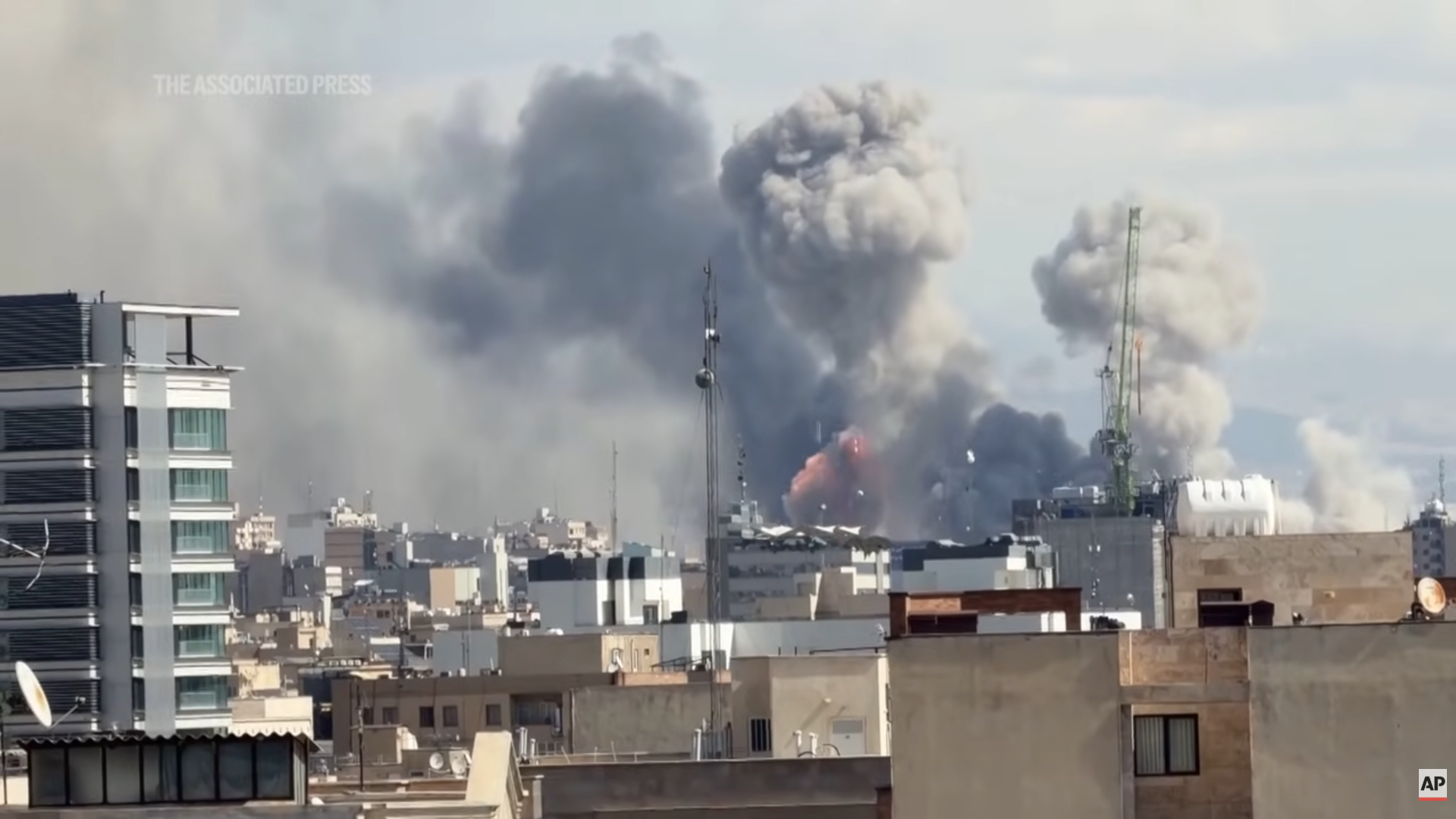
Central to Shi’a belief is that from the family of Ali there were a series of infallible imams, who were not merely political and military leaders of the Islamic community, but divinely appointed spiritual heirs of Muhammad. The Mahdi who it is believed will appear at the end of time and bring in an era of supernatural Islamic justice, is the twelfth imam who disappeared from public view in 880, but is still living. The Iranian Supreme Leader is the deputy of earth of the imam, responsible for implementing Islamic justice until he appears. No-one knows when the Mahdi will appear. However, his coming is believed to be preceded by a major battle…This raises the question of whether the hardliners within the regime might be questioning whether the current war with the US and Isreal could be that battle. That would certainly explain some of the more extraordinary demands they have made for a ceasefire.
What is clear though, is that the hardliners will regard any ceasefire or peace treaty as merely a temporary truce because they believe that the whole world will ultimately be conquered.
The importance of empowering the pragmatists
Which brings us back to what to do about Iran, which has now attacked at least two UK military bases. The failure to respond with even a limited military strike will have been viewed by the hardliners as weakness, signalling the UK may not respond to future more serious attacks.
The Iranian regime has always consisted of both hardliners who believe it should have no relationship with non-Islamic countries, and pragmatists who are not necessarily moderates, but nonetheless see such as relationships as essential if Iran’s economy is not to collapse.
The same will be even more true in relation to the current war with the US and Isreal. The pragmatists will be looking for an off-ramp to end the war as soon as possible. While the hardliners will only accept a ceasefire if they see it as a strategic pause, enabling them to gather strength to finally defeat the west.
So, in terms of the political realities on the ground, at the moment the best hope for the future of Iran is probably that a pragmatist of a similar ilk to Gorbachev gains power. That could both end the current war and avert a future one, while allowing some measure of reforms to be instituted that would give greater freedom to ordinary Iranians. However, like Gorbachev, such a person could only emerge themselves from within the Iranian establishment if they are seen as wholly untainted by the west.
The likely alternatives are both far worse than situation which existed before the present war. Either that the regime survives in a weakened, but even more dangerous state, lashing out at not just shipping in the Persian Gulf, but probably also mounting atrocities in the UK and western countries themselves. Alternatively, Iran could disintegrate into fiefdoms controlled by regional warlords in a similar manner to Iraq. Some of these would probably be former IRGC commanders. While the absence of an effective central government would risk a power vacuum that could allow a jihadist group such as al-Qaeda to establish itself among the Sunni areas such as the south-east.
Actions the UK government needs to take
To empower the pragmatists, the first thing the UK government should do is to add the Iranian Revolutionary Guard Corps to the Home Office’s list of proscribed terror organisations, as the EU has recently done.
It is quite extraordinary that the IRGC has been involved in attempting to kill British citizens for more than a quarters of century and not been proscribed. The argument made against proscription, that it is important to retain links with the Iranian regime, simply empowers the hardliners the IRGC represents.
Secondly, any attack on British military bases, aircraft or ships must be met with a proportionate military response. Anything less empowers the hardliners, who see us as weak and themselves as having inflicted a defeat on us.
Thirdly, we need a massive reorientation of government to prepare the UK to fight and win a future war that we are forced to fight. As the fourth century Roman writer Publius Flavius Vegetius wrote when the Roman Empire was under similar threat from Goths, Vandals and Huns:
“Anyone who wants peace must prepare for war.”




![James Carville Admits Democrats Had No Shutdown Endgame, Mishandled Strategy [WATCH]](https://www.right2024.com/wp-content/uploads/2025/11/1763070634_James-Carville-Admits-Democrats-Had-No-Shutdown-Endgame-Mishandled-Strategy-350x250.jpg)
![Two Dead, 14 Injured After Gunfire Erupts Following College Football Game in Alabama [WATCH]](https://www.right2024.com/wp-content/uploads/2025/10/Two-Dead-14-Injured-After-Gunfire-Erupts-Following-College-Football-350x250.jpg)
![CNN's Kaitlan Collins Fact-Checks Rep. Jasmine Crockett Over False Trump Ballroom Claim [WATCH]](https://www.right2024.com/wp-content/uploads/2025/10/1761954330_CNNs-Kaitlan-Collins-Fact-Checks-Rep-Jasmine-Crockett-Over-False-Trump-350x250.jpg)