Sanjoy Sen is a chemical engineer. He contested Alyn and Deeside in the 2019 general election.
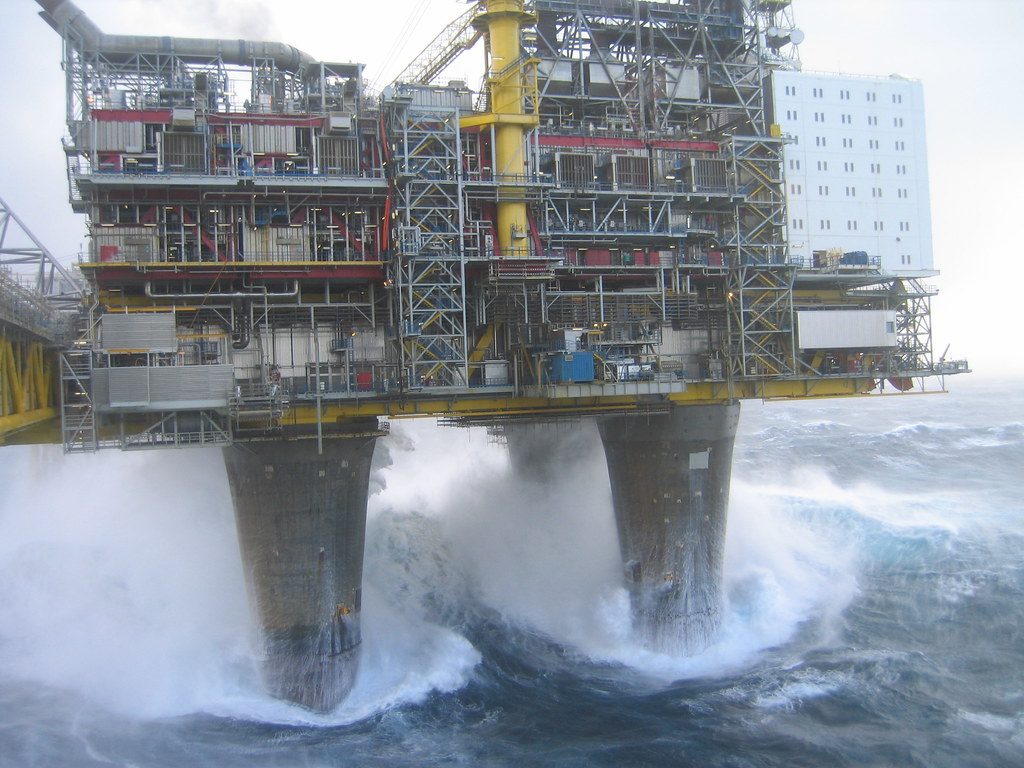
As a 1980s schoolkid in land-locked Derbyshire, I learned North Sea oil would be all be over by the millennium. Instead, I began my Aberdeen career in the year 2000, just as production peaked. This is a sector that has been written off many times before.
The North Sea has long been keeping Britain’s lights on with relatively little political interference. Except, of course, meddling chancellors who can’t leave tax rates alone. But with the sector suddenly in the headlines, here are the perspectives of someone who spent many years working in it. Uncertainties whether drilling can bring back self-sufficiency (no), improve energy security (a bit, maybe) or reduce bills (same again) have been widely covered elsewhere. Here are the answers everyone is looking for.
But first, some perspectives. The sector understands that billions in value remains. But there’s no denial going on here: North Sea oil won’t last forever. Britain needs to extract what’s left and pursue long-term alternatives. This isn’t the ‘either-or’ choice framed by Miliband and the Greens.
What is it like to work in North Sea oil?
I was too young for the seventies boom when Texas oilmen strutted down Union Street in their cowboy gear. Aberdeen was on a roll with even the football team overcoming Real Madrid to lift European silverware. Offshore production was uncharted territory, and the UK fast became a global leader. That unsung success is even more impressive considering the dismal state of British industry at the time.
What I do recall from Aberdeen is the positive, can-do attitude. Like many others, my engineering career ranged from crunching numbers in the office to taking the helicopter offshore to trouble-shoot production issues. Too few young people (or parliamentarians) get to hear what working in energy can offer. But as companies have exited, former colleagues have changed sector or opted for early retirement. Worryingly, that erodes the skills base needed to deliver the future, from floating offshore wind to nuclear.
Is the North Sea still a “treasure chest”?
Despite what The Donald told Keir, most of the North Sea’s value is long gone: some 90% of reserves have been extracted. Stalled developments (Cambo, Jackdaw, Rosebank) won’t reverse the decline but can generate much-needed tax revenues and protect skilled jobs.
Undeveloped discoveries won’t stay viable forever, however. With major fields (e.g. Brent) entering the decommissioning phase, shared infrastructure (platforms, pipelines, terminals) is fast disappearing. Last year’s North Sea Future Plan creates wriggle room to start drilling. That needs to happen soon, combined with axing the Energy Profits Levy which contributes almost half the current 78% marginal tax rate.
As oil has tailed off, the North Sea has nevertheless remained busy. British waters are already home to several giant windfarms with Dogger Bank set to become the world’s largest. And the further out you go, the higher and more consistent the output: UK offshore wind’s load factor is 40%, well ahead of onshore’s 26%.
Renewables won’t meet all our energy requirements, but offshore wind is by far the UK’s best green bet in terms of cost and capacity. That means politicians need to focus on it – and be wary of expending credibility pushing smaller (but often controversial) onshore wind and solar developments. In our northerly climes, rooftop panels can trim domestic bills, but they deliver relatively few of the year-round, extra giga-watts that Britain needs.
Are the Norwegians nicking our oil?
The North Sea is split down the middle between the UK and Norway. (Plus smaller Dutch, Danish and German sectors further south). And below the seabed, there are hundreds of separate fields on either side. It isn’t one great big tank that the Norwegians are draining away at our expense – despite Richard Tice’s assertions.
Across the world, fields that straddle international boundaries have proven contentious, even leading to conflict. Here, the handful of North Sea fields that sit across the median line are subject to long-standing international treaties with collaborative development via unitisation agreements. The Icelanders might have pinched our cod but the Norwegians can’t touch our oil.
Whatever will become of our climate leadership?
Visiting India from the 1980s to the present day, I’ve seen the economy transformed. Within a generation, both India (and China) have put millions on the grid and industrialised via cheap, plentiful domestic coal. Brazil, fresh from hosting COP30, is launching an offshore oil drilling round. And Guyana, with a sub-million population, struck oil in 2015 and already out-produces the UK. Most countries put their own needs first and understand that energy policy needs to address a complex trilemma: security, cost and the environment.
Here, by contrast, poor decision-making and (worse still) decision deferral has seen energy security eroded at the expense of the British consumer. And the drive to net-zero (at the expense of soaring bills and vital industries) is unravelling in the face of geo-political reality. Nobody is waiting for our leadership here. But if Rolls-Royce can take an early lead in small modular nuclear reactors (SMRs), there could be billions in export potential. Let’s skip the lectures and focus on trade.
What of the future?
Following the recent Iran oil price spike, knee-jerk “solutions” are being rolled out to keep bills down. But if the Straits of Hormuz doesn’t re-open sharpish, that could turn into a ruinous, open-ended commitment. And even subsidies might not be enough ultimately: for the first time in fifty years, we might be looking at rationing and even blackouts. As our domestic hydrocarbon reserves dwindle, now is the time to step off the roller-coaster. And an effective way to do that is via electrification.
Whilst de-industrialisation saw national electricity consumption decline since the 1970s, new factors are reversing the trend. The 2030 petrol-diesel phase-out looks increasingly unlikely but electric vehicles are beginning to prove more compelling, from affordable Chinese brands to higher-end models with 400+ miles range. Currently only 1% of homes have a heat pump but if installation costs fall, these could start to displace gas boilers. Data centres could also add to national demand. UK power requirements are projected to triple by 2050, putting greater demand on the transmission network. And as more renewables come on-line, their fluctuating output requires grid reinforcement to avoid situations like last year’s Iberian black-out.
The Great Grid Upgrade recognizes the scale of investment required. But with new pylons unpopular, it’s unsurprising that MPs often side with local opponents. Burying cables (another Tice suggestion) would be ruinously expensive. Route compromises will be necessary, but decisions have to be made. It’s hard to imagine how our current grid could ever have been built in today’s political environment.
And, where to get this power from?
So, here we are at yet another “never again” moment. After the 1970s oil crisis, France went big on nuclear. By contrast, I never got to put my undergraduate nuclear engineering module to use – and neither did anyone else in Britain. Our last new reactor was Sizewell B in 1995.
But with 16 per cent of our power now imported from Europe via subsea interconnectors, nuclear is again vital. Sadly, Hinkley Point C is years late and way over budget. Over-complex regulation and financing headaches need to be overcome. Whilst the previous Conservative administration made big commitments, progress took so long that Labour have claimed the credit, signing off on Sizewell C (a Hinkley C copy) and Small Modular Reactors at Wylfa.
Back in 2010, Nick Clegg dismissed nuclear because it takes a decade to come on-line. Whilst the current crisis means we need to re-open the North Sea urgently, we also need some long-term thinking. And that means diversifying from imported hydrocarbons. Nobody can predict how long the current Iran oil price spike will last but one thing is certain: future global uncertainty.





![Kamala Comes Unglued, Makes Bogus Claim About Her Landslide Loss to Trump [WATCH]](https://www.right2024.com/wp-content/uploads/2025/10/Kamala-Comes-Unglued-Makes-Bogus-Claim-About-Her-Landslide-Loss-350x250.jpg)