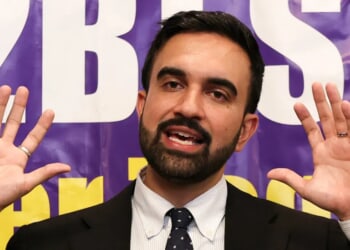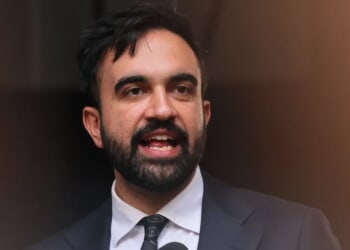
Speaking at a panel event hosted by the Demos think-tank, Liberal Democrat MP Max Wilkinson said that “social media…is making sure that you can have your voice heard in a really easy way that you couldn’t in the past”.
He went on to argue that this is a “massive problem”, because it allows members of the public to highlight problems with mass migration. For Wilkinson, the issue isn’t the impact that mass migration is having on our public finances, or the healthcare system, or our communities. It’s that people can now freely express and debate their concerns.
This approach is frighteningly common in our politics. Far too often, politicians have tried to make difficult problems go away by encouraging people not to talk about them. In some quarters, there seems to be a genuine belief that real-world problems are conjured into being when people talk about them, and that problems can be made to disappear if only people would just keep their concerns to themselves.
But that isn’t how the truth works. If something is true, then it remains true regardless of whether people are able to acknowledge it or not. In fact, failure to acknowledge the truth almost always makes problems worse.
That’s exactly what happened with the rape and grooming gangs, which operated with impunity across dozens of towns and cities for decades. Institutions like the police, local councils, and care homes refused to properly acknowledge or investigate the horrific abuse perpetrated by these gangs. In many cases, this is because they were unwilling to face difficult truths about the role that ethnicity, religion, and culture played in motivating these crimes.
The result is that thousands of children across the country were abused, trafficked, and raped. Failure to acknowledge the truth, and a desire to prevent other people from doing so, allowed people to get away with the some of the very worst crimes committed in this country in living memory.
And I fear that it’s exactly what’s happening with the Government’s approach to the twin threats of Islamist extremism and separatism. Last month, the Home Office published its so-called ‘social cohesion white paper’, which promised to address concerns about migration, culture, and extremism.
The report acknowledged that “for many living in the UK, the changes brought about by…migration have been too much, too quickly, and have put huge pressure on services and housing”. It also acknowledged the existence of “communities in the UK living segregated or parallel lives”.
Clearly, this is all true. As Kemi said last month in her speech on British integration, “for too long, Britain has been complacent about our culture and too tolerant of those weaponising identity politics for their own gain”.
Yet instead of confronting difficult realities about culture and religion, the report instead blamed the internet, and underplayed the role of Islamist extremism in particular, despite the fact that it represents by far the most serious extremist threat to our country.
The paper could have recommended a lower overall level of immigration, and a more selective migration system. It could have recommended curbing the pernicious family visa system, which so often results in chain migration from cultures with very different norms to our own. It could have recommended enforcing our country’s norms, or reforming our approach to Islamist terror networks.
Instead, the paper’s headline recommendation was the adoption of a “non-statutory definition of anti-Muslim hostility”, a rebranding of the Government’s plans for an Islamophobia definition.
As Nick Timothy and Claire Coutinho highlighted in their campaign against the definition, this guidance will make it harder for institutions like the civil service to have frank conversations about subjects like extremism, female genital mutilation, and the grooming gangs. If public officials fear being perceived as ‘anti-Muslim’, how can they be expected to carry out their jobs without fear or favour, and to acknowledge difficult truths?
And worse, the Government now plans to appoint a “Special Representative on anti-Muslim hostility’, meaning that they will employ a paid-up advocate for their new definition. It will be their job to spend all day, every day, condemning people, policies, or views that they consider to be ‘anti-Muslim’.
Under those conditions, how can we possibly have open, public conversations about the real threat posed by Islamist extremism, or separatism amongst certain groups? Once again, when confronted with difficult truths, this Government’s approach is to prevent people from acknowledging those truths, in the vain hope that suppressing discussion will alter reality.
Trying to solve a problem by encouraging people not to talk about it has never worked, and it never will. This cowardly approach must not form the basis for our approach to Islamist separatism and extremism. The stakes are far too high; we must not let the Government bury their heads in the sand, or force other people to do so.