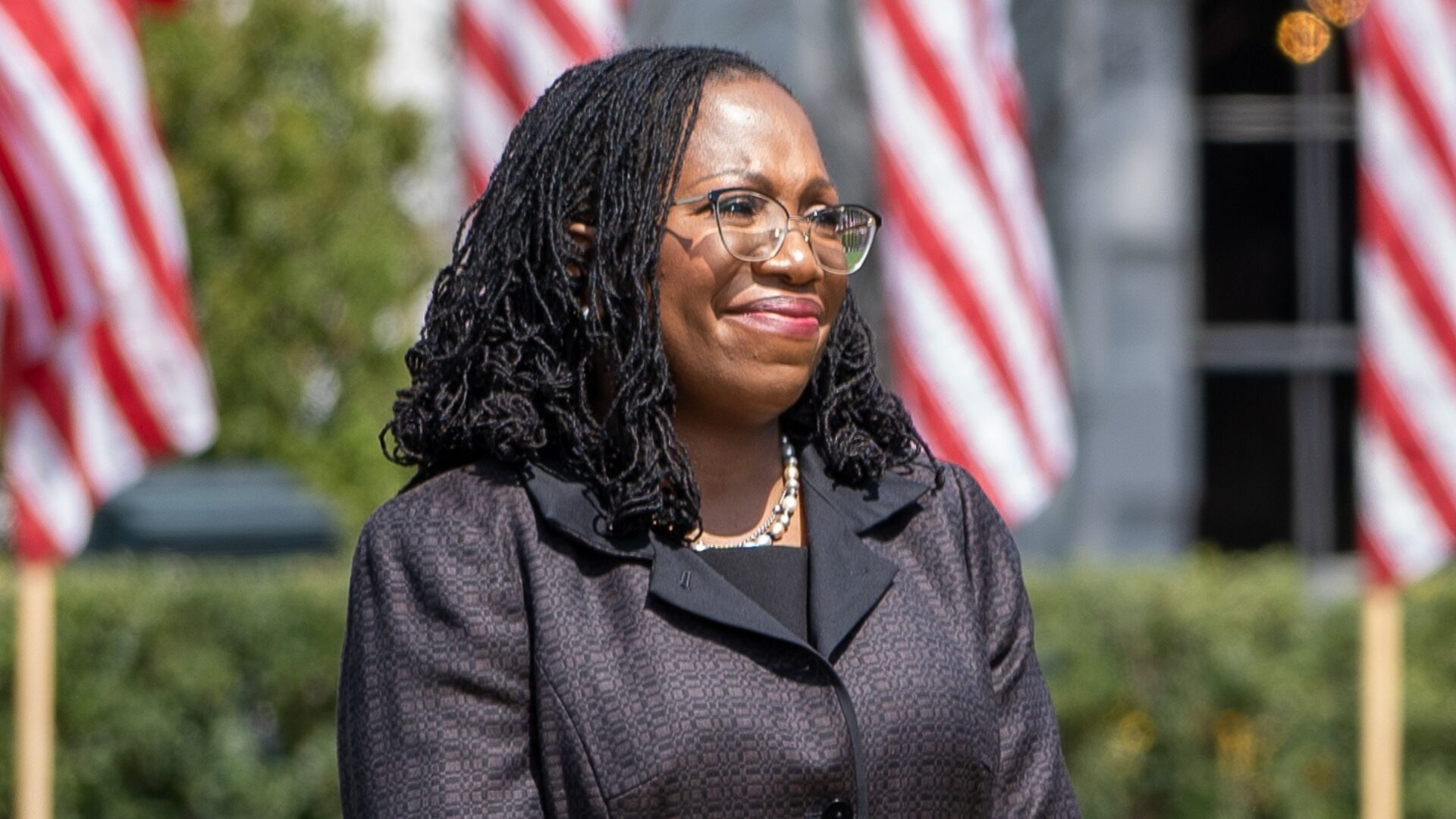
During oral arguments on Wednesday at the U.S. Supreme Court, Justice Ketanji Brown Jackson discussed the concept of “local allegiance” while considering whether children born in the United States to foreign nationals temporarily in the country should qualify for birthright citizenship, as reported by Breitbart.
The case, identified as Trump v. Barbara, centers on an executive order issued by President Donald Trump seeking to end automatic citizenship for U.S.-born children of illegal aliens and foreign tourists.
The issue before the court is whether that order is consistent with the Constitution.
Here’s What They’re Not Telling You About Your Retirement
During the proceedings, Jackson engaged in an exchange with Cecillia Wang, who argued that the executive order is unconstitutional.
Jackson raised questions about how allegiance is defined under the law and whether it could apply to individuals present in the United States on a temporary basis.
“I was thinking about this, and I think there are various sources that say this, that you can have — you obviously have permanent allegiance based on being born in whatever country you’re from, that’s what everyone recognizes,” Jackson said.
“But you also have local allegiance when you are on the soil of this other sovereign.”
This Could Be the Most Important Video Gun Owners Watch All Year
Jackson continued by offering a hypothetical example involving international travel.
“And I was thinking, I, U.S. citizen, am visiting Japan, and what it means is that, if I steal someone’s wallet in Japan, the Japanese authorities can arrest me and prosecute me. It’s allegiance meaning, can they control you as a matter of law? I can also rely on them if my wallet is stolen, under Japanese law go and prosecute the person who has stolen it. So there’s this relationship, even though I’m a temporary traveler, I’m just on vacation in Japan, I’m still locally owing allegiance in that sense.”
The remarks came as the court considers how the Fourteenth Amendment to the United States Constitution applies to children born on U.S. soil to parents who are not permanent residents or citizens.
The amendment states that all persons born or naturalized in the United States, and subject to its jurisdiction, are citizens.
The executive order at issue seeks to reinterpret that language, arguing that individuals in the country unlawfully or temporarily are not fully subject to U.S. jurisdiction in the way required for automatic citizenship to apply to their children.
The American Civil Liberties Union, represented in part by Wang, has challenged the order, arguing that the longstanding interpretation of the Fourteenth Amendment supports birthright citizenship regardless of parental status.
The case also raises questions that have not been directly resolved by the Supreme Court.
While the concept of birthright citizenship has been recognized in prior rulings, the court has not explicitly addressed whether it applies to children born to illegal aliens or foreign tourists in the United States.
Estimates cited during the broader public debate suggest that approximately 250,000 children are born each year in the United States to illegal aliens and foreign tourists.
The issue has been a subject of ongoing legal and political discussion, particularly in relation to immigration policy and constitutional interpretation.
Legal scholars remain divided on whether the original intent of the Fourteenth Amendment included extending automatic citizenship to children born under such circumstances, a question that remains central to the case now before the court.
The opinions expressed by contributors and/or content partners are their own and do not necessarily reflect the views of LifeZette. Contact us for guidelines on submitting your own commentary.


![Kamala Comes Unglued, Makes Bogus Claim About Her Landslide Loss to Trump [WATCH]](https://www.right2024.com/wp-content/uploads/2025/10/Kamala-Comes-Unglued-Makes-Bogus-Claim-About-Her-Landslide-Loss-350x250.jpg)