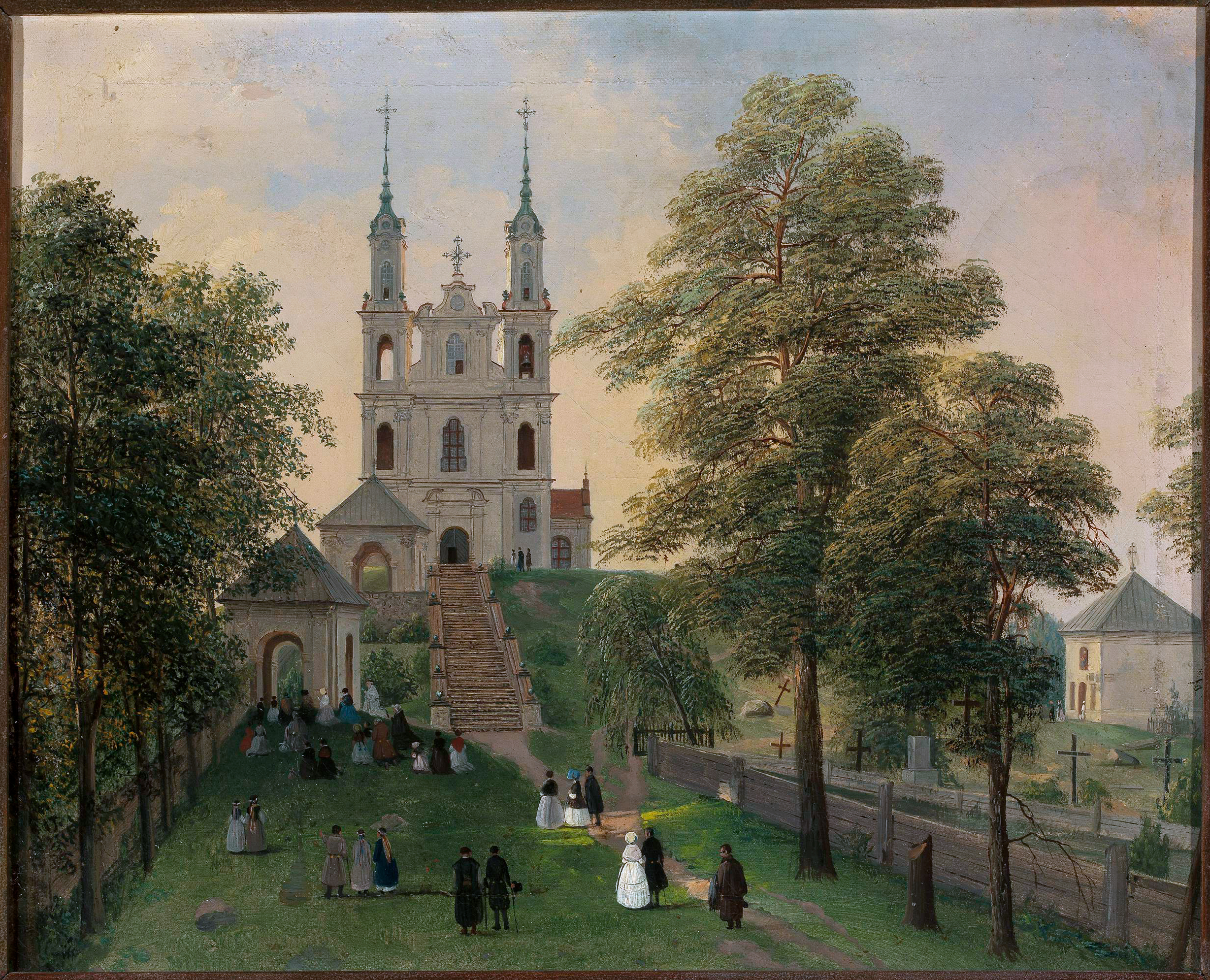
VILNIUS, Lithuania — On the northern edge of Lithuania’s capital, pilgrims walk a 7-kilometer (4.3-mile) route known as Vilnius Calvary, a landscape of chapels, gates, hills, and a small bridge designed to reflect the topography and distances of Jerusalem’s Way of the Cross.
At the center of the route stands the Church of the Discovery of the Holy Cross, located in the city’s Jeruzalė (Jerusalem) neighborhood. Unlike the familiar 14 Stations of the Cross found in many Catholic parishes, Vilnius Calvary leads pilgrims through 35 stations, making it one of Europe’s largest outdoor Stations of the Cross ensembles.
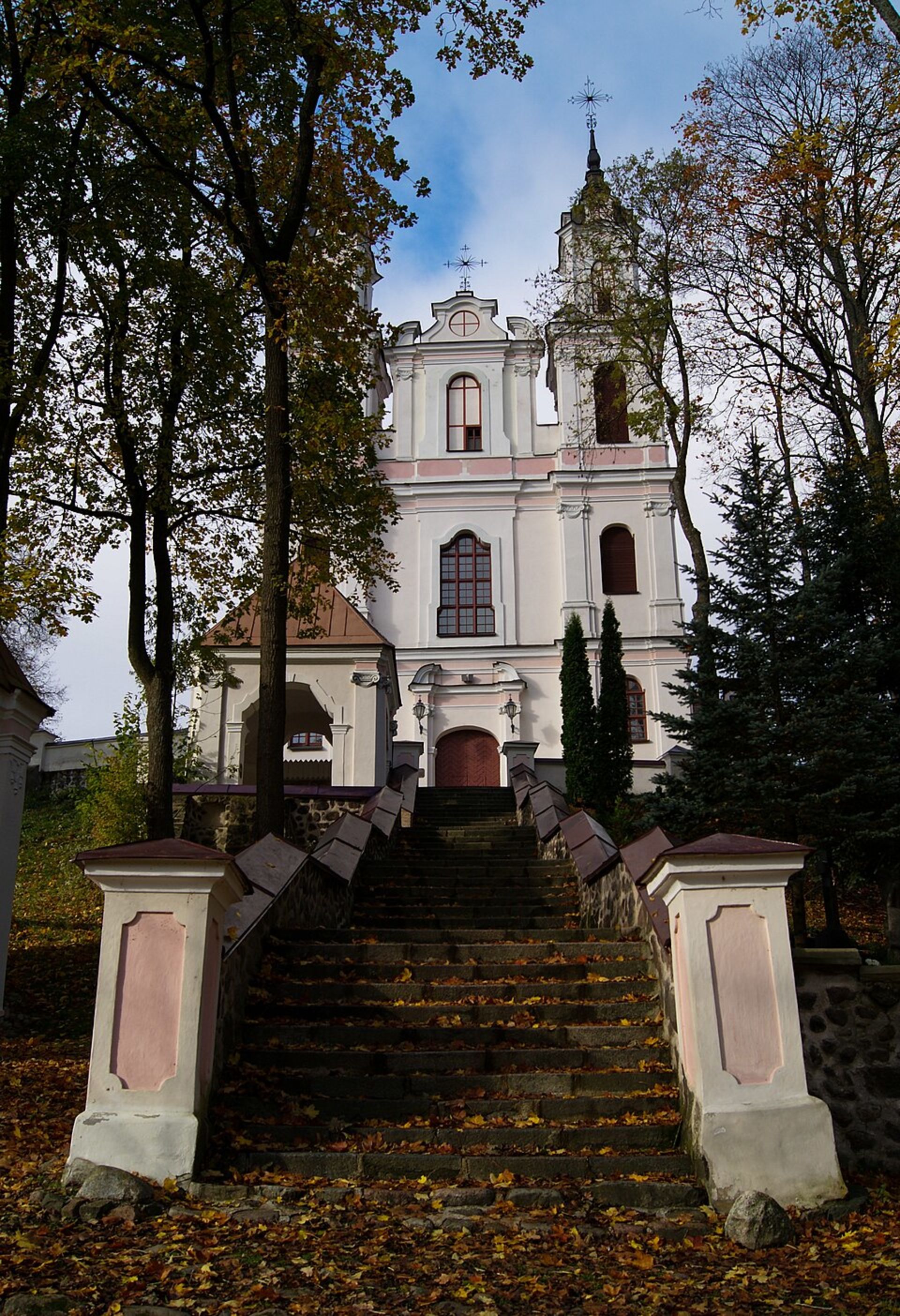
The Church of the Discovery of the Holy Cross stands at the center of the Vilnius Calvary pilgrimage route in the Jeruzalė neighborhood of Vilnius, Lithuania. | Credit: Guillaume Speurt/Wikimedia Commons
A Lithuanian ‘Jerusalem’ built for pilgrims
The devotion of the Stations of the Cross, strongly promoted across Europe through Franciscan tradition, developed in part as a spiritual alternative for Christians unable to make the long, costly, and dangerous journey to the Holy Land.
Vilnius Calvary gave that tradition a local form by integrating prayer with geography: Pilgrims walk a route laid across hills and valleys, with places bearing biblical names creating a pilgrimage experience shaped by movement as well as meditation.
In practice, planners modeled the route using pilgrimage accounts, devotional guides, early maps of Jerusalem, and traditions preserved by the Franciscans, who long served as custodians of holy sites in the Holy Land. These descriptions were then adapted to Vilnius’ natural landscape so that pilgrims could experience the Via Dolorosa not only through prayer but also through the physical rhythm of walking, ascent, and pause.
Founded in gratitude
Vilnius Calvary took shape in the late 17th century following the wars that brought severe destruction to Vilnius and the surrounding region. At the time, Vilnius belonged to the Polish-Lithuanian Commonwealth and was seized during the mid-1600s conflicts involving Muscovite (tsarist Russian) forces. Lithuanian forces and their allies later recaptured the city, and Church leaders established the Calvary as a public act of thanksgiving for the restoration of the capital.
The project was initiated by Vilnius Bishop Jurgis Bialozoras, who allocated roughly 140 hectares of land from his Verkiai Manor estate to build a church, various chapels, and the pilgrimage path. The area was chosen because its terrain allowed for a symbolic “Jerusalem” in Lithuania: Hills were assigned biblical names such as Golgotha, Zion, and the Mount of Olives, while a nearby stream recalled the Kidron Valley.
The church and the Way of the Cross were solemnly consecrated on June 9, 1669, on the feast of Pentecost.
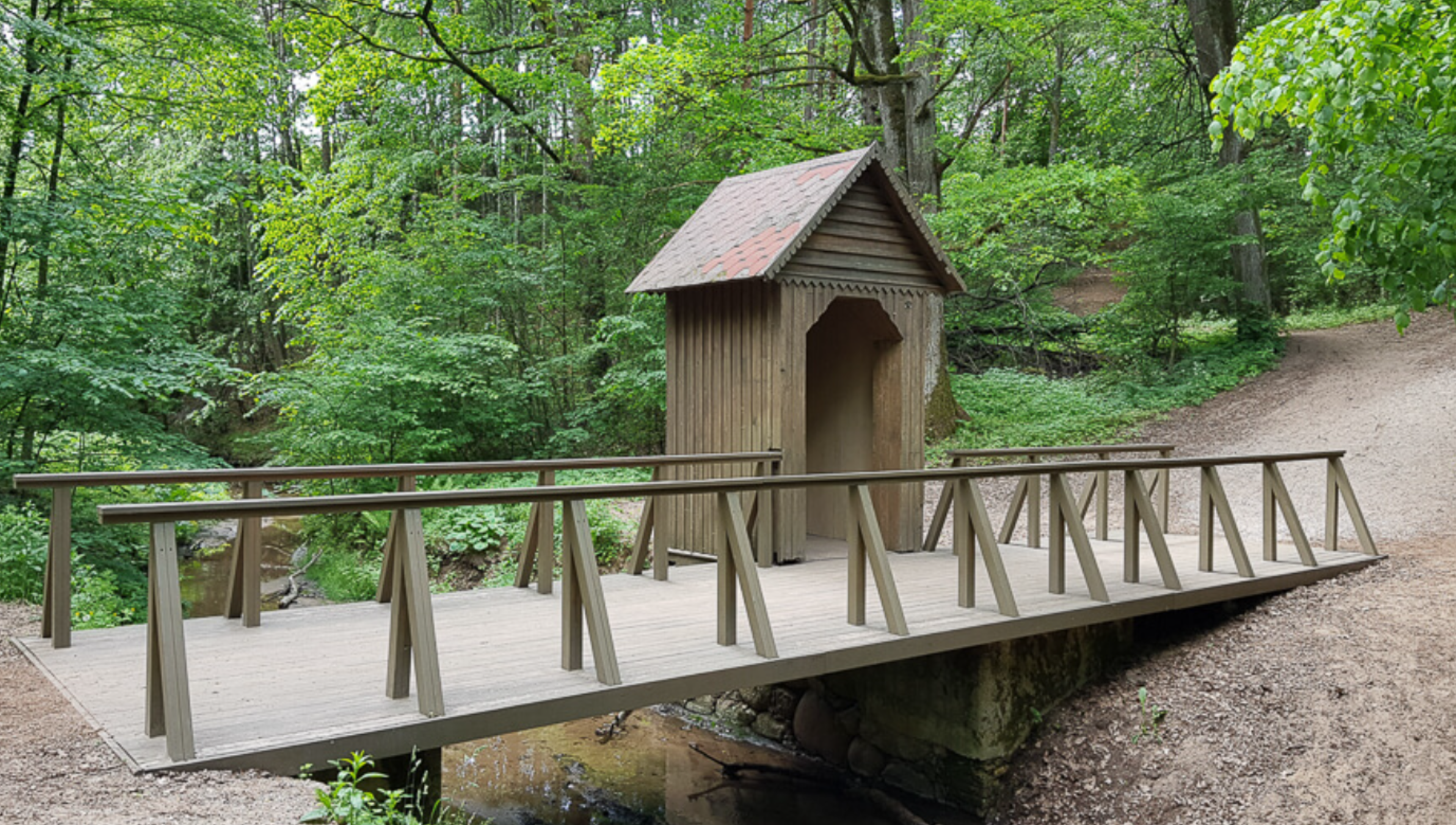
Christ by the Brook Kidron, the fifth station of the Vilnius Calvary Way of the Cross in Vilnius, Lithuania. | Credit: Vilnius Calvary Parish
Why 35 stations of the cross?
The 35-station structure reflects an older “Passion route” tradition in which the devotion extends beyond the standard 14 stations. In such traditions, the pilgrimage includes additional moments associated with Christ’s final hours as well as devotional scenes linked to the Church’s meditation on the Passion.
In Vilnius Calvary, the route begins not with Christ’s condemnation but reaches back to earlier moments of the Passion, including the Last Supper, Christ’s journey toward the Mount of Olives, and his interrogation before Annas and Caiaphas.
The pilgrimage then continues through the later stages of the Passion and extends beyond the Crucifixion. It also draws meaning from the church’s title, the Discovery of the Holy Cross, linking the devotion not only to Christ’s suffering but also to the Church’s proclamation of the cross as the source of salvation.
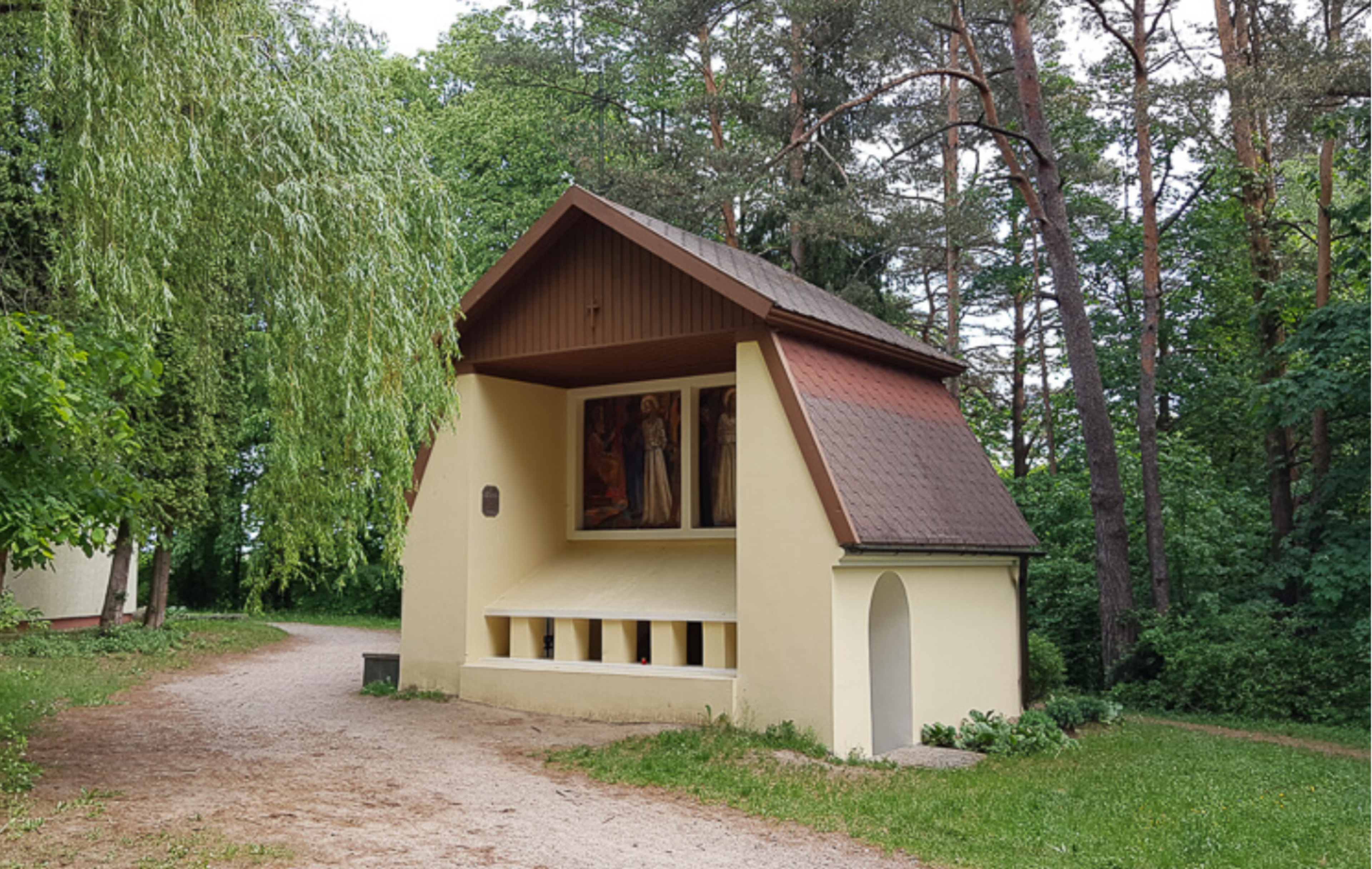
Christ’s first visit to Caiaphas, the ninth station of the Vilnius Calvary Way of the Cross in Vilnius, Lithuania. | Credit: Vilnius Calvary Parish
Destruction and rebuilding
For centuries, Vilnius Calvary served as a major site of popular devotion, especially at Pentecost, when large crowds traditionally gathered for prayer and preaching along the route.
The site was damaged during the Napoleonic Wars, when French forces occupied the Verkiai forest area and used the church as a barracks and a hospital. Some chapels were damaged, and the church was plundered during the army’s retreat following their failed invasion of Russia.
The most severe destruction came under Soviet rule. In 1962, communist authorities demolished most of the chapels, leaving only a small number of structures nearest the church intact.
After Lithuania regained independence in 1990, reconstruction began. The restored chapels were solemnly blessed again at Pentecost in 2002. Over roughly a decade, the ensemble was rebuilt with 16 masonry chapels, seven wooden gates, one masonry gate, and a bridge structure, restoring the route as a full pilgrimage path.
The church at the center of the pilgrimage
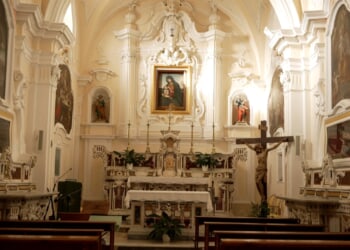
The Church of the Discovery of the Holy Cross is not simply a landmark along the route. It is also the spiritual center of the ensemble and the culmination of the pilgrimage. Its position on a high hill is intended to correspond symbolically to Golgotha, and the main altar, dedicated to the crucified Christ, is treated as the central devotional point of the Way of the Cross.
The church also contains an 18th-century silver gilded reliquary containing a relic of the holy cross, which is decorated with rhinestones.
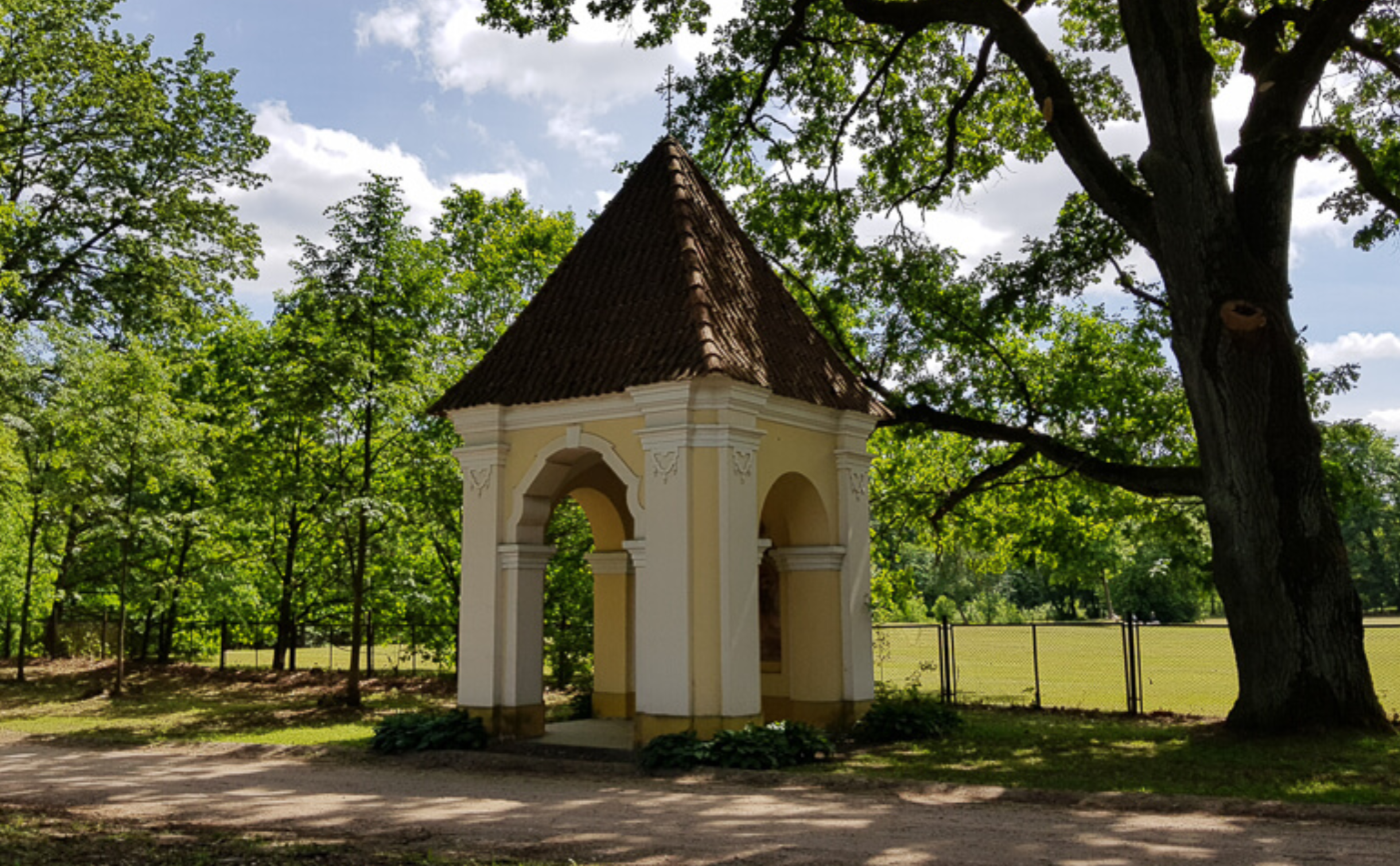
Jesus comforting the weeping women, the 28th station of the Vilnius Calvary Way of the Cross in Vilnius, Lithuania. | Credit: Vilnius Calvary Parish
A living devotion in modern Vilnius
Vilnius Calvary remains active as a place of prayer. The route is used throughout the year for organized Stations of the Cross, including regular Friday devotions and monthly pilgrimages. The Secular Franciscans in Vilnius also unite their prayer with the Franciscans in Jerusalem, reflecting the devotion’s historical connection to the Holy Land.
Elzbieta Uckuronyte, a lifelong parishioner at the church, told EWTN News that the Stations of the Cross at Vilnius Calvary had become deeply personal to her over time.
“The first time I went, I didn’t fully understand it,” she said. “But as my faith has grown, I’ve come to see the value in the discomfort — kneeling on stones, walking in rain or snow, crossing hills and streams. It isn’t easy, but it reflects the hardship Christ endured, and there is a quiet beauty in that.”
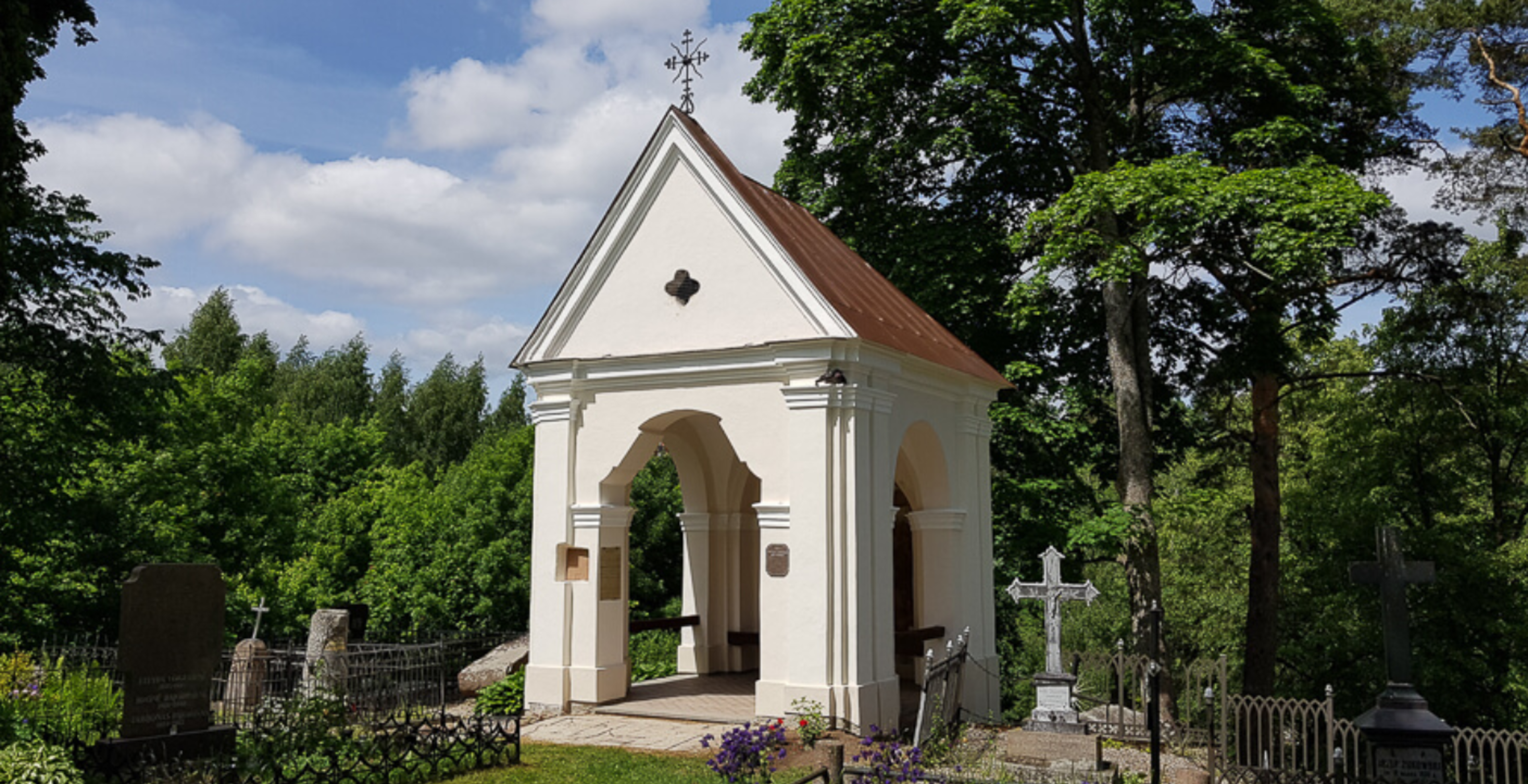
The discovery of the holy cross, the 35th and final station of the Vilnius Calvary Way of the Cross in Vilnius, Lithuania. | Credit: Vilnius Calvary Parish
For many pilgrims, Vilnius Calvary offers something rare in a modern European capital: a sustained Passion pilgrimage shaped not only by texts and stations but also by distance, landscape, and public religious memory.