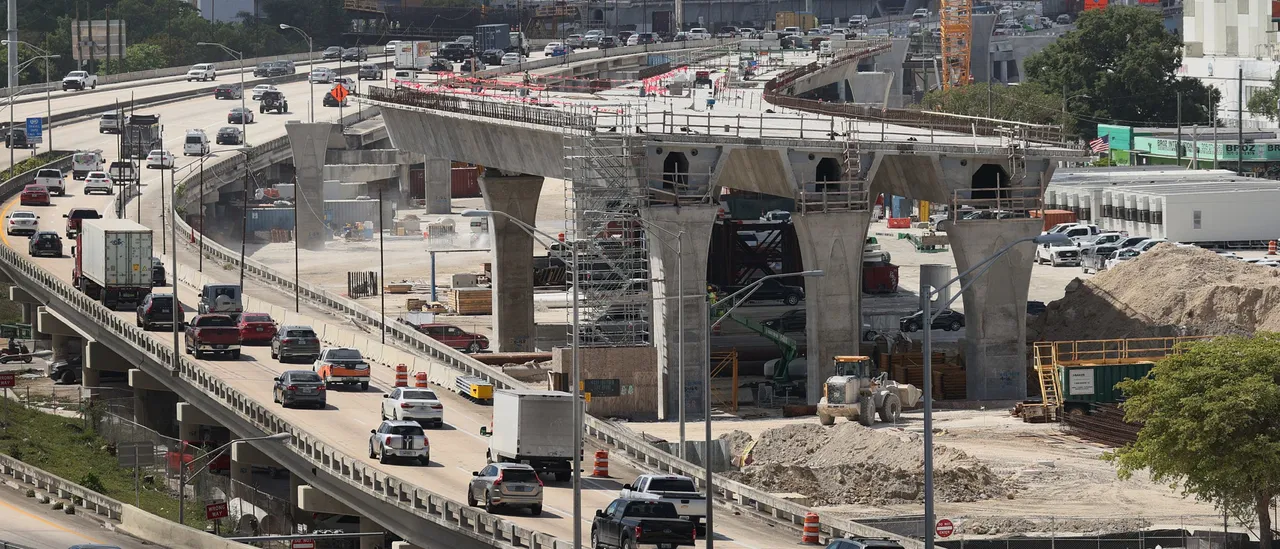
Warning signs are flashing for America’s already-decaying highway infrastructure as a key transportation fund quickly runs out of cash.
The Highway Trust Fund (HTF), which funds roads, bridges, and public transit, is set to be exhausted by 2028, according to a letter authored by more than 100 policy experts and economists and sent to Congress. If the HTF were depleted, highway and transportation funding would face a 46% cut, resulting in project freezes and payment delays and forcing states to fund projects themselves, leading to tax increases on their residents. (RELATED: Republicans Rebrand Trump’s Big Beautiful Bill Ahead Of Midterms)
“The gas tax and diesel tax … are no longer a sufficient source of funding for the Trust Fund,” a spokesperson for Republican Missouri Rep. Sam Graves, who heads the House Transportation and Infrastructure Committee, told the Daily Caller News Foundation. “More vehicles are using less gas — or no gas, in the case of EVs — so not everyone is paying their fair share for the use of the roads.”
The spokesperson added that the Highway Trust Fund has exceeded revenues since 2001 and relied on “user pay” since its founding, but the model is becoming increasingly strained.
“Our transportation systems are critical to our national security, economy, and way of life,” A spokesperson for Republican North Carolina Rep. David Rouzer, chairman of the House Highways and Transit Subcommittee, told the DCNF. “As vehicles have become more fuel efficient — or, in the case of EVs, do not pay any gas tax at all — it is important to identify new sources of funding that are fair to all users and sustainable long-term.”
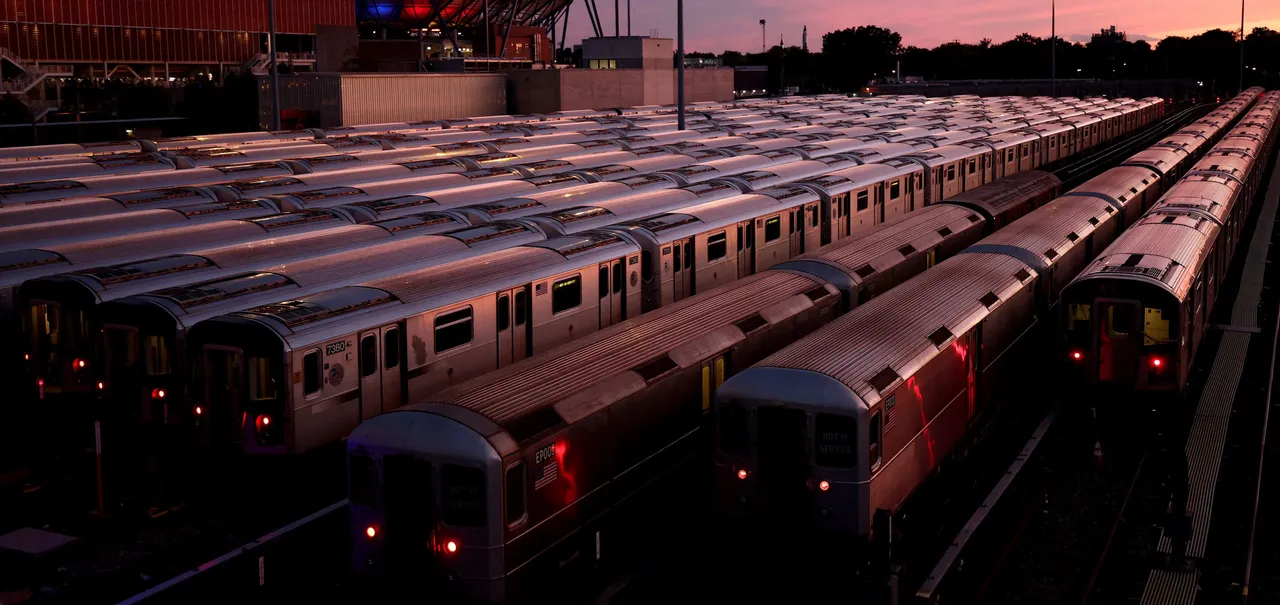
NEW YORK, NEW YORK – AUGUST 31: A general view of the MTA 7 train in a yard outside of Arthur Ashe and Louis Armstrong Stadium on Day Eight of the 2025 US Open at USTA Billie Jean King National Tennis Center on August 31, 2025 in the Flushing neighborhood of the Queens borough of New York City. (Photo by Maddie Meyer/Getty Images)
‘Critical’
The Bipartisan Infrastructure Law (BIL), which provides roughly $383 Billion to the HTF, is set to expire sometime in 2026. Lawmakers are working on reauthorizing the BIL this year, though it’s unlikely, and a short-term extension of the bill may be coming to give Congress more time to address the HTF, according to Politico.
The letter promotes several solutions, such as the “user pay” model, where drivers and riders pay taxes that go to construction and repairs, mileage-based fees for drivers, and improving price sensitivity by aligning fees paid by a driver more closely with the vehicle type, for example, a commercial vehicle versus a sedan.
“We respectfully urge Congress to take practical, incremental steps in the upcoming transportation legislation to put the Highway Trust Fund (HTF) on a stable and sustainable path,” the letter states.
In 2021, a record-breaking $1.2 trillion infrastructure bill was signed into law by former President Joe Biden, aimed at rebuilding infrastructure and expanding internet access, with little results 5 years later. Around $42 billion was earmarked to provide internet to those in rural areas, but the project failed to launch a single project or connect a single user.
The 2025 Report Card for America’s Infrastructure gave roads a “D+,” a small increase from the previous “D” grade in 2021.
The Nation’s Highways, Bridges and Transit report by the Department of Transportation cited poor ride quality worsened from a 2008-2018 period (rising from 15.8 percent to 22.6 percent).
The HTF currently relies heavily on the gas tax, which accounts for 91% of all revenue deposited into the fund. The tax rate, which currently sits at 18.4 cents per gallon, has remained unchanged since 1993.
Fewer Americans are also paying into the system as electric vehicles grow in popularity.
Graves previously supported a proposal to impose a $250 annual fee on electric vehicles and a $100 fee on hybrids as part of the One Big Beautiful Bill Act, though the measure was not included in the final legislative text.
Foreign attacks could also harm GPS systems used to provide drivers with navigation and positioning, the letter warns. It also suggests ending dependence on Chinese-made batteries for electric vehicles and charging stations due to security threats.
“A GPS outage would cost billions of dollars daily.” The letter to Congress states. “Cars driven in America should carry GPS backup systems tested by the US Department of Transportation.”
Infrastructure is far more expensive than it should be due to regulatory burdens that lead to delays, experts wrote. Layered regulations require projects to comply with federal, state, and local requirements, leading to overlap. A large urban project could face an average delay of 11 months and $5.1 million in additional economic costs, according to a 2011 Texas Transportation Institute study.
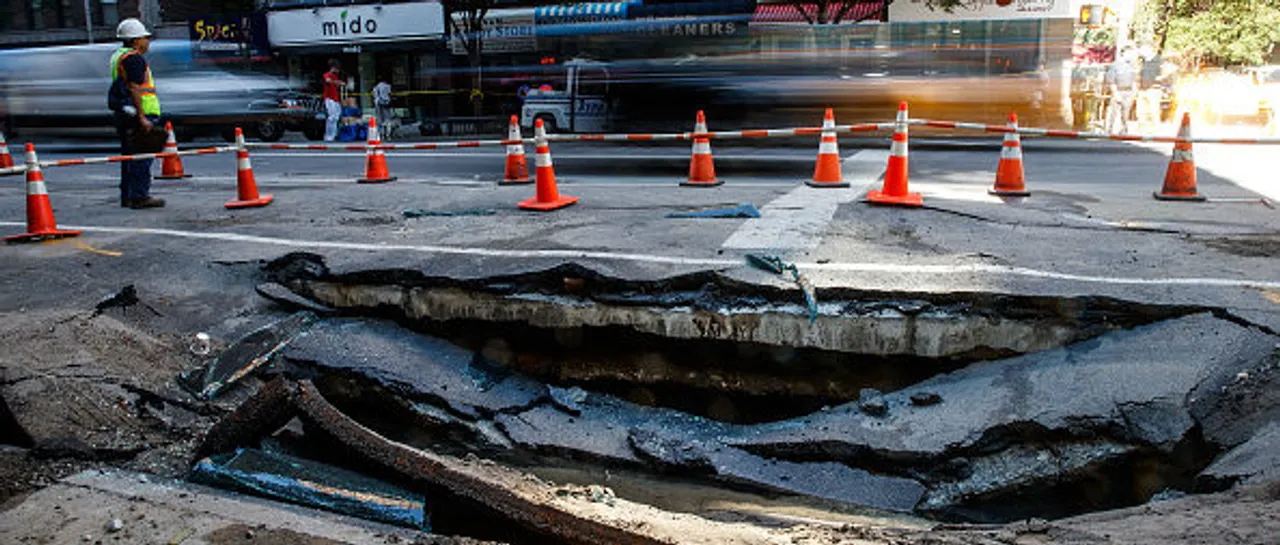
NEW YORK, NY – AUGUST 30: Traffic passes by a sinkhole caused by a water main break on Amsterdam Avenue, in the Upper West Side section of Manhatten, August 30, 2016 in New York City. Water started flowing Monday night from a broken pipe and crews continued with repairs on Tuesday morning. (Photo by Drew Angerer/Getty Images)
Fixing the trust fund is not “urgent quite yet,” Senior Fellow for the Eno Center for Transportation Jeff Davis told DCNF, although he noted that the fund will be depleted by 2027 or 2028.
“The Mass Transit Account of the Trust Fund will run out of money late in fiscal year 2027, and the much larger Highway Account will run out of money the following year,” Davis said, citing Congressional Budget Office projections. “Once the Trust Fund runs out of money, FHWA and FTA can’t make reimbursements. They have to wait for new estimated tax receipts to be transferred to the Trust Fund.”
Davis warned that some states will face cash-management issues, and eventually state highway departments and transit agencies may shut down if they no longer receive funding from the FHWA and FTA.
The CBO recently increased the HTF revenue projections by $82 billion over the 2026-2035 period due to increased future fuel needs, following the elimination of penalties for noncompliance with fuel economy standards in the One Big Beautiful Bill (OBBB). Shrinking the deficit from $410 billion to $340 billion.




![Kamala Comes Unglued, Makes Bogus Claim About Her Landslide Loss to Trump [WATCH]](https://www.right2024.com/wp-content/uploads/2025/10/Kamala-Comes-Unglued-Makes-Bogus-Claim-About-Her-Landslide-Loss-350x250.jpg)




![CNN's Kaitlan Collins Fact-Checks Rep. Jasmine Crockett Over False Trump Ballroom Claim [WATCH]](https://www.right2024.com/wp-content/uploads/2025/10/1761954330_CNNs-Kaitlan-Collins-Fact-Checks-Rep-Jasmine-Crockett-Over-False-Trump-350x250.jpg)