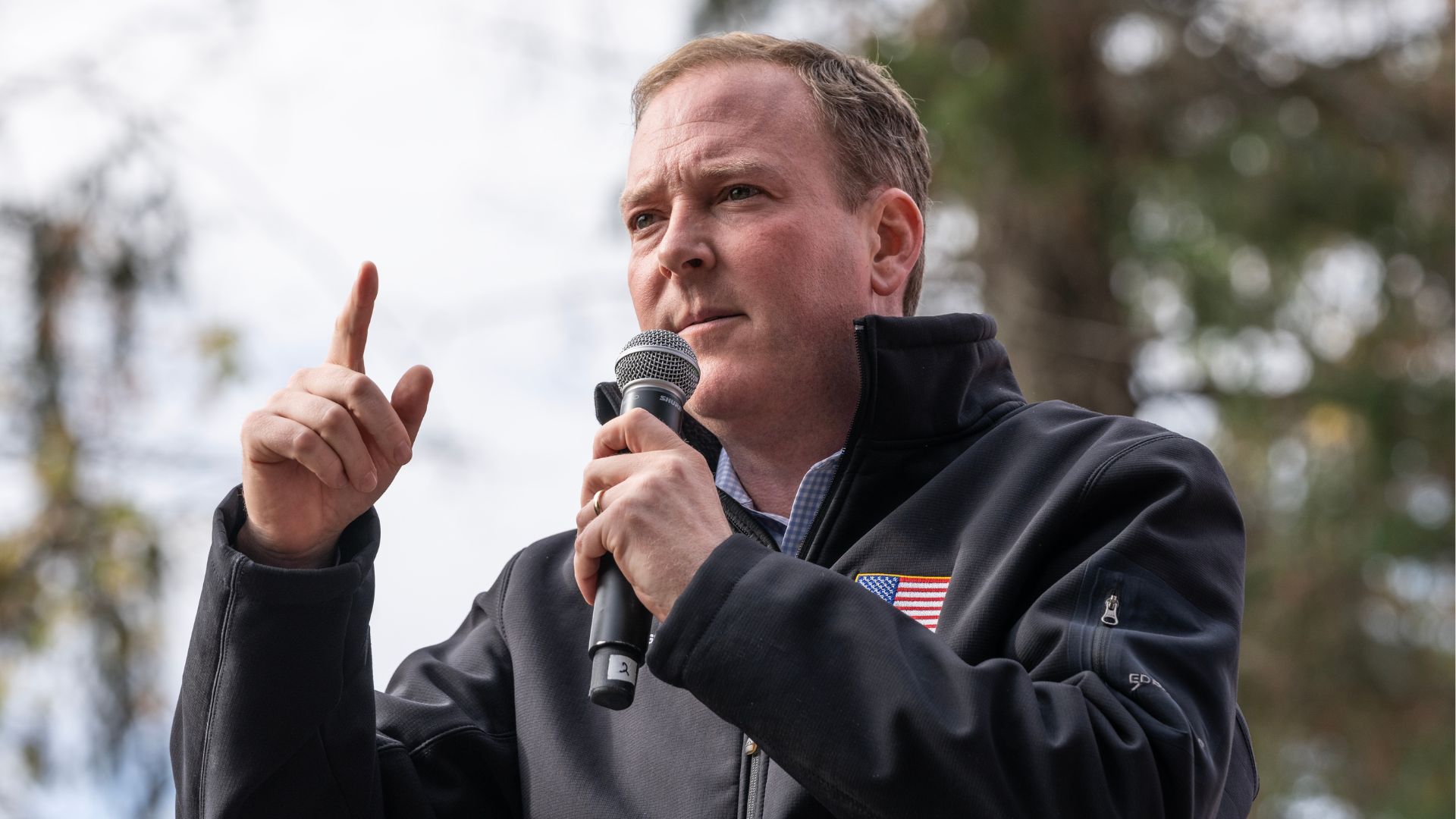
The exchange centered on the legal and scientific basis for the original 2009 finding, as well as the authority of federal agencies to regulate greenhouse gas emissions under existing law.
“I do want to start with the fundamental question that’s at the heart of all this,” Hunt said. “I mean, do you accept the overwhelming scientific consensus that these greenhouse gas emissions are the biggest drivers of man made climate change?”
Zeldin responded by first addressing how the issue has been presented publicly.
Here’s What They’re Not Telling You About Your Retirement
“Well, it’s great to be on with you,” he said. “First, it’s worth pointing out that all eight or so images that you just posted on the screen have nothing to do with this week’s announcement.”
He continued, “What was the 2009 endangerment finding had to do with was with regards to mobile sources vehicles. This week’s proposal to rescind the 2009 endangerment finding was with regards to mobile sources vehicles.”
Zeldin also addressed how media coverage has portrayed the issue.
“CNN has been using a lot of photos where they show smoke stacks of stationary sources like power plants,” he said. “That’s not what we proposed.”
This Could Be the Most Important Video Gun Owners Watch All Year
Turning to the scientific basis cited in 2009, Zeldin described how the original finding relied on a range of projections.
“Now going back to 2009 the science that they were reviewing included both optimistic to pessimistic scenarios,” he said. “To reach the 2009 endangerment finding, they relied on the most pessimistic views of the science.”
He added, “The great news is that a lot of the pessimistic views of the science, in 2009 that was being assumed ended up not panning out.”
“Hey, that’s great,” Zeldin said. “We can rely on two 2025 facts, as opposed to 22,009 bad assumptions.”
Zeldin then shifted to the legal framework governing the EPA’s authority.
“The other thing too is that at EPA, we don’t just get to creatively make the law whatever we want it to be,” he said.
He cited recent Supreme Court decisions.
“The Supreme Court ruled in Loper bright overturning the chevron doctrine in West Virginia versus EPA, Michigan versus EPA, that agencies like the EPA can’t just use vague language in statute and try to make it be whatever we want it to be,” Zeldin said.
He continued, “The major policy doctrine also says that when you’re going to reach something like an endangerment finding and then have trillions of dollars of regulation, that’s something that should be decided by our elected members of Congress in passing statute.”
Zeldin also addressed how the 2009 finding characterized carbon dioxide.
“And if you don’t mind the 2009 endangerment finding while it’s simply summed up now, is saying carbon dioxide endangers public health and welfare,” he said.
He added, “That’s not what they did back in 2009 they had a lot of mental leaps.”
“They say carbon dioxide when mixed with a whole bunch of other well mixed gasses, gasses, in some cases not even emitted from mobile sources,” Zeldin said. “They say that that contributes to global climate change.”
He continued, “Doesn’t say causes contributes? How much they don’t say, but it’s north of zero, not much more than zero.”
Hunt followed up by questioning Zeldin’s position.
“So you’re sounding pretty skeptical of this overall scientific consensus that these greenhouse gas emissions are the overwhelming man made climate change driver,” she said.
Zeldin rejected that characterization.
“That might be your way to to try to twist my words,” he said. “But what I’m saying is, is that we get our power at EPA from what the law states.”
He reiterated the agency’s position on statutory limits.
“And the Supreme Court in recent cases have been very clear,” Zeldin said.
“So what I was just describing with all the mental leaps used in the 2009 endangerment finding, section 202 of the Clean Air Act doesn’t allow all of these different mental leaps, as the Supreme Court made clear in recent years,” he said.
Zeldin concluded by emphasizing that future action depends on Congress.
“So I’m not going to get creative with the law,” he said. “We’re going to read the plain language.”
“And if section 202 of the Clean Air Act gets amended by Congress, then we’ll follow that new law,” Zeldin added.
WATCH:








![Kamala Comes Unglued, Makes Bogus Claim About Her Landslide Loss to Trump [WATCH]](https://www.right2024.com/wp-content/uploads/2025/10/Kamala-Comes-Unglued-Makes-Bogus-Claim-About-Her-Landslide-Loss-350x250.jpg)