On the heels of his first apostolic visit of 2026 to Monaco on March 28 and after presiding over Holy Week and Easter events and celebrations, Pope Leo XIV is making final preparations for his 10-day papal visit to four countries in Africa from April 13–23.
The pontiffʼs first apostolic trip to Africa comes at a time when the continent accounts for about 20% of Catholics worldwide and is experiencing significant growth in priestly vocations.
Here are nine important facts to know about Pope Leo XIV’s trip to Africa:
1. The pope will visit four countries and 11 cities in 10 days.
Pope Leo will spend 10 days in Africa and will visit four countries: Algeria, Cameroon, Angola, and Equatorial Guinea, with stops in 11 cities across those nations. The Vatican estimates he will travel more than 11,000 miles on 18 separate flights during this single trip, underscoring how demanding modern papal travel has become.
Leo will celebrate eight public Masses and deliver 24 speeches and homilies during the visit. He is expected to speak French in Algeria and Cameroon, Portuguese in Angola, and Spanish in Equatorial Guinea as well as English throughout the trip.
2. He follows in the footsteps of other modern popes.
This is Pope Leo’s third international trip and his first apostolic journey to Africa — taking place less than a year after his election.
In his 12 years of pontificate, Pope Francis made five trips to Africa and visited 10 countries. Benedict XVI made two apostolic trips, visiting three countries, and Pope John Paul II made 11 trips to Africa, visiting 41 countries during his 26‑year pontificate.
Pope Paul VI was the first reigning pope ever to visit Africa when he traveled to Uganda from July 31 to Aug. 2, 1969.
3. Pope Leoʼs polyglot talent will be on full display.
Pope Leo speaks English, Spanish, Italian, French, and Portuguese, and he can read Latin and German, which makes it very likely he will use several of these languages during his visit. It is also likely that Arabic will appear in greetings or prepared texts.
According to ACI Africa, the sister service of EWTN News in Africa, the popeʼs Africa itinerary will showcase the main languages of the four host countries: Arabic and French in Algeria, English and French in Cameroon, Portuguese in Angola, and Spanish in Equatorial Guinea, which is the only African country that has Spanish as its official language.
4. This is the first-ever papal visit to Algeria.
Pope Leo will become the first pope in history to visit Algeria, the largest African country and where Islam is the state religion. Algeria has roughly 45 million to 48 million people, but only a few thousand Catholics — often estimated at no more than 10,000, a fraction of 1%. Most Catholics are expatriates, sub-Saharan African students, migrant workers, diplomats, and religious.
5. The visit will highlight the popeʼs Augustine connection.
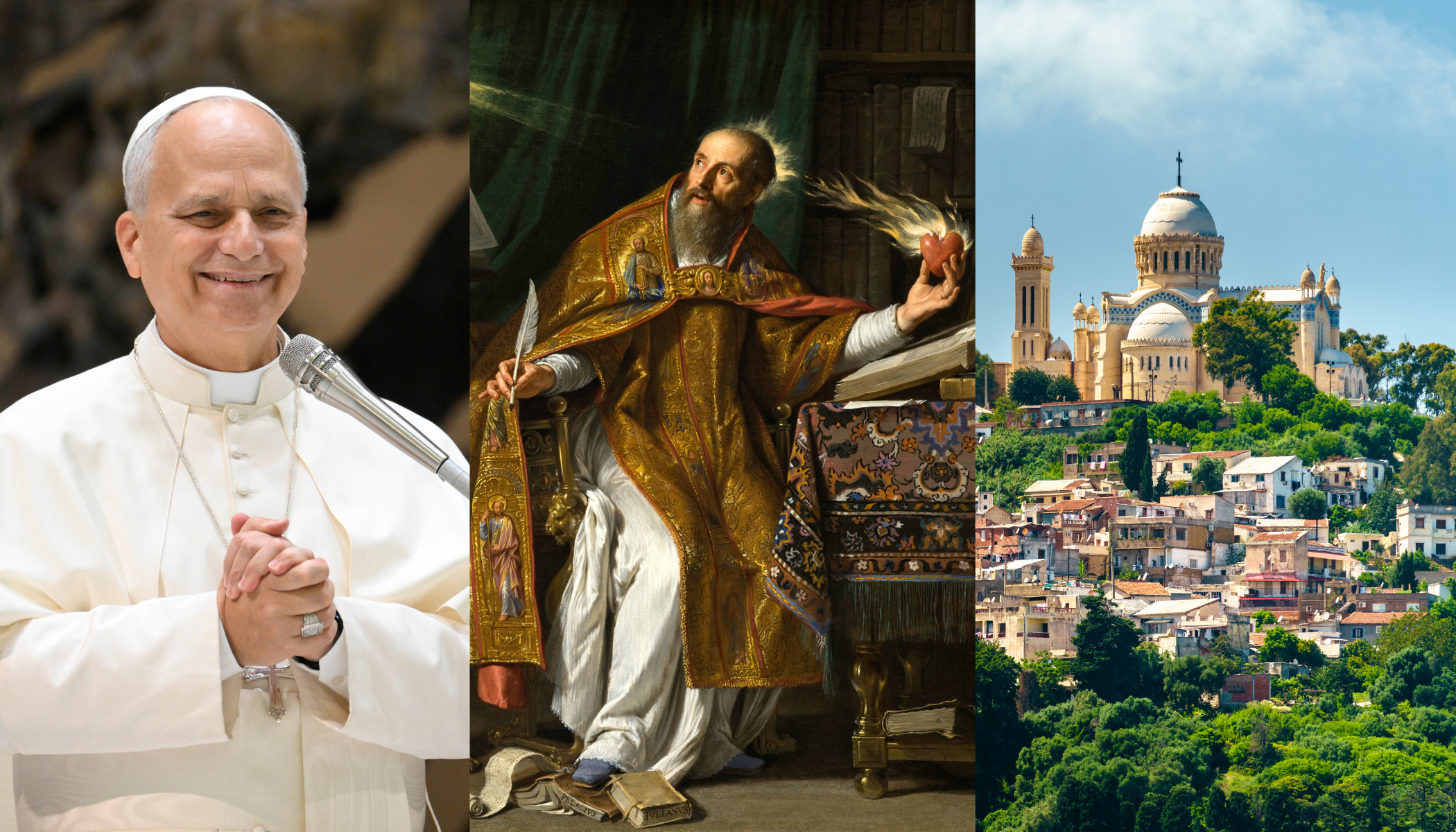
The Algerian leg of the journey intentionally traces the footsteps of St. Augustine of Hippo, connecting Pope Leo’s trip to one of the most influential doctors of the Church who lived and died in North Africa.
He will visit Annaba, a place that underlines his personal devotion to St. Augustine and his Augustinian identity. While there, he will visit the archaeological site of Hippo, meet Augustinian religious, and celebrate Mass in the Basilica of St. Augustine, which makes this first leg of the trip a kind of pilgrimage to his “father” in faith, echoing his own description of himself as “a son of St. Augustine.”
6. The pope will visit a mosque for the second time.
In Algiers, the pope is scheduled to visit the Great Mosque of Algiers — one of the largest mosques in the world — as a concrete gesture of interreligious dialogue. This will be his second visit to a mosque as a pope. He visited the Sultan Ahmed (Blue) Mosque in Istanbul, Turkey, during his first international trip in November 2025.
7. His journey will be marked by works of mercy.
Throughout the pope’s papal visit to Africa there will be several encounters that explicitly highlight the Church’s works of mercy. These include the popeʼs plan to visit an orphanage and a hospital in Cameroon, a nursing home in Angola, the Little Sisters of the Poor in Algeria, and a psychiatric hospital and prison in Equatorial Guinea.
8. A record-breaking rosary is expected to take place in Angola.
In Angola, local authorities expect to host a record-breaking event at the Shrine of Our Lady of the Conception of Muxima, a Marian shrine in Angola’s Diocese of Viana and one of the country’s most important pilgrimage sites. The pope will lead a public rosary where roughly 2 million pilgrims are expected to attend.
Additionally, this will be the first time a pope visits the Muxima shrine since its founding in 1599.
9. The trip will end with a visit to one of Africaʼs smallest countries — Equatorial Guinea.
The last leg of the pope’s trip will be to Equatorial Guinea. One of the smallest countries of Africa, it’s similar in size to the state of Maryland. In this country nearly 90% of the population is Catholic, making it one of the most heavily Catholic nations on the African continent.
The small nation is welcoming a pope after 44 years. Pope John Paul II visited Equatorial Guinea in 1982.
Pope Leo plans to visit Bata Prison, a facility criticized internationally for its conditions, signaling a clear concern for prisoners and human rights.
He will also pray at a monument for the victims of the Bata explosions, a disaster that killed about 100 people and injured 500, bringing a strong message of consolation and remembrance.