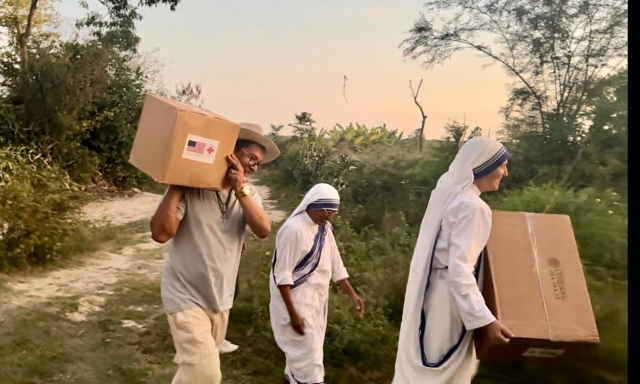
As political tension between the United States and Cuba intensifies, the Catholic Church is providing an opportunity for greater solidarity between the two nations.
Caritas Cuba and Catholic Relief Services (CRS) have been key players in dispersing U.S. government aid throughout Cuba, which may be a testament to the Church’s international reputation for trustworthiness but also highlights the strong ties between south Florida and Cuba.
Even before the U.S. arrest of Venezuelan leader Nicolás Maduro on Jan. 3, the December 2025 U.S. naval blockade of Venezuelan oil tankers inhibited the transportation of oil to Cuba, according to the Associated Press. With the goal of toppling the Cuban communist regime, a Jan. 29 U.S. executive order imposed tariffs on nations that provide oil to Cuba.
The strain on the island’s already fragile energy system has intensified.
The Cuba-Florida bond
Many Cubans went into exile in the years following Fidel Castro’s 1959 revolution.
Operation Pedro Pan enabled over 14,000 children to enter the U.S. as refugees between 1960–1962. Father José J. Espino, a former Pedro Pan refugee, was tasked as a Miami seminarian in 1980 with greeting Mariel Boatlift, a mass emigration of Cubans who traveled from Cuba’s Mariel Harbor to the U.S. between April 15 and Oct. 31, 1980.
Now as rector of the National Shrine of Our Lady of Charity, a focal point of Espino’s ministry is to accompany Cuban immigrants at the shrine, which is named for Cuba’s patron saint.
Family histories like those of Samuel Rojas, a 21-year-old student at Florida International University (FIU) in Miami, demonstrate that exiles come from widely varying backgrounds.
Rojas’ grandparents settled in New Jersey by way of Florida. His maternal grandfather arrived in the U.S. through Pedro Pan. His family was well-to-do until their land was seized after the revolution. In contrast, Rojas’ impoverished paternal grandfather was a “guajiro” (“cowboy”), aiding revolutionary forces as a courier before becoming disillusioned with the new government, couriering for anti-Castro efforts instead, and ending up “with a warrant for his arrest.”
In the midst of such hardships, the link between Cuba and south Florida has been strengthened.
As of 2023, according to FIU’s Cuban Research Institute, “Miami-Dade County has nearly twice as many residents of Cuban origin as the island’s second-largest city, Santiago de Cuba.” Western Union reports 2021 data showing “around 1.5 million [Cuban Americans] live in Florida and more than 400,000 live in just four other states: Texas, California, New Jersey, and New York. The remaining 20% live in other areas of the U.S.”
Elderly among those hardest hit by oil shortage
Scott Gale — program chair of political science at St. Thomas University in Miami Gardens — noted that Venezuelan oil is a key chess piece in international affairs relating to Cuba. Before Maduro was ousted, the communist government of China was accepting Venezuelan oil in repayment for debt.
“China was winning on both ends in Venezuela,” Gale, who has over 30 years of experience in U.S. government service, explained to EWTN News. “[China] was getting the oil cheap and … taking it off the money [Venezuela] owes them. Once the Trump administration put an embargo, it hurt China, but it hurt Cuba the most because Cuba is heavily dependent on Venezuelan oil.”
Juan T. O’Naghten, director of Cuba programs for the Cuban Association of the Order of Malta, explained how senior citizens are among those most impacted by the oil shortage.
Formed in 1952, the Cuban Association is headquartered in Coral Gables, with members in Florida and Cuba. Since 2000, they have been working with parishes and other institutions of the Church in Cuba, including Caritas Cuba, to provide free-of-charge services to the elderly, including “comedores.”
Comedores, operated by the Catholic Church, are places where the elderly can eat and socialize through activity programs like choral and exercise groups. In various locations, free laundry services are offered.
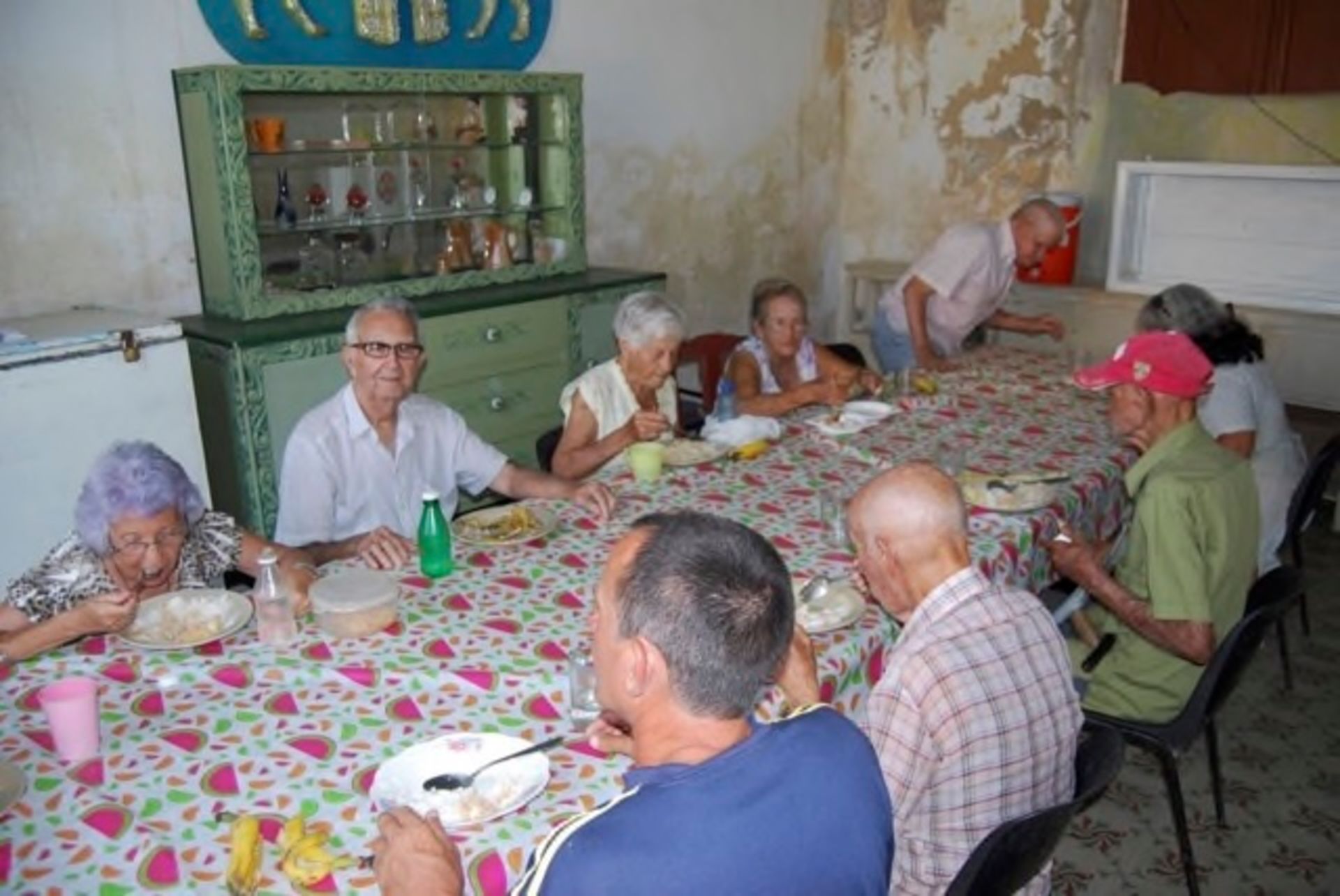
Lunch at the comedor operated at Iglesia Parroquial del Espíritu Santo, believed to be the oldest Christian church still standing in Havana dating from 1635. | Credit: Photo courtesy of Catholic Charities of the Archdiocese of Miami
“Our aim is to let the elderly, who live very difficult lives in Cuba, have a more dignified existence,” O’Naghten said.
In Cuba today, the elderly are frequently left alone when younger family members depart the island. Current oil-related transportation issues have made it harder for seniors to access resources. Trash buildup in the streets has existed for years, further restricting seniors’ mobility.
Lingering effects of Hurricane Melissa
Another factor affecting Cuba is the lingering effects of Hurricane Melissa in October 2025.
Catholic Charities of the Archdiocese of Miami recognized early on that Category 5 Hurricane Melissa had deadly potential. According to Peter Routsis-Arroyo, CEO, they began calling for assistance to the Caribbean prior to the storm’s destructive strike on Jamaica on Oct. 28.
As Miami’s Florida Catholic reported, Jamaica and Haiti took the brunt of the storm. Catholic Charities of Miami’s Hurricane Melissa appeal focused on these two nations and Cuba. In Cuba, Catholic Charities’ supplies “go into the hands of the Catholic Church, and both governments recognize that and allow this to go on,” Routsis-Arroyo said.
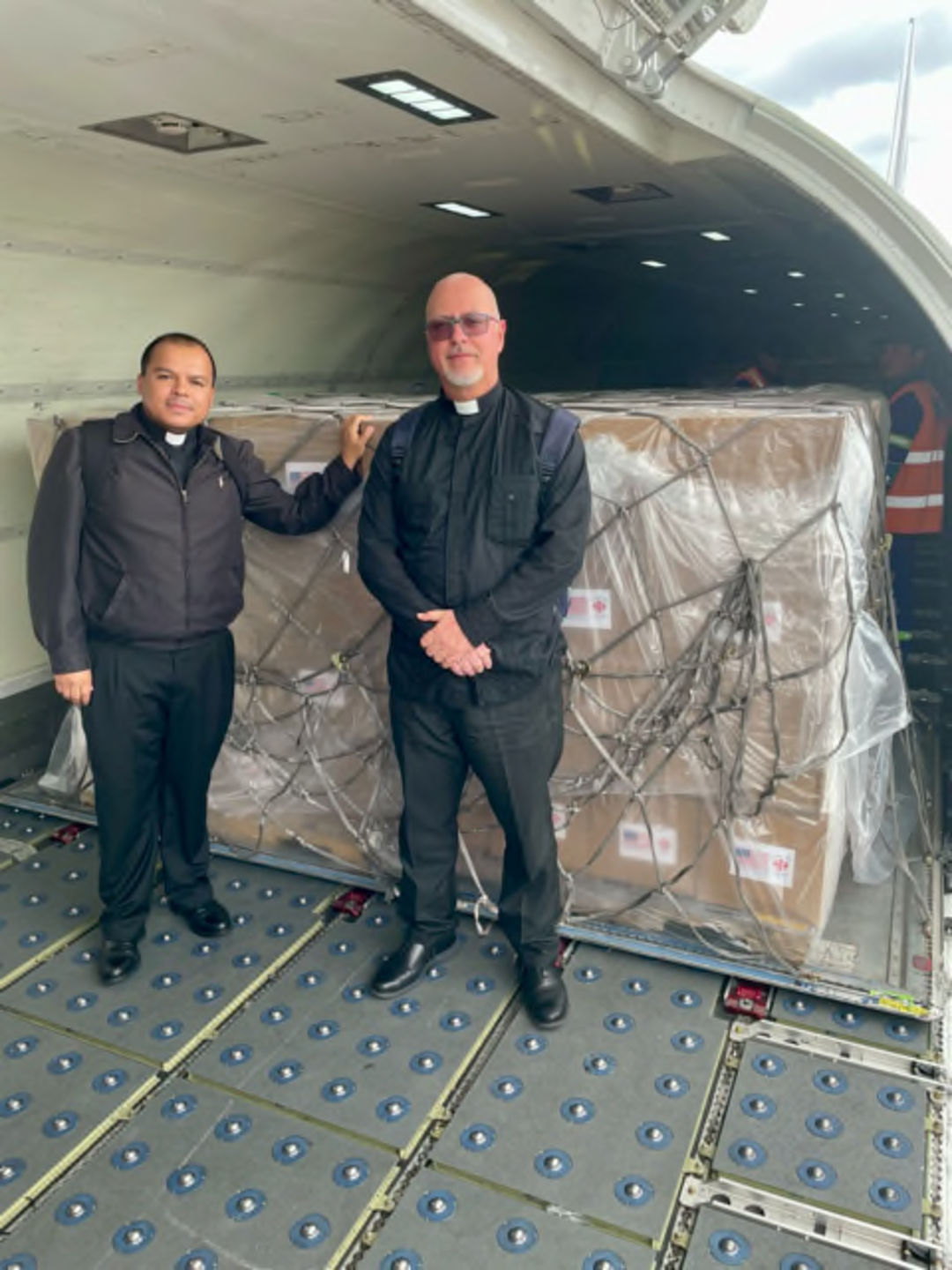
Father Elvis Gonzalez (left) and Father Esney Muñoz Diaz act as guarantors during a U.S. government aid transfer to Catholic Church representatives in Holguín, Cuba, in late January 2026. | Credit: Photo courtesy of Catholic Charities of the Archdiocese of Miami
Beginning in the early 2000s, Catholic Charities of Miami has provided a flow of resources to the Cuban Church, approximately 25-30 shipping containers of supplies per year.
Recently, the U.S. government began collaborating with CRS to transfer hurricane-related government aid to Caritas Cuba. Initial supplies reached the island Jan. 14. Catholic Charities of Miami is also involved with the continuing hurricane relief initiative.
Father Richard Vigoa is pastor of St. Augustine Parish in Coral Gables, a predominantly Cuban parish instrumental in arranging Catholic Charities’ initial Hurricane Melissa aid flights to Cuba.
“It is important to note that those affected by the hurricane, in one way or another, include almost the entire population of eastern Cuba; therefore, $3 million would amount to approximately $1 per person,” he explained. “Because of this, Caritas Cuba has had to visit the most affected areas and identify the most vulnerable individuals.”
Routsis-Arroyo explained that Caritas Cuba disperses the aid, such as food and cleaning kits, primarily to “single mothers, senior citizens, and people with disabilities.”
Espino and Sister Eva Puebla of the Daughters of Charity acted as guarantors accompanying a Jan. 28 aid transfer to Santiago’s Catholic Church representatives. Shortly thereafter, a pair of guarantors from St. Michael the Archangel Parish in Miami accompanied a drop-off to the area of Holguín: Father Elvis Gonzalez, pastor, and Father Esney Muñoz Diaz, parochial vicar.
The initial wave of U.S. aid to Cuba was $3 million, and since Feb. 5, the Trump administration has increased the total by $6 million.
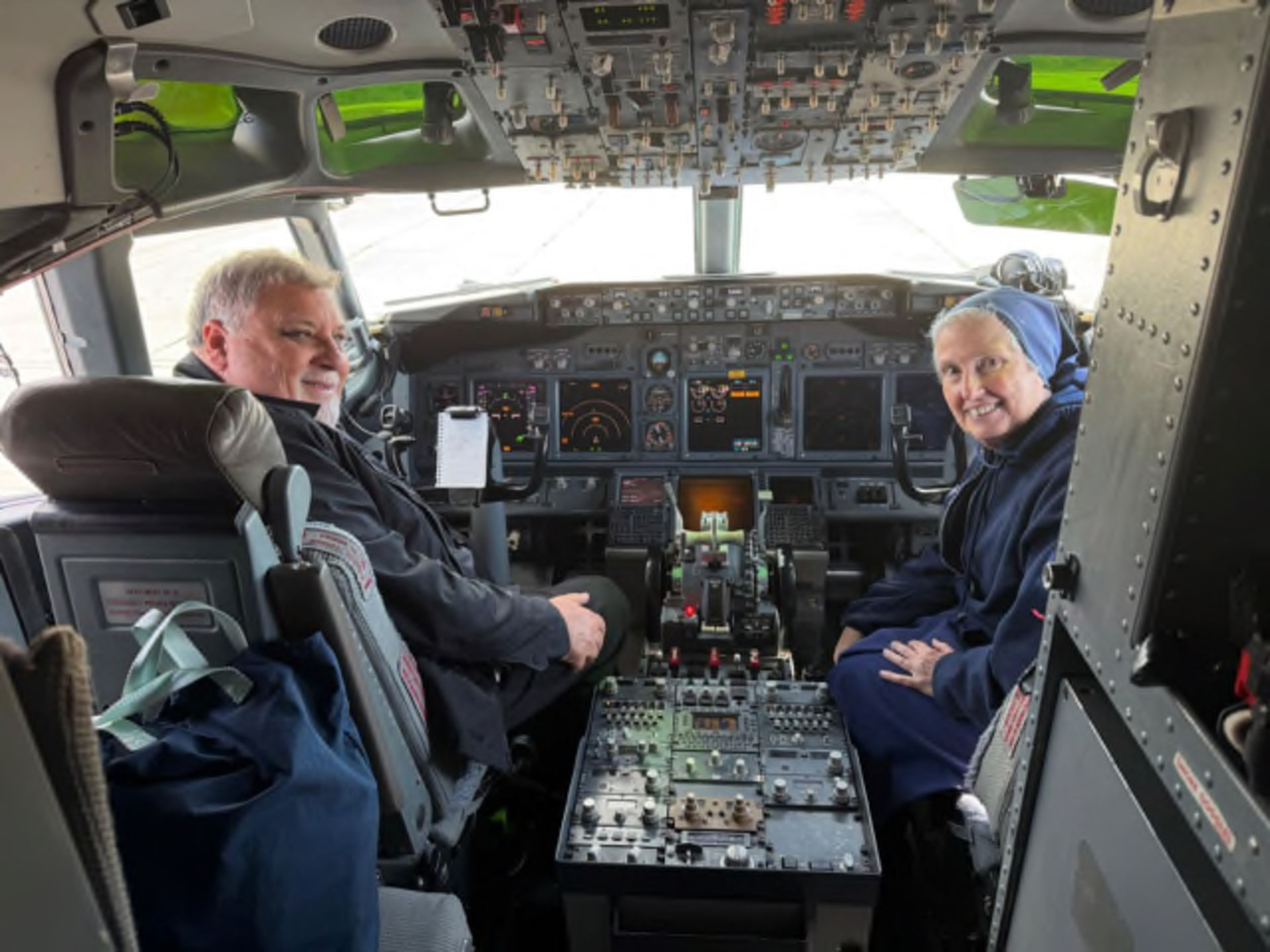
Father José J. Espino and Sister Eva Puebla act as guarantors during a U.S. government aid transfer to Catholic Church representatives in Santiago de Cuba in late January 2026. | Credit: Photo courtesy of Catholic Charities of the Archdiocese of Miami
According to Jeremy P. Lewin, senior official for the Bureau of Foreign Assistance, Humanitarian Affairs, and Religious Freedom: “To my knowledge, this is the largest amount of direct assistance the United States has ever delivered to Cuba, at least in recent memory. I know in the past, in 2022, the Biden administration did $2 million for Hurricane Ian, so now we are far surpassing that.”
“The respect and the willingness from both governments to look to the Catholic Church to be the stewards of this aid speaks volumes as to the work that we do and the assurances we can provide to be the ones to get this immediate assistance out as quickly as possible,” Routsis-Arroyo said.
“The Church is the one that can unite the Cuban people, the ones here [in the U.S.] and the ones in Cuba,” agreed Tony Argiz, a former Pedro Pan participant. “I wouldn’t be here without them. I thank God every day.”
Tearing up, he shared that the Miami Catholic Church served as his legal guardian from 9 years old until he was 14, when his parents departed Cuba for the U.S.
He added: “Who else better [than the Church] to take care of the most vulnerable people in the island?”