Man, there must be something in the water at Cornell… First we get William Jacobson, and now we get this guy.
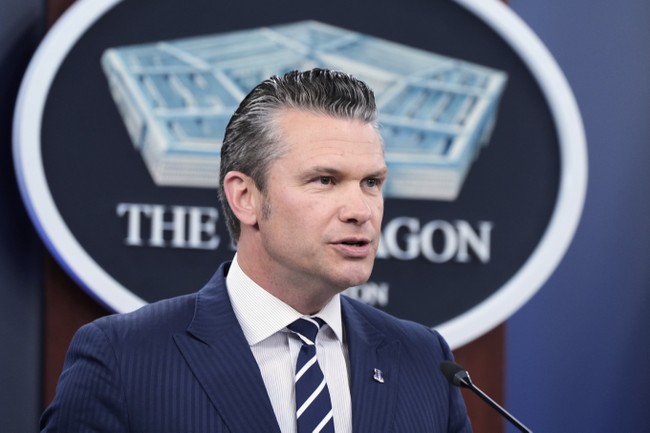
In our last post, we made fun of people crying over the use of war powers to take on narco-terrorists. Some of the people complaining about how Secretary of Blowing Up Drug Dealers Secretary of War Pete Hegseth trolled them claimed that the pro-blowing-up-drug-dealers side of the equation couldn’t actually defend it. Except, this professor did exact that:
🚨 CALLING ALL JOURNALISTS
Listen up. The further I progress in j school, the less patience I have for journalistic malpractice when covering int’l law involving armed conflict in our media coverage. Take this story @CNN by @NatashaBertrand for example.
For now, I’ll focus on… https://t.co/bx3uAP9L5F pic.twitter.com/ZC5JPSlyPk
— Dr. Brian L. Cox (@BrianCox_RLTW) November 29, 2025
The cut off text:
For now, I’ll focus on ONE specific #LOAC…
LOAC stands for Law Of Armed Conflict. Back to Professor Cox:
… issue covered in this story since Natasha also addresses it in QTd post: when a person qualifies as ‘hors de combat’ – or out of the fight due to sickness, illness, injury, or detention.
According to anonymous sources in connected stories @washingtonpost & @theintercept, operators @Southcom & @SOCSOUTH attacked 2 suspected narco-terrorists somewhere in open waters of the Caribbean who survived an initial strike on their boat. This is sometimes referred to colloquially as a ‘double tap’ attack & it was supposedly a response to guidance from @SecWar @PeteHegseth to ‘kill everyone.’
Natasha seeks commentary from Sarah Harrison @CrisisGroup, who claims it’s unlawful pursuant to #LOAC to attack somebody who ‘is ‘hors de combat’ and no longer able to fight, then they have to be treated humanely.’ Natasha reiterates this claim using slightly different language in her post @X QTd here.
Here’s the thing: both source & journalist are wrong. And confirming this is as easy as opening the latest edition of DoD Law of War Manual & searching for ‘hors de combat’.
Just to break in for a moment, that manual was updated in December of 2015, meaning just before the first Trump administration. So literally, Obama wrote these rules. Back to his analysis:
If journalists did so, they would encounter plenty of material confirming Harrison’s characterization of int’l law – and those who express similar commentary – is incorrect. But don’t just take my word for it: read the attached excerpts of the Manual for yourself (highlights added for emphasis).
The common theme among these excerpts can be summarized by one simple phrase: a person is only rendered hors de combat ‘under circumstances where it is feasible for the opposing party to accept the surrender.’ Any guesses what these anonymous sources at the center of this whole media frenzy fail to establish?
That’s right! That it was feasible to accept the surrender of these suspected narco-terrorists under the circumstances on the high seas.
If it was not, then the suspected civilians taking direct part in hostilities were NOT hors de combat. Period.
Now, if a reporter were engaged in balanced & informed journalism, s/he would do some research to discover this standard so they can at least ensure their source addresses it. In this case, it might sound something like this during the interview:
‘Ms. Harrison, you said somebody who is ‘hors de combat and no longer able to fight, then they have to be treated humanely,’ but are you able to determine whether US military forces were able to accept the surrender of the people on or near the boat under the circumstances at the time? If so, what is the source of this factual knowledge? And if you are not able to confirm the circumstances, how does this impact your claim that this ‘double tap’ strike violated LOAC?’
As a reader, think about how much answers to these questions might influence your understanding of the (un?)lawfulness of this reported strike. Yet, this context isn’t presented to you because the person writing the story – the journalist – doesn’t understand the body of law she’s reporting to you.
And here’s the thing. It’s not just Natasha Bertrand or CNN or this one article or this one issue in the article. This professional #journalisticmalpractice manifests almost every time journalists report on int’l law involving armed conflict, for similar reasons as those addressed above.
Think about how often this body of law is addressed in news coverage. Getting it wrong on 1 issue in 1 article is bad enough. For this to happen nearly every time media covers applied LOAC creates a global pandemic of misinformation.
Quite simply, standards actually being applied in practice aren’t consistent with expectations created by media coverage.
The lesson is simple & clear: do better. We owe it to our audience to find ways to get LOAC right.
Recommended
And this led to a reasonable discussion with another poster:
Similar in the Canadian context – excerpts from the DND/CAF Manual on LOAC below – however, in the maritime context, I believe it is illegal to kill enemy combatants who are in the water after their vessel has been sunk or rendered inoperable (under the 2nd Geneva Convention;…
— David Fahey (@fahey_davi37740) November 29, 2025
In this case, we are just going to cut and paste all of it:
Similar in the Canadian context – excerpts from the DND/CAF Manual on LOAC below – however, in the maritime context, I believe it is illegal to kill enemy combatants who are in the water after their vessel has been sunk or rendered inoperable (under the 2nd Geneva Convention; excerpts below). Where possible, they should be rescued and imprisoned.
The issue now becomes, if an enemy vessel on the high seas is sunk by attack from the air, and there is no friendly vessel nearby in a position to rescue the enemy combatants in the water, does the attacking party have any obligations to the enemy combatants who are now shipwrecked?
309. COMBATANTS WHO ARE HORS DE COMBAT
1. A combatant is hors de combat (out of combat) if that person:
a. is in the power of an adverse party;
b. clearly expresses an intention to surrender; or
c. has been rendered unconscious or is otherwise incapacitated by wounds or sickness, and is
therefore incapable of self defence;
provided that in any of these cases the individual abstains from any hostile act and does not attempt to
escape.
AP l Art 41 (2)
2. A combatant who is recognized or who, in the circumstances, should be recognized to be hors de
combat shall not be attacked.
HIVR Art 23 (c); GI Art 12 (1); GII Art 12 (1); GI V Art 16 (1); AP l Arts 10 (1) & 41 (1); AP II Arts 4 (1) & 7 (1)
407. EXAMPLES OF OBJECTS WHICH ARE MILITARY OBJECTIVES
[…]
2. Civilian vessels, aircraft, vehicles and buildings are military objectives if they contain combatants,
military equipment or supplies.
AP l Art 52 (2)
435. WOUNDED, SICK AND SHIPWRECKED
1. All the wounded, sick and shipwrecked, to whichever party they belong, shall be respected and
protected and shall not be attacked.
3. ‘Shipwrecked’ means persons, whether military or civilian, who are in peril at sea or in other waters
as a result of misfortune affecting them or the vessel or aircraft carrying them. The shipwrecked are
protected so long as they refrain from any act of hostility.
AP l Art 8 (2)
The 2nd Geneva Convention, however, defines shipwrecked differently, and clearly makes it illegal to kill enemy personnel who are shipwrecked:
Article 12 – Protection and care of the wounded, sick and shipwrecked
Members of the armed forces and other persons mentioned in the following Article , who are at sea and who are wounded, sick or shipwrecked, shall be respected and protected in all circumstances, it being understood that the term ‘shipwreck’ means shipwreck from any cause and includes forced landings at sea by or from aircraft.
Such persons shall be treated humanely and cared for by the Parties to the conflict in whose power they may be, without any adverse distinction founded on sex, race, nationality, religion, political opinions, or any other similar criteria. Any attempts upon their lives, or violence to their persons, shall be strictly prohibited; in particular, they shall not be murdered or exterminated, subjected to torture or to biological experiments; they shall not wilfully be left without medical assistance and care, nor shall conditions exposing them to contagion or infection be created.
Article 18 – Search for casualties after an engagement
After each engagement, Parties to the conflict shall, without delay, take all possible measures to search for and collect the shipwrecked, wounded and sick, to protect them against pillage and ill-treatment, to ensure their adequate care, and to search for the dead and prevent their being despoiled.
References:
1. Department of National Defence, B-GJ-005-104/FP-021, Law of Armed Conflict at the Operational and Tactical Levels, 13 August 2001
https://fichl.org/fileadmin/_migrated/content_uploads/Canadian_LOAC_Manual_2001_English.pdf
2. Convention (II) for the Amelioration of the Condition of Wounded, Sick and Shipwrecked Members of Armed Forces at Sea. Geneva, 12 August 1949.
Dr. Cox responded by saying ‘That’s a good point’ and directing him to a different reply to someone else which addressed that:
Those components of the Manual address provisions from GC II, sometimes referred to as GWS-Sea (pic 1). Like all 1949 Geneva Conventions, GC II applies only during times of armed conflict “between two or more High Contracting Parties” (pic 2). Armed conflict between 🇺🇸 &… pic.twitter.com/tDwsWOcwaw
— Dr. Brian L. Cox (@BrianCox_RLTW) November 29, 2025
The cut off text:
Armed conflict between 🇺🇸 & narco-terrorists doesn’t qualify, so neither GWS-Sea nor Manual provisions addressing that treaty apply.
On your point about surrender vs. shipwreck, they’re both a subcategory of hors de combat. A fighter who is hors de combat may not be made object of direct attack. Fighters are considered hors de combat when they are no longer capable of defending themselves due to illness, injury, or detention. The issue here is whether fighters are rendered hors de combat when only aerial assets are available to take custody of them – regardless of whether they’re at sea or on land. Not all countries adopt this interpretation, but US mil doctrine reflected in the Manual – which I believe is correct fwiw – is that fighters aren’t rendered hors de combat when only an aerial asset is present to take custody of them, regardless of the domain or context. This isn’t to suggest coordination can’t be made between air & ground/naval forces to take custody of hors de combat fighters – but there is no obligation to do so.
Dr. I don’t think they are even covered because they are engaging in espionage against the US:
They really aren’t “hors de combat” Terrorists don’t even figure into that category.. that’s the grave error they are making… they aren’t beholden to any state military and they are…
— Navyjava5 (@navyjava5) November 29, 2025
The cut off text:
Terrorists don’t even figure into that category.. that’s the grave error they are making… they aren’t beholden to any state military and they are applying rules between state militaries.. in which they aren’t. They may be state sponsored- but, they fall into same category as a spy who engages in espionage. They are not provided ANY of those protections.
Finally:
The major problem here is everyone is trying to apply battlefield rules of engagement to narco terrorists.
— Jeffery Deckard (@panama721) November 30, 2025
Fair enough, but this author is enough of a nerd to enjoy the discussion and we hoped you guys would, too.
Can Donald Trump Refuse to Follow an Unconstitutional Judicial Order? (A Deep Dive)
BREAKING: Tulsi Gabbard Blows Open Russiagate With Document Dump
BREAKING: An NYT Interview With Biden Just Undermined Thousands of His Late Pardons (A Deep Dive)
Editor’s Note: Thanks to President Trump and Defense Secretary Pete Hegseth’s leadership, the warrior ethos is coming back to America’s military.
Help us report on Trump and Hegesth’s successes as they make our military great again. Join Twitchy VIP today and use promo code FIGHT to get 60% off your VIP membership.



![Donald Trump Slams Chicago Leaders After Train Attack Leaves Woman Critically Burned [WATCH]](https://www.right2024.com/wp-content/uploads/2025/11/Trump-Torches-Powell-at-Investment-Forum-Presses-Scott-Bessent-to-350x250.jpg)


![Kamala Comes Unglued, Makes Bogus Claim About Her Landslide Loss to Trump [WATCH]](https://www.right2024.com/wp-content/uploads/2025/10/Kamala-Comes-Unglued-Makes-Bogus-Claim-About-Her-Landslide-Loss-350x250.jpg)