Andrew Griffith MP is Shadow Secretary of State for Business & Trade and Conservative MP for Arundel & South Downs.
Conservative Home readers may have followed Labour’s UnEmployment Bill more than most but, as we approach what the government may hope will be its final week in Parliament, employers up and down the country are bracing for the damaging impact of this 330-page job destroying red tape.
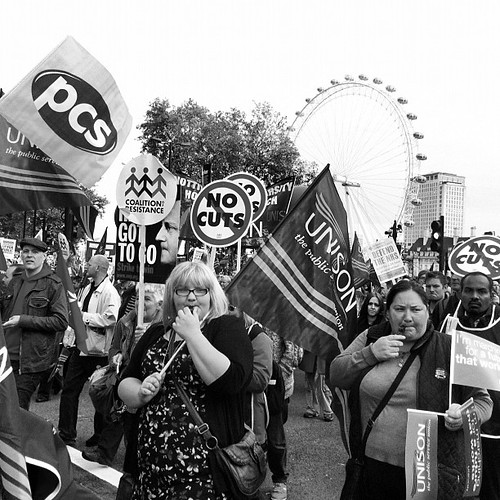
For those lucky enough not to be familiar with it yet let me summarise just some of its terrible provisions. It will see trade unions recolonise the private sector, shattering decades of consensus forged by Margaret Thatcher by giving unions a foothold in businesses even when as few as 10 in 500 employees indicate an interest. With that recognition will come greater paid time off for union reps and a new breed of ‘union equality’ reps too. Militant strikers will be resurgent. The strike ballot threshold, a requirement for 50 per cent turnout for a ballot to be valid, is removed.
It’s the key safety valve that has saved patients, commuters, businesses, and Wes Streeting from having to endure strikes when only a tiny minority vote for them. And there’s more. It hands unions regular direct access rights to workplaces – a ‘right to roam’ extending beyond physical premises to businesses electronic networks. It will ban free speech in pubs, create an Orwellian new “Fair Work” regulator that can take businesses to court even where not a single employee has complained, and it will reduce decades of union rules that were originally intended to prevent corruption, harassment, and violence on pickets.
It is then a terrible Bill on its merits. But it’s also been a damaging encapsulation of all that is wrong with Labour’s approach to Parliament and that of their Lib Dem allies.
The Bill was introduced in haste; half-baked simply so that Angela Rayner could make good on a promise to the trade unions (who wrote it) to introduce it within the first 100 days of government. Rightly panned by the government’s own independent Regulatory Policy Committee it is so poorly written that Business Secretary, Peter Kyle, has been reduced to begging the business groups (who universally oppose it), to respond to an upcoming 26 consultations in the hope of correcting some of its many defects.
Conservatives have rightly fought this Bill at every stage, especially in the House of Lords where our shadow business team includes Lord David Hunt, who served in Thatcher’s cabinet as Secretary of State for Employment. Unfairly derided Conservative peers have done their constitutional job with diligence, supporting cross bench efforts to mitigate its worse impacts. Interestingly, upper house divisions have been mostly won through tactical abstentions by Blairite era Labour peers whose own bitter battles with trade unions give them no reason to turn back the clock. One respected Labour peer has joined the exodus and emigrated to the UAE during the passage of this legislation!
Our collective efforts extracted a key concession: the Government’s plan to make any dismissal subject to a tribunal from the first day of employment now instead sees this only kick in after six months of employer and employee getting to know each other. It’s a crucial victory which will save vital employment opportunities for young people, those who are a little different, and those seeking to return to work after gaps in their CV. Without it, the incentive not to take a risk when hiring would be prohibitive.
Other amendments, on maintaining the strike ballot threshold, on protections for workers on trade union political funds, and on important flexibility for seasonal work, were on the table until last week. Then Liberal Democrat peers surprised everyone by throwing British businesses under the bus and switching their votes to the Labour government. What drove them to vote with the Government in the Lords only two days after they refused to do so in the Commons? Two extra peerages appear to be the shabby price.
Along its 14 months journey the Bill has become a pawn in a ‘custody battle’ between Starmer’s No10 and Angela Rayner. It was supposed to pass in the summer.
Then it was supposed to pass before the TUC conference.
Then it was supposed to pass in the Autumn.
Following a complete clear-out of departmental ministers in Starmer’s re-shuffle, overdue sensible compromises such as that from zero to six months had to be offset by union fantasies such as completely scrapping the cap on dismissal compensation payouts. Scrapping the cap will do little for average workers but will mean multi-million-pound payouts for failed water bosses as well as open the floodgate of claims generally. Last week the Ministry of Justice released figures showing the backlog of Employment Tribunal cases have reached their highest ever levels. At the end of Q2 2025/26, there were 515,000 open claims in total meaning backlogs in many areas already stretch back well over two years. For the government to seek to add to this by removing limits on payouts is completely potty. It’s an odd hill for Labour to die on or for the Liberal Democrats to support and remains the major outstanding issue as it returns to the Commons today.
Whatever happens this week, the mission to ‘get Britain working again’ is top of the Conservative list.
Payrolled employees are falling and have been lower every month Labour has been in power. That’s why one of the first acts of a future Conservative government would be to do what Conservatives always do after Labour have been in power: clean up their mess.
If Labour force through the Bill this week, the next Conservative government will repeal all of its job-destroying and union militant boosting measures.





![Donald Trump Slams Chicago Leaders After Train Attack Leaves Woman Critically Burned [WATCH]](https://www.right2024.com/wp-content/uploads/2025/11/Trump-Torches-Powell-at-Investment-Forum-Presses-Scott-Bessent-to-350x250.jpg)

![Kamala Comes Unglued, Makes Bogus Claim About Her Landslide Loss to Trump [WATCH]](https://www.right2024.com/wp-content/uploads/2025/10/Kamala-Comes-Unglued-Makes-Bogus-Claim-About-Her-Landslide-Loss-350x250.jpg)