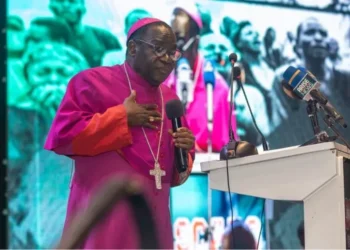
Aphra Brandreth MP is Member of Parliament for Chester South & Eddisbury.
Unlocking Opportunity: Why the Commonwealth Matters in a Changing World
Britain has slipped to fourth place in the 2026 Global Soft Power Index, behind the United States, China and now Japan. One explanation often offered for this decline is that Britain has adopted a more isolationist foreign policy since leaving the European Union. Yet this interpretation does not stand up to scrutiny. In reality, under the previous Conservative government, the United Kingdom expanded its engagement with new markets and emerging opportunities beyond Europe, seeking to strengthen ties with regions that will play an increasingly significant role in the global economy in the decades ahead.
One clear example of Britain working in partnership with countries around the world is the Commonwealth, the largest and oldest transnational association of nations. Its membership spans every continent and represents around a third of the world’s population. The modern Commonwealth is sometimes mistakenly viewed as a continuation of the British Empire, but this characterisation is outdated. Today it is better understood as a voluntary family of nations committed to shared principles including development, democracy and peace, where every member state has an equal voice regardless of size or economic strength. The fact that the four most recent members have no historical ties to the British Empire illustrates how the Commonwealth has evolved into a forward-looking partnership rather than a legacy institution. Britain is just one of 56 countries working together through this network of cooperation and shared values. In an increasingly unstable world, the importance of such partnerships, and of working as equal partners, should not be underestimated.
The modern Commonwealth was established in 1949, in the years since the world has changed dramatically. Today with war on our doorstep in Europe, and the Middle East in chaos, it is clear that the international system is becoming increasingly multipolar, uncertain and, at times, dangerous. In this environment, networks that bring countries together around shared values and encourage dialogue between diverse nations matter more than ever – highlighting the enduring importance of the Commonwealth.
Yet Britain today faces a clear soft power challenge. In an increasingly unstable and volatile world, strengthening our hard power remains essential. However, influence in the modern era is exercised in many ways. Too often discussions about global competition focus solely on military capability, whether measured by the size of navies, the strength of air forces, or the number of soldiers in our armies. These capabilities remain vital, but soft power, expressed through our cultural influence, diplomatic networks, educational institutions and economic partnerships, can be just as significant in shaping global influence. This year’s Commonwealth Day offers a timely opportunity not only to celebrate one of the world’s most enduring transnational networks, but also to look ahead. Its theme, “Unlocking Opportunities Together for a Prosperous Commonwealth,” reflects the potential of this partnership to expand cooperation and create new opportunities for its member nations. For Britain, it is an opportunity to deepen collaboration with partners across the Commonwealth and to work together to unlock the opportunities that this unique network provides.
Recent developments illustrate how Commonwealth relationships could help shape the global dynamics of tomorrow. Last week, Canada’s Conservative Party leader, Pierre Poilievre, outlined a vision in which the United Kingdom, Canada, Australia and New Zealand deepen their cooperation in areas such as defence, trade, mobility and skills. Greater collaboration between these nations would not only generate economic, cultural and social benefits, but would also strengthen our collective voice at a time when speaking with clarity and conviction on the international stage matters more than ever.
Of course, it would be unrealistic to replicate a CANZUK-style framework across the entire Commonwealth.
The diversity of its membership, spanning every region, culture and stage of economic development, makes such an arrangement impractical. Yet that diversity is also one of the Commonwealth’s greatest strengths. While deeper integration may be possible between some members, there remains significant scope to expand cooperation across the wider network wherever it is mutually beneficial. Whether through trade, education, diplomacy or development, the Commonwealth provides a unique platform through which its 56 members can strengthen partnerships and unlock new opportunities for growth and collaboration.
Britain must recognise a simple reality.
In today’s world, influence is rarely exercised alone. Power is more widely distributed, and the ability to shape events increasingly depends on the strength of partnerships and alliances. That challenge has been compounded by the current Labour Government’s hesitant and ineffective response to the crisis in the Middle East, which has done little to reinforce Britain’s credibility on the global stage. Networks such as the Commonwealth therefore become even more valuable. If Britain approaches this partnership with ambition, humility and a clear sense of purpose, it can help deepen cooperation between member states while strengthening its own global influence in the process.
By working alongside Commonwealth partners to expand opportunity, strengthen connections and address shared challenges, Britain can help ensure that this remarkable network remains a force for stability, cooperation and prosperity in an increasingly uncertain world.





![Donald Trump Slams Chicago Leaders After Train Attack Leaves Woman Critically Burned [WATCH]](https://www.right2024.com/wp-content/uploads/2025/11/Trump-Torches-Powell-at-Investment-Forum-Presses-Scott-Bessent-to-350x250.jpg)

![CNN's Kaitlan Collins Fact-Checks Rep. Jasmine Crockett Over False Trump Ballroom Claim [WATCH]](https://www.right2024.com/wp-content/uploads/2025/10/1761954330_CNNs-Kaitlan-Collins-Fact-Checks-Rep-Jasmine-Crockett-Over-False-Trump-350x250.jpg)