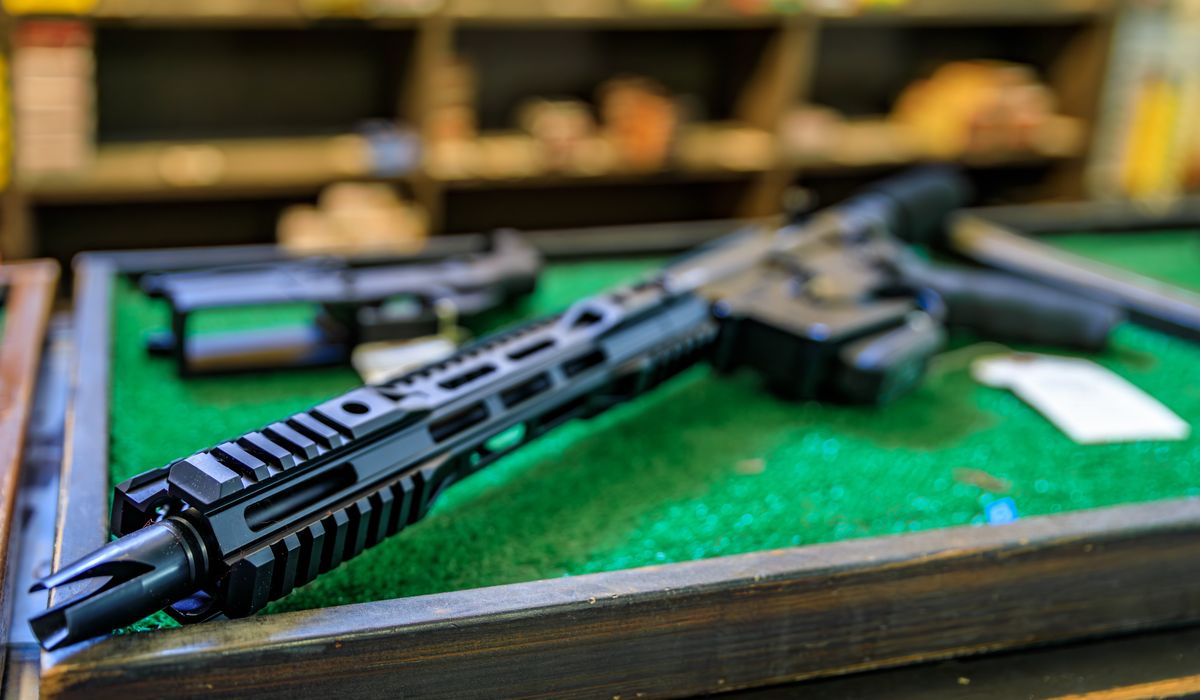
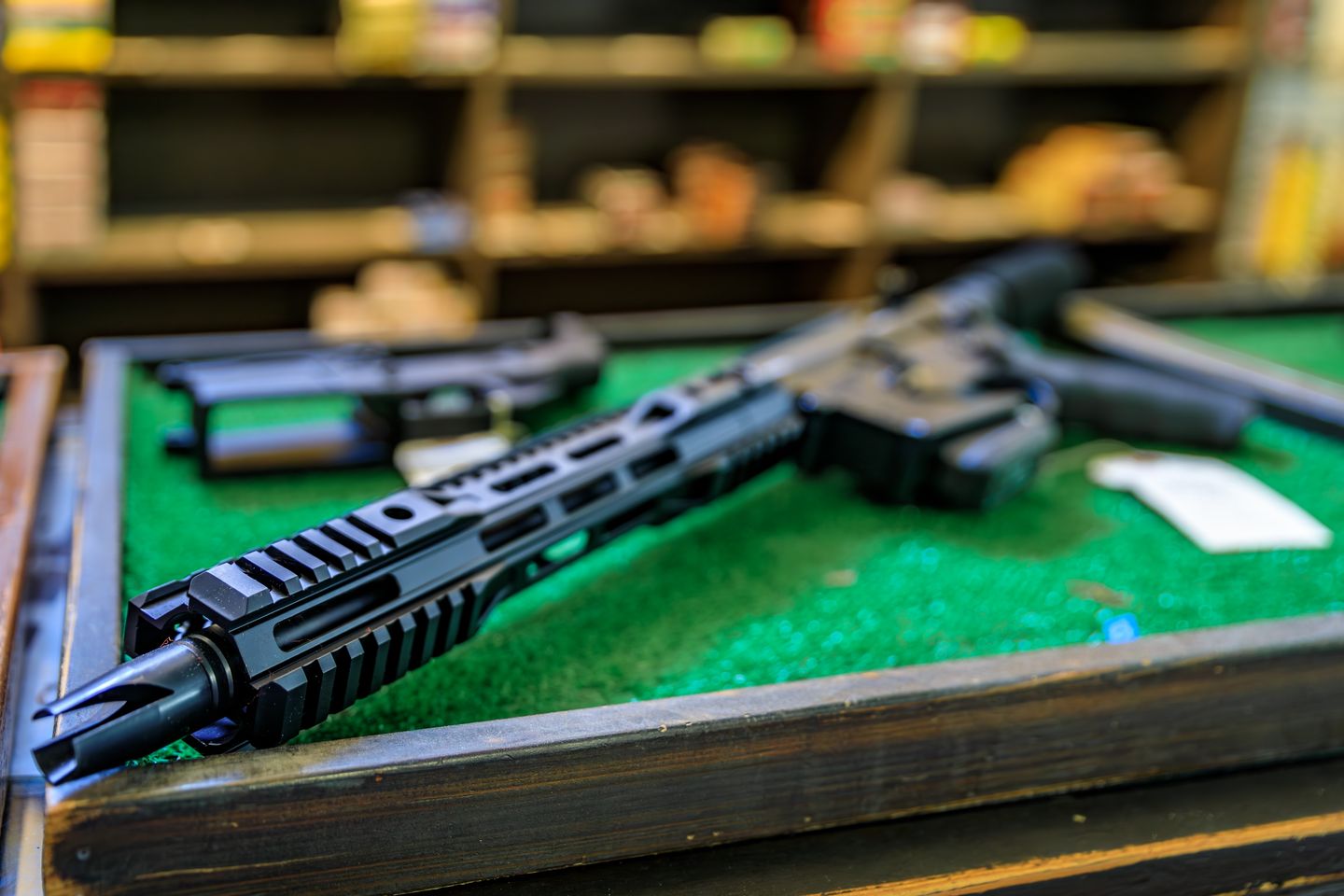
Second Amendment advocates are questioning why the Justice Department is still treating any pistol with a stabilizing brace as a short-barreled rifle that requires registration for a tax stamp, despite a 2023 court ruling that struck down the Biden-era rule.
More than a year after the court ruling, the Bureau of Alcohol, Tobacco, Firearms and Explosives sent an email to a gun owner indicating that he could not put a pistol brace on his firearm without registering it and paying for a tax stamp.
The enforcement appears to have persisted under President Trump.
“After President Trump promised on the campaign trail to eliminate the ’Biden Pistol Brace Ban’ in his first week, gun owners are rightfully horrified to learn that Attorney General Bondi is continuing to treat braced pistols as illegal short-barreled rifles,” Gun Owners of America said in a statement to The Washington Times. “Even more shockingly, this is happening after a federal court vacated the rule and after Congress eliminated the tax on short-barreled firearms in the One Big Beautiful Bill Act.”
The gun-rights group continued: “The Department of Justice has now wasted over a year defending Biden-era gun control with cutesy word games in federal court. If they want to call themselves the most pro-Second Amendment DOJ in U.S. history, it’s long past time they start acting like it.”
A Justice Department spokesman told The Times that GOA has it wrong.
“This is untrue. The Biden administration’s pistol brace rule has been vacated by a court. DOJ is not defending the rule, and ATF is not enforcing it,” the Justice Department spokesman said.
Up until President Biden came to office, the ATF did not classify AR-15-type pistols with attached pistol braces as short-barreled rifles, a classification of firearms that requires registration and a $200 federal tax stamp, but the device was intended for disabled people to aid them in holding their guns more securely.
When the Biden ATF changed its classification to an SBR under the National Firearms Act and the Gun Control Act, it resulted in the possession of pistols with stabilizing braces as a felony if one did not register the firearm and obtain a tax stamp or break the firearm down.
Second Amendment organizations took them to court seeking injunctions, and the rule was struck down by the 5th Circuit and ultimately vacated in 2023.
However, ATF said in court papers attached to the case that struck down the rule that the ruling does not change the law.
In the March 16 filing by the ATF in the Southern District Court of Texas, Victoria Division, it stated that although the rule was killed in the 5th Circuit Court, the law still exists and the agency will enforce it the way it sees fit, and the court cannot stop this enforcement because the previous case was only about the rule.
Under this interpretation of the law, a pistol with a brace is still considered a short-barreled rifle.
“The plaintiffs also make much of the fact that defendants continue to enforce the NFAs and the [Gun Control Act’s] regulation of short-barreled rifles against some brace-equipped pistols, even though the rule has been universally vacated,” the ATF said in court papers. “But that should come as no surprise, as this is consistent with how defendants have always explained how things work if a court vacated the rule or enjoined its enforcement.”
“At any rate, [the ATF] continues to enforce certain statutory requirements and prohibitions that they have been delegated the authority and responsibility to administer, which is irrelevant to whether plaintiff’s … challenge to the now defunct rule is moot,” the agency said.
Second Amendment advocate and attorney Colion Noir said there are higher stakes at play here.
“The ATF is basically stepping back and saying, ’All right, you got us on how we made that rule, but you didn’t take away the foundation we’re standing on.’ The ATF wants this case over as fast as possible, and that’s not by accident. Right now, the case is about the rule,” Mr. Noir said on his podcast.
“That’s something they can afford to lose, but what they don’t want is for the case to keep going and evolve into something bigger, where now we’re not just talking about a rule, we’re talking about the legitimacy of the National Firearms Act or the Gun Control Act, because once you go there, now you’re not fighting over one bad decision. You’re fighting over the entire foundation.”





![Donald Trump Slams Chicago Leaders After Train Attack Leaves Woman Critically Burned [WATCH]](https://www.right2024.com/wp-content/uploads/2025/11/Trump-Torches-Powell-at-Investment-Forum-Presses-Scott-Bessent-to-350x250.jpg)


![CNN's Kaitlan Collins Fact-Checks Rep. Jasmine Crockett Over False Trump Ballroom Claim [WATCH]](https://www.right2024.com/wp-content/uploads/2025/10/1761954330_CNNs-Kaitlan-Collins-Fact-Checks-Rep-Jasmine-Crockett-Over-False-Trump-350x250.jpg)