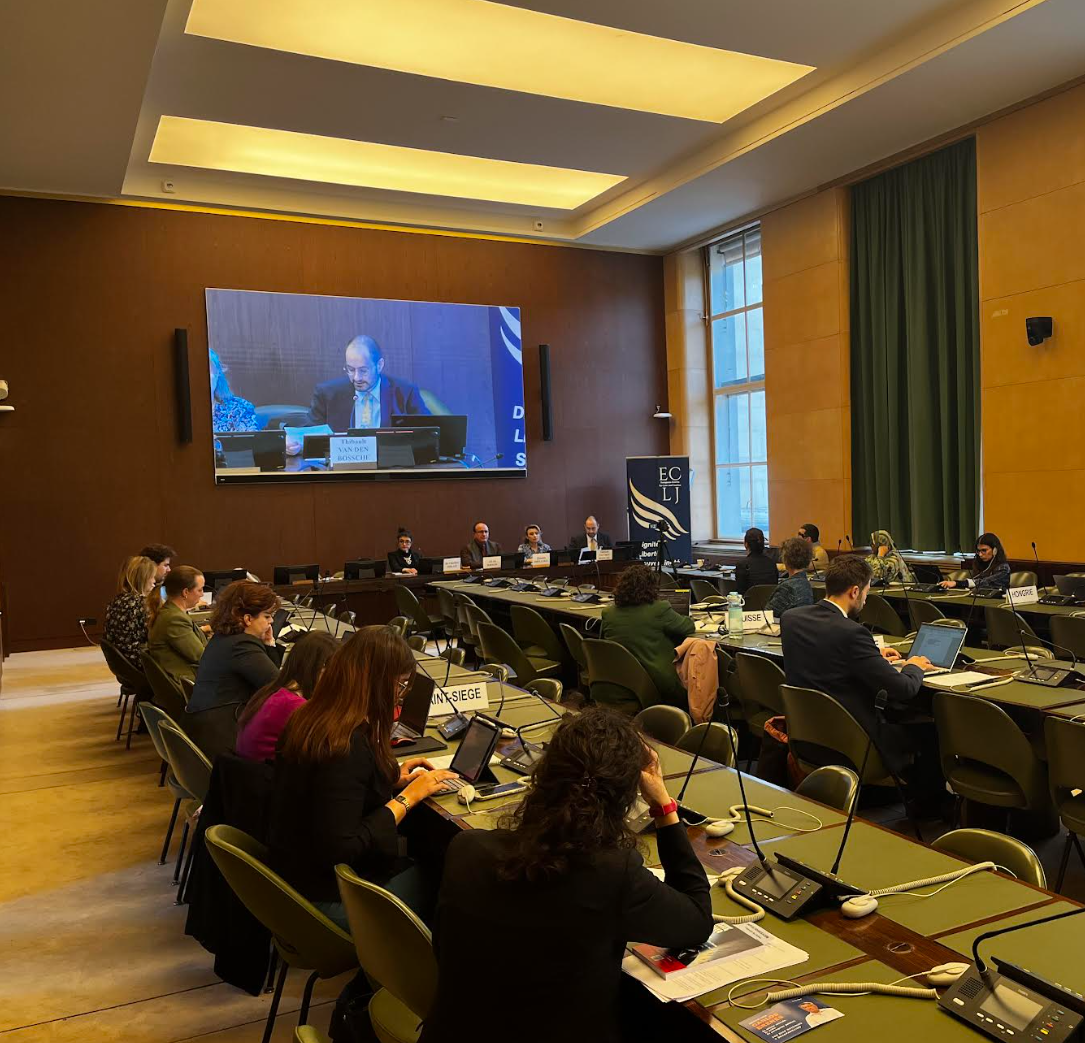
GENEVA — Before Pope Leo XIV is expected to set foot in Algeria, a side event conference at the United Nations Human Rights Council heard testimony and insights that paint a troubling picture of what awaits him: a country where Christians cannot freely practice their faith, where churches have been shuttered by the state, and where conversion from Islam remains a criminal offense.
The March 18 conference was organized by the European Centre for Law and Justice in collaboration with Jubilee Campaign and Christian Solidarity International. It brought together experts who described a systematic pattern of legal and administrative repression against Christians in the North African nation.
A constitution that no longer protects them
Algeria’s 2020 constitution removed any explicit reference to freedom of conscience. Only the country’s Islamic identity is given constitutional recognition, while conversions to Christianity are subject to criminal prosecution. The legal opening of new churches has become practically impossible under a 2006 ordinance governing non-Muslim worship and a 2012 law on religious associations.
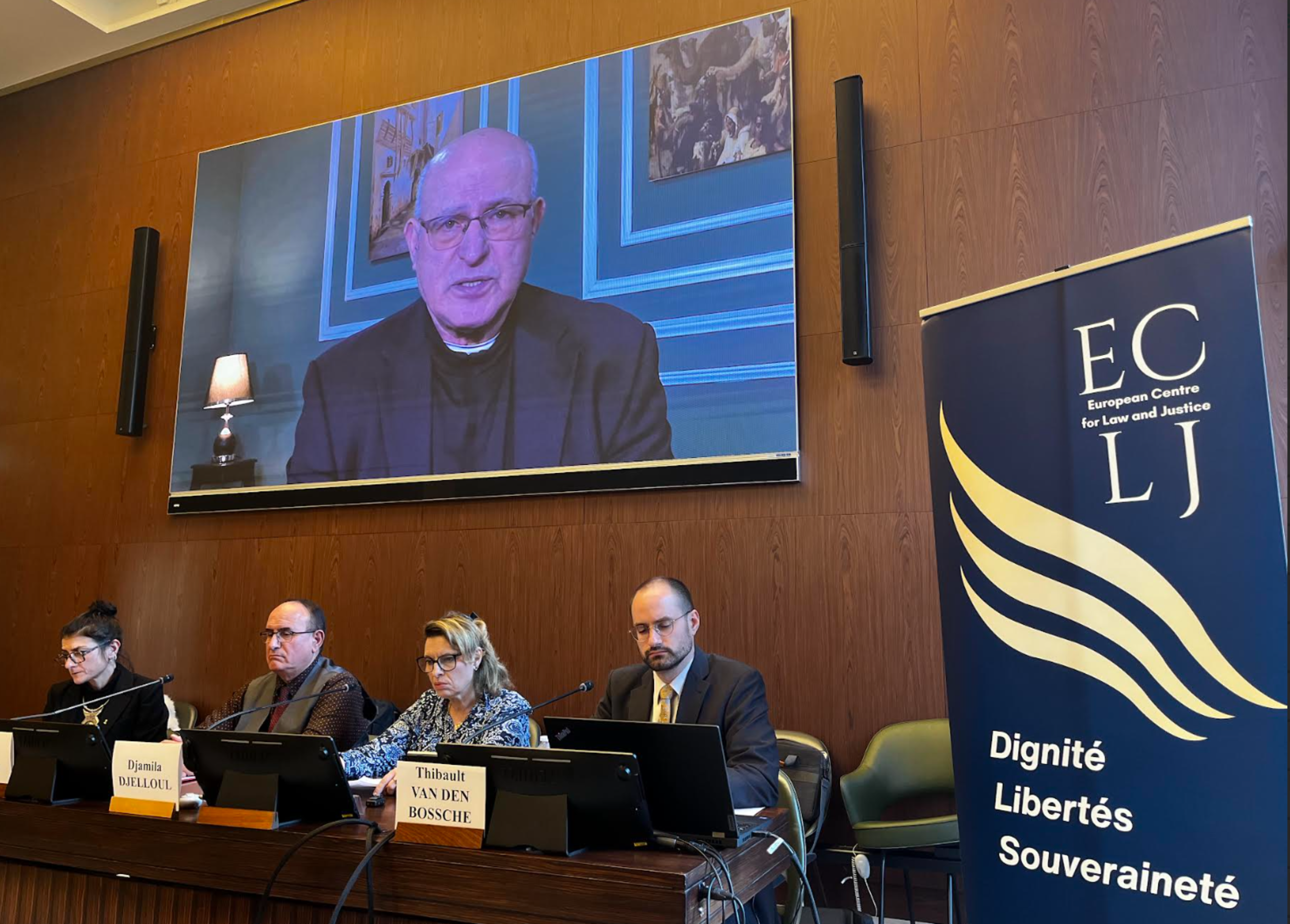
Pastor Youssef Ourahmane, vice president of the Protestant Church of Algeria, addresses a side event at the United Nations Human Rights Council in Geneva on March 18, 2026. | Credit: European Centre for Law and Justice (ECLJ)
Pastor Youssef Ourahmane, vice president of the Protestant Church of Algeria, addressed the gathering as a representative of a denomination that has seen 47 of its churches closed by the state. The church’s historic legal status, recognized since 1972, has also come under challenge.
Djamila Marie Djelloul, a former Muslim who converted to Christianity and is of Algerian origin, shared her insight alongside Ali Ait Djoudi, president of Riposte Internationale. Nicolas Bay, a member of the European Parliament, and Charlotte Touati, a historian and affiliated researcher with the University of Lausanne, Switzerland, also addressed the session.
The Catholic Church has not been spared either. Caritas Algeria, the Church’s humanitarian service arm that served the broader population of Algeria regardless of religion, was closed at the request of Algerian authorities on Oct. 1, 2022.
‘An Algerian can only be a Muslim’
Speaking to EWTN News, Ait Djoudi explained that the repression of Protestant churches in the country is rooted in a political conception of national identity that leaves no room for religious minorities.
He quoted former Minister of Religious Affairs Bouabdellah Ghlamallah, who stated in 2010 that “no one wants there to be religious minorities in Algeria, because that could serve as a pretext for foreign powers to interfere in the country’s internal affairs under the guise of protecting minority rights.” Ghlamallah also asserted plainly that “an Algerian can only be a Muslim.”
“Any religious activity outside officially authorized venues is prohibited,” Ait Djoudi said, describing administrative church closures as legally framed but politically motivated. On the ground, he explained, this translates into closures of places of worship, legal proceedings, fines, and even imprisonment alongside acts of intimidation and desecration.
On the question of the papal visit, Ait Djoudi, while expressing hope that the visit could open dialogue, warned against taking the government’s messaging at face value. “We observe a double standard,” he said. “A display of openness to the outside world but a policy of control and restriction maintained internally.” In 2025, he noted, Algeria ranked among the lowest-scoring countries globally on religious freedom for Christians.
Geopolitics shields Algeria from accountability
The Algerian government would “surely try to use the pope’s visit for their own PR purposes,” Joel Veldkamp, advocacy director of Christian Solidarity International, told EWTN News. He explained the visit could still serve Algeria’s Christians in practical ways. “Harsh crackdowns are more likely to be noticed internationally if they occur close to a papal visit,” he said, suggesting it may provide at least a temporary shield.
He also pointed to a telling precedent. When Pope Francis visited neighboring Morocco in 2019, King Mohammed VI used his welcome address to describe Christians as “guests,” placing them firmly outside of Moroccan society.
Algeria, Veldkamp noted, operates with a similar logic. But he pushed back on the premise. “Of course, Christians were in Algeria long before Muslims were,” he said. “This is the land of St. Augustine.” He noted a growing Christian revival among Algeria’s Indigenous Berber population, who are rediscovering pre-Islamic roots. “Pope Leo has an opportunity to emphasize this part of Algeria’s identity,” he said, “which is hardly acknowledged by the authorities.”
Regarding Algeria’s place in the global persecution spectrum, Veldkamp explained that Christians there have been spared the extreme violence seen elsewhere in the Arab world. Yet they face what he called “suffocating state control” — including blocked Bible imports, closed bookstores, prohibited evangelization, and systematic harassment of converts.
Currently Algeria is a key energy supplier for Europe, a counterterrorism partner for the United States, and a major arms buyer for Russia. “None of these actors are eager to upset Algeria,” Veldkamp noted. Yet precisely because the Christian community is so small, he argued, the government’s insistence on suppressing it is indefensible. “The Algerian government cannot possibly believe that it poses a threat. A little pressure from the outside world might go a long way.”
What the conference asked for
Recommendations proposed at the conference called on Algeria to restore freedom of conscience to its constitution, permit the legal functioning of Protestant churches, review criminal provisions on proselytism, and allow Caritas to resume operations.
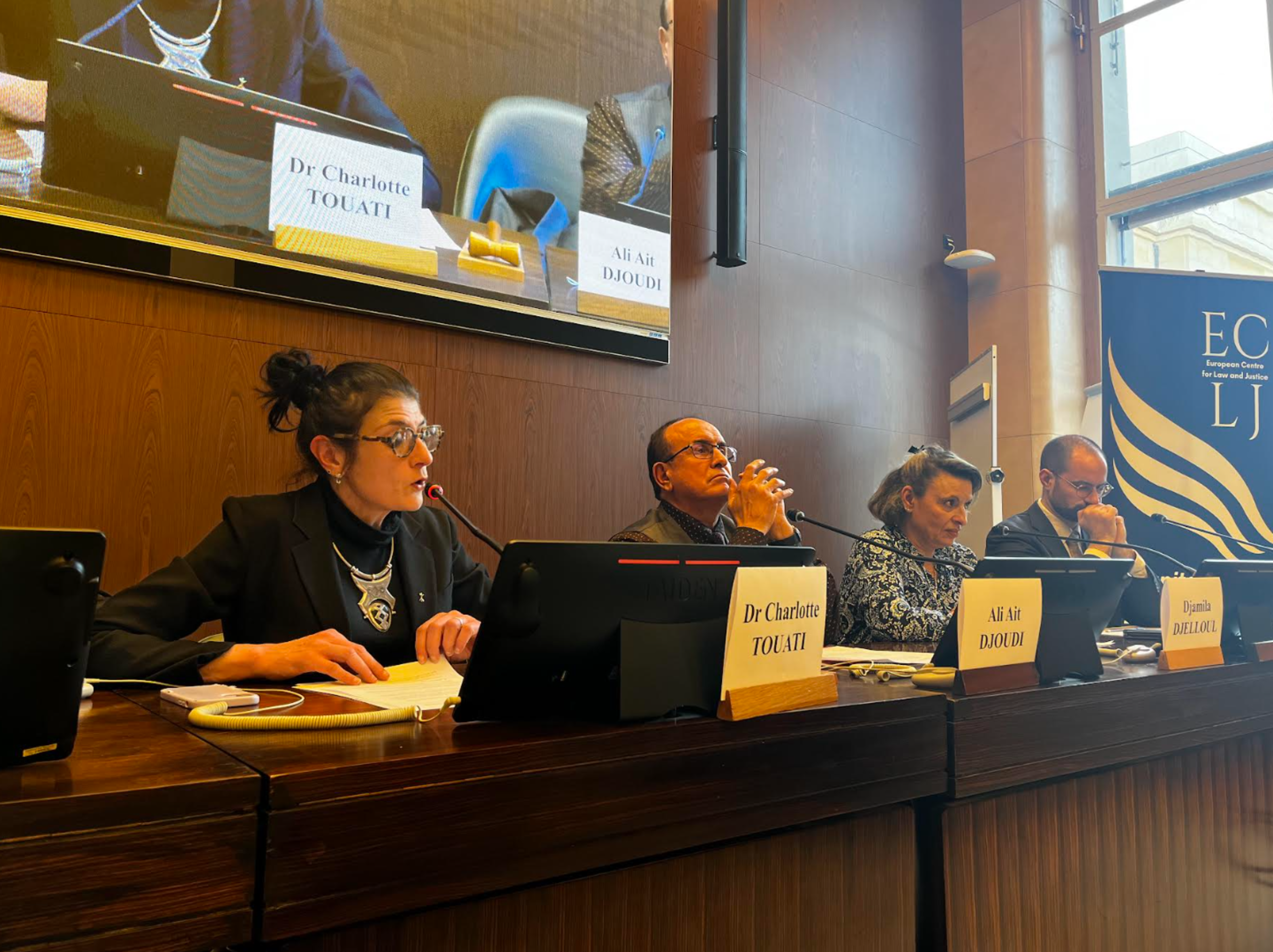
Charlotte Touati (left), historian and researcher at the University of
Lausanne, addresses the ECLJ side event on Christians in Algeria at the United Nations Human Rights Council in Geneva on March 18, 2026, alongside (from left) Ali Ait Djoudi and Djamila Marie Djelloul. | Credit: European Centre for Law and Justice (ECLJ)
The event also called on the United Nations to remind Algeria of its obligations under the International Covenant on Civil and Political Rights and to encourage an official visit by the U.N. special rapporteur on freedom of religion or belief, Nazila Ghanea.
The pope is expected in Algeria from April 13–15. The visit also marks the 30th anniversary of the martyrdom of the monks of Tibhirine, who were killed on May 21, 1996. For Algeria’s Christians, the hope is that the pope’s visit amounts to more than a photo opportunity.