This content was produced via a partnership with KCPAC. The views and opinions expressed in this commentary are those of the author and do not reflect the official position of the Daily Caller.
The Computers Rule is Not OK
A new political reality is unfolding in South Korea under the current President Lee Jae-Myung. He is displaying a specific kind of arrogance — having assumed office under the dark cloud of electoral fraud allegations, he is moving to expand the very mechanism of that suspected fraud. If it leads to the likely result, it will be the latest example of digital manipulation of election results on a national scale.
During his visit to South Africa on Nov. 23, 2025 Lee addressed a bill to introduce electronic voting for overseas citizens. He framed this as a modernization effort for convenience. But for South Koreans who have watched their democracy erode under the shadow of alleged statistical anomalies, this is not modernization. Rather, it is gaslighting on a national scale. (RELATED: Can America Count On South Korea To Help With Taiwan? Maybe Not)
This maneuver will feel eerily familiar to international observers. In the 2020 election, research indicated that South Korea was plagued by a statistically inexplicable divergence between early voting and same-day voting. In election after election, we have witnessed conservative candidates win the majority of votes cast on election day. But their victory has been crushed by unprecedented margins in the early voting ballots processed by machines.
In the last election, this pattern reached a breaking point. Lee himself was the primary beneficiary of these bizarre metrics, securing a mathematically improbable dominance in early votes that seemingly defied pre-election polling and exit trends.
A Flawed System
Statisticians have argued that there are indications of discrepancies. Yet rather than addressing these doubts or agreeing to a transparent investigation, the Lee administration is now attempting to export this suspicious “black box” system to the over 7 million Koreans living abroad. This is the height of hubris. A political figure whose very legitimacy is questioned by opponents due to the “ghosts in the machine” should be the first to demand transparency. Instead, Lee is doubling down by making a calculated maneuver to normalize the system. By pushing for expanded electronic voting, he might as well announce to the public and international experts that the system is flawed but he will make it even more digital.
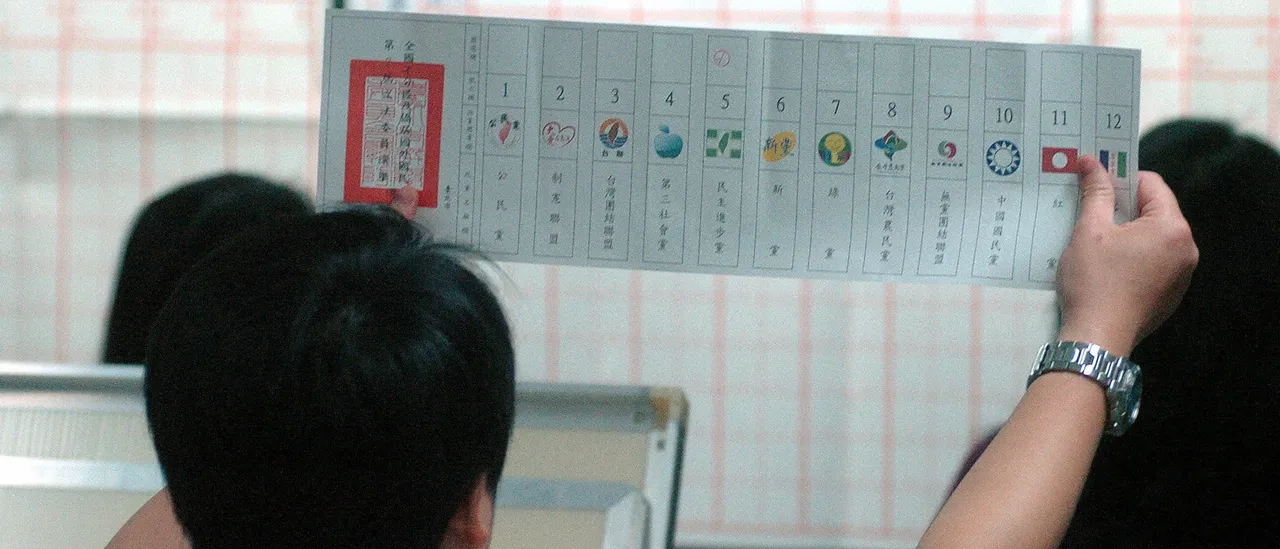
The tragedy is that South Korea has an available solution — one that is simple, transparent and proven. This is the “Taiwan Model.” The Taiwanese democracy is facing similar threats from the Chinese Communist Party (CCP) but their elections are a model of integrity. There are no electronic counters, no mail-in ballots and citizens vote in person on paper. As soon as polls close, ballots are held up one by one and the result is shouted aloud for the public to verify. It is slow, it is manual, but it is impossible to hack. (RELATED: A Holy War Declared: The Grave Threat To South Korea’s Constitutional Liberty)
Why not Us?
The South Korean public craves the same clarity. They want to trust their nation’s electoral process. Yet, the current leftist government is racing away in the opposite direction. You might ask why? The answer is terrifyingly obvious: You cannot hack a Taiwan-style hand count — but you can use an digital tool (technically known as an algorithm) to skew the results in your favor.
A Matter of Server Control
In the United States, President Donald Trump has made election integrity a cornerstone of his new administration. He recognizes that a nation without secure ballots is no nation at all. If South Korea, a linchpin of the Indo-Pacific security strategy, consolidates a voting system vulnerable to domestic manipulation and Chinese interference, then the U.S. will lose a reliable partner. A government in Seoul installed by server manipulation will ultimately answer to those who control the servers, not the Korean people, and certainly not Washington. They will answer to China and their global ambitions.
The battle lines are drawn. On one side, the “Taiwan Model” —transparent, verifiable and free of such manipulation. On the other, a government pushing toward a “Digital Dictatorship,” using the convenience of voter access in-country and worldwide as a mask for permanent control. Lee’s proposal is not a step forward; it is a cover-up operation disguised as policy. The United States should see this for what it is, as we cannot allow South Korea to fall victim to the algorithmic rules that command the digital age.





![Donald Trump Slams Chicago Leaders After Train Attack Leaves Woman Critically Burned [WATCH]](https://www.right2024.com/wp-content/uploads/2025/11/Trump-Torches-Powell-at-Investment-Forum-Presses-Scott-Bessent-to-350x250.jpg)