Dr Robert Seely MBE is author of ‘The New Total War’, ConservativeHome foreign affairs columnist and a former Conservative MP.
It is at times like this – dangerous, uncertain times – that we most miss strong leadership; a person or a team that understands the task ahead, can unite us and make us feel that they are up to the job. In response, we put our trust in them.
We already know that Sir Keir Starmer is not that man.
He will leave power soon, but every week that passes reminds us of his personal and political limitations. His Iran crisis press conference yesterday merely confirmed his lack of vision – apart from peddling a relentless and divisive Europhile agenda.
It’s not that I think Britain should have joined President Donald Trump’s attacks on Iran. On balance, I don’t, but what shocks me is the way that Sir Keir’s passivity and aimlessness are now being cynically sold as wisdom. Labour have spun Starmer’s indecision into their Love Actually moment when a British PM stands up to a US president.
There’s a bigger picture here, beyond Trump hatred. The hard reality is that Britain, in the eyes of our Middle East allies, has appeared to be a fair-weather friend. There is anger as to how little we stood by our Gulf allies. They see us as weak and vacillating. Our diplomacy, power and reputation have taken a hit.
The Labour Government had three choices in relation to the attacks on Iran, now ongoing since late February.
Option 1. Take part in initial offensive operations and throw our lot in with Israel and the US for the duration.
Option 2. Not to take part in offensive operations in Iran, but plan, prepare and support our allies (primarily the Gulf states but also the US) to help with supporting operations.
Option 3. Drag our feet and fail to prepare a collective defence with either NATO or Middle East allies.
We chose the third.
The perception in the region is that we have prioritised placating a Muslim enemy (Islamist Iran) over the support of our moderate Muslim allies (primarily the broadly Anglophile Gulf States; UAE, Bahrain, Oman, Kuwait and Qatar).
Let’s look at those options in a bit more detail.
Option 1: take part in operations. Whilst there is a moral case for the war – those who piously intone about ‘illegality’ understand neither the hotchpotch of international law conventions nor the subjective nature of their own opinions – I’m not saying we should have done so. There were reasons not to, especially if you believe Iran would have struck a deal over nuclear weapons and missiles. I suspect that is naivety in the extreme, but I can’t prove it and I accept it’s a legitimate, if flawed, point of view.
Option 2: do not directly support offensive operations but, being forewarned by at least 11 days and arguably up to three weeks, position ourselves in three critical ways.
First, support our Gulf allies. We governed them for parts of the 20th century. We continue to have close ties. We have defence treaties with several of them. The Gulf is our fourth biggest trading partner. Their ruling families and elites know the UK well.
Second, a more active PPP – presence posture and profile – which would have enabled us to defend our bases in the region more assertively. The Cypriot government has used the feebleness of Sir Keir as reason to question the future of our bases there.
Third, to be sympathetic to the US plans, even if we didn’t take an active role in the attacks on Iran. We would do this not only because there is a moral case – Iran has been in conflict with the US, Israel and the Sunni world for decades – but because there is also a significant realpolitik case. Yes, I understand that Trump’s political behaviour in relation to his allies is erratic, but there’s a deeper relationship with the US that goes beyond Trump and will, I hope, eventually be rebuilt.
All these entailed a series of sensible, proportionate measures that we could have taken, but didn’t.
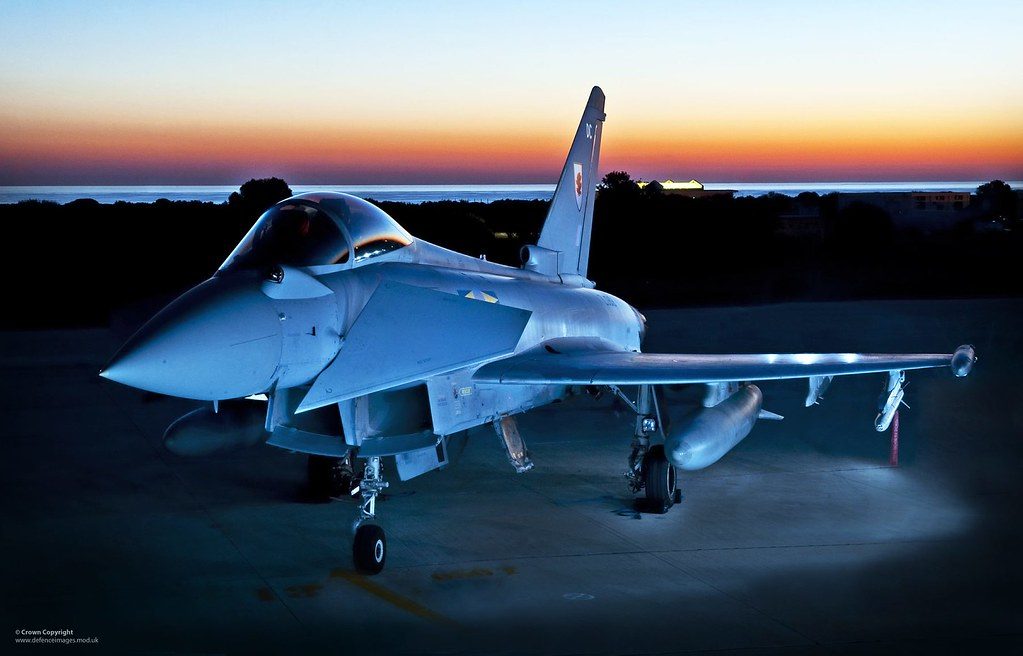
We could have got ships out to the Gulf to support keeping the Straits of Hormuz option (and what a time to withdraw our minesweepers!). We could have got UK (and Ukrainian) drone experts out to the Gulf earlier. We could have got more fast jets or helicopters out to help prep for the drone war. We could have got more service people out to support and strengthen our operations. We didn’t.
We could have, should have, allowed the US to use their bases in the UK and Diego Garcia from the start. Is Trump’s verbal hostility now a result of that decision? If so, Starmer has done serious, needless damage to the US relationship for zero gain, apart from placating our precious Attorney General’s conscience.
All this would have meant that, whilst not taking part in the active bombing of Iran, we could have asserted a stabilising role, prioritising reassurance and support operations. This is what our allies would have expected from an old ally such as Britain, especially one with deep ties to the Arab world.
Regardless of the wider operation, this could/should have been a clear gain for British diplomacy and military heft. Even if we didn’t support the US and Israeli agenda, our actions would also have been interpreted as an intelligent counter-weight, proof of our ability to play a positive role.
What Britain got was Option 3: drag one’s feet, avoid making decisions, hide behind process and legalisms, and then belatedly wrap yourself in the flag like an accidental hero. The Government framed its actions in the prism of anti-Trump, UK domestic politics – and that too has clearly backfired because we did so little to help.
Whether we like Trump or not (and most don’t), a failure to keep what is left of the special relationship is, at any level, a failure that undefended Britain can ill-afford. Starmer’s anti-Midas touch is returning. One begins to imagine that Europe is for Sir Keir some form of psychological comfort blanket behind which he will be able to hide his inability to fulfil his role.
In his press conference, Starmer said Britain would emerge ‘stronger and more secure’, yet our alliances with the Gulf and the US are much weaker than they were. Some of this is Starmer’s fault, some not, but you have to ask, who writes this boilerplate waffle for him? And his response to the crisis: more Europe. We know where this is going to lead, rejoining the EU in everything but name, and maybe in name too. This refusal to respect the EU vote will be by far the most dangerous of the many foolish things that Starmer has done in his short and unsuccessful time in power. Declaring that you will stop political rivals by pushing closer ties to Europe is not the action of a democrat but a demagogue, all be it a bureaucratic one.
Iran is the latest crisis to expose our Prime Minister’s inadequacies. I suspect it won’t be the last.




![Kamala Comes Unglued, Makes Bogus Claim About Her Landslide Loss to Trump [WATCH]](https://www.right2024.com/wp-content/uploads/2025/10/Kamala-Comes-Unglued-Makes-Bogus-Claim-About-Her-Landslide-Loss-350x250.jpg)

![CNN's Kaitlan Collins Fact-Checks Rep. Jasmine Crockett Over False Trump Ballroom Claim [WATCH]](https://www.right2024.com/wp-content/uploads/2025/10/1761954330_CNNs-Kaitlan-Collins-Fact-Checks-Rep-Jasmine-Crockett-Over-False-Trump-350x250.jpg)