Brandon To is a Politics graduate from UCL and a Hong Kong BN(O) immigrant settled in Harrow
In September 1938, Neville Chamberlain returned from Munich waving a piece of paper and proclaiming “peace for our time”. Britain and France had agreed to let Nazi Germany annex the Sudetenland, a concession made in the hope that satisfying Hitler’s demands would preserve peace in Europe.
It did not. Within a year, Europe was at war.
The lesson was brutally clear: appeasement does not moderate aggressors; it feeds them. Give them an inch, and they will take a mile. Concessions are not interpreted as goodwill, but as weakness.
This is not merely a historical curiosity. It is a pattern, and one we are in danger of repeating.
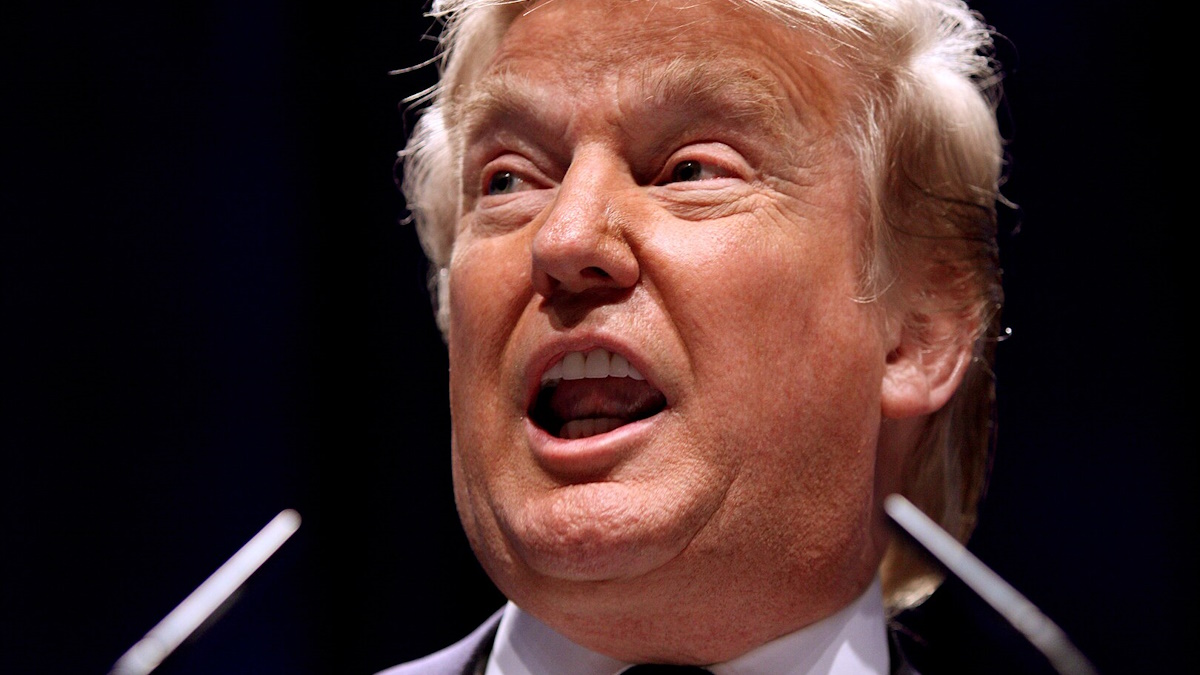
Only today, the aggressor is not Nazi Germany, nor even Russia, but the United States under Donald Trump’s renewed protectionist instincts.
This is not a hypothetical concern. As he started his second term, Trump imposed global tariffs — including on close allies — treating Europe not as a partner, but as a competitor to be disciplined. Trade became a blunt instrument of pressure rather than a means of shared prosperity.
Now, he openly toys with territorial ambitions over Greenland while once again threatening Europe with punitive tariffs. The danger lies not in any single demand, but in the precedent it sets. If Europe concedes over Greenland on the grounds of “national security”, what comes next? The North Sea, framed as a strategic energy asset? Pressure on Britain’s manufacturing, justified as supply-chain resilience?
Once the language of security is normalised as a tool of economic and territorial coercion, it can be redeployed endlessly. Appeasement does not end when demands are met; it ends only when we are weakened enough to depend on the aggressor’s favour. And when that moment arrives, one question remains: what, then, are Britain and Europe reduced to?
The message is unmistakable: no alliance is sacred, no friendship immune, when “America First” demands sacrifice from others.
For too long, Europe, and Britain in particular, has relied on the comfort of the “special relationship”, assuming that shared history and past alliances guarantee fair treatment. Trump’s posture should finally disabuse us of that illusion. Alliances exist only so long as interests align and powers balance. When they diverge, sentiment counts for very little.
What makes this moment more troubling is the predictable response from both ends of the political spectrum.
The Left will posture loudly when dealing with domestic opponents, but grow timid when confronted by external pressure. Faced with real power, their instinct is always the same: de-escalate, appease, compromise, regardless of the long-term cost. They mistake submission for sophistication.
The populist Right, meanwhile, will either fall silent or actively justify American aggression. Enamoured with “America First”, they admire strength even when it is wielded against Britain’s own interests.
Even when tariffs damage British industry, undermine European stability, even erode our strategic autonomy — neatly undermining the “Britain First” mantra they profess — they will still rush to justify it.
Appeasement, once again, disguised as realism.
Between these two failures, leadership is required.
This is precisely the moment for the Conservative Party, particularly Kemi Badenoch and Priti Patel, to show strength and courage. Conservatives should be pressuring Keir Starmer to stand unequivocally with our European allies against economic coercion. Not out of sentimentality, but out of self-interest.
Because this was the original purpose of European cooperation.
The European project did not begin as an ideological crusade or a bureaucratic machine obsessed with niche social issues. It began as a practical economic union. A way for European nations to stand together in a bipolar world, so that none could be picked off, threatened, or divided by stronger external powers.
That logic has not expired. If anything, it has returned with force.
Yet in recent decades, the EU drifted away from this foundational mission, focusing instead on political correctness and an immigration policy that too often prioritised moral posturing over integration and cohesion. Brexit was, in large part, a response to that drift.
Britain is not rejoining the EU. Nor should it.
But Brexit was never an argument for isolation. It was an argument for a different kind of relationship. One based on partnership and mutual respect. A political and economic alignment with Europe that allows Britain to act as a partner, not a subordinate; a collaborator, not a follower.
Only through such a framework can Europe, including the UK, resist pressure from both east and west. Only together can we maintain relevance in a world increasingly shaped by great-power competition.
As Edmund Burke warned:
“When bad men combine, the good must associate; else they will fall, one by one.”
The choice before Britain is stark. We can continue to believe that appeasement buys us safety, or we can recognise that strength and cooperation are the only currencies that aggressors respect.
History has already shown us where the first path leads.


![Donald Trump Slams Chicago Leaders After Train Attack Leaves Woman Critically Burned [WATCH]](https://www.right2024.com/wp-content/uploads/2025/11/Trump-Torches-Powell-at-Investment-Forum-Presses-Scott-Bessent-to-350x250.jpg)