California’s long-delayed high-speed rail released a new budget plan, touting a few billion in savings but failing to emphasize costs that have significantly exceeded projections since its inception.
In a newly released 2026 budget plan by the California High-Speed Rail Authority (CHSRA), the full estimated cost for Phase 1 is now $126.2 billion. But the plan discusses new potential savings for the state. (RELATED: Newsom’s Big Win: High-Speed Railway Has A Fancy Warehouse After Nearly Two Decades Of Construction)
Compared to the 2024 plan, officials say Phase 1’s new estimated cost will save California roughly $1.7 billion. But that pales in comparison to the project’s staggering overruns, with the total now ballooning to $126.2 billion from the original $33 billion to $45 billion projected when voters approved it in 2008.
The initial operating segment (Merced-Bakersfield) now also has an estimated capital cost of roughly $34.76 billion, representing another net reduction of nearly $2 billion from the $36.75 billion in the 2025 Supplemental Project Update Report.
Additionally, program-wide savings for Phase 1 are claimed at $105 billion through an “optimized approach.” However, the plan warns about a potential 10% cost increase if supportive policies aren’t enacted.
These savings come amid ongoing delays, with the plan pushing Merced-Bakersfield revenue service to 2033 and full Phase 1 completion to 2040, far beyond the original 2020 target.
Within the 2026 plan, the CHSRA also cites significant funding gaps and risks for both the Merced-Bakersfield segment and Phase 1 expansions.
While the plan identifies $39.3 billion in available funds through 2045 for the Merced-Bakersfield segment, exceeding the $34.76 billion cost, revenues arrive on a mismatched timeline compared to the project’s heavy upfront expenditures.
For instance, major outlays for civil works contracts and right-of-way acquisitions peak between 2026 and 2032, totaling over $20 billion in committed Central Valley construction alone. While steady annual revenues from Cap-and-Invest, $1 billion per year starting in fiscal year 2026-27, come in later, creating a short-term cash crunch.
This cash flow misalignment—akin to front-loading major construction costs like infrastructure and materials while back-end funding trickles in—could force work pauses that drive up expenses through inflation and idle resources. To mitigate this, the authority calls for low-cost financing, such as bonding against future Cap-and-Invest revenues, instead of a pay-as-you-go approach that risks adding billions in overruns and delaying completion by up to a decade.
Meaning essentially one would borrow money now by issuing bonds backed by expected future proceeds from California’s emissions-trading program, which would then generate funds through pollution allowances.
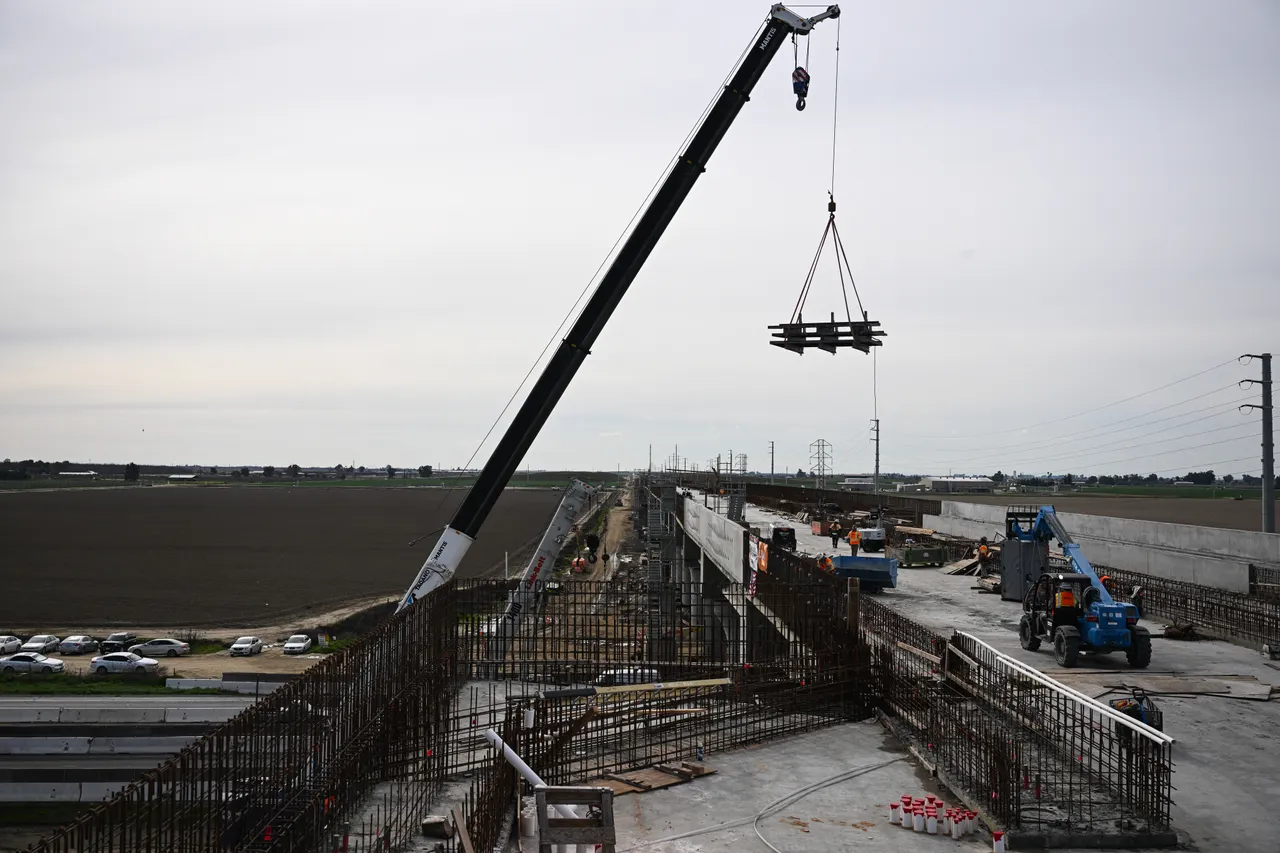
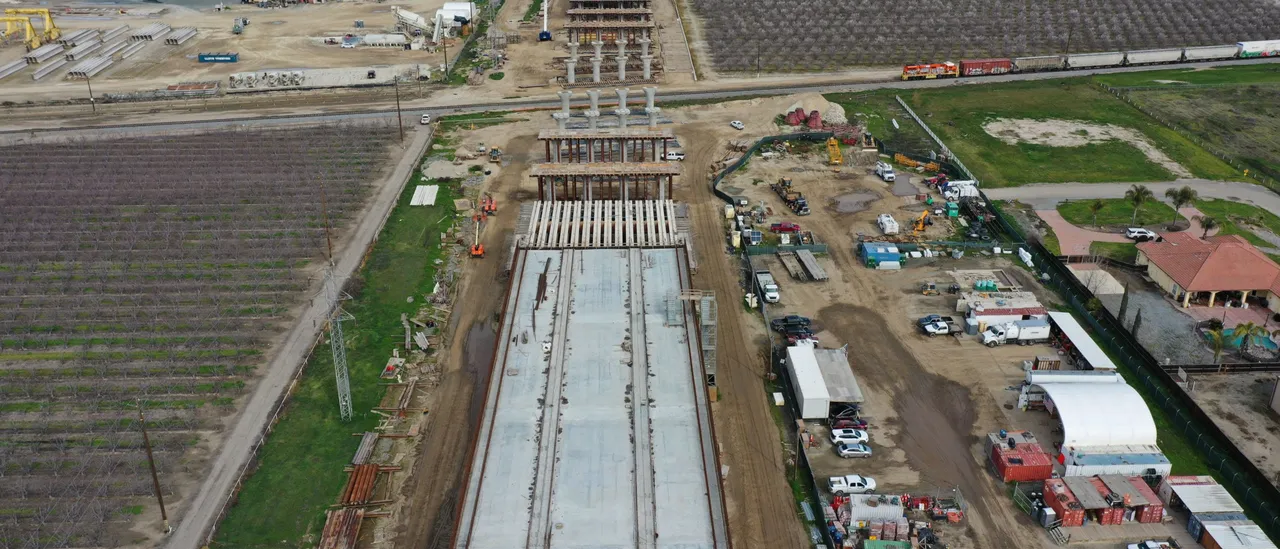
Construction workers use a crane to move equipment as they build the Hanford Viaduct over Highway 198 as part of the California High Speed Rail (CAHSR). (Photo by PATRICK T. FALLON/AFP via Getty Images)
Phase 1 will also immediately require an additional $500 million-plus for geotechnical work, right-of-way and utilities.
The plan lists risks including funding volatility that could add billions in inflation-driven overruns, plus criticisms from previous reports labeling the project a “fantasy.” While the plan projects $173 billion in economic output from Phase 1, these benefits are back-loaded, doing little to offset the immediate taxpayer costs.
“While the identified funding through 2045 is $39.3 billion, and current estimated cost for the segment is $34.76 billion, the timing of the revenues is not aligned with the timing of the expenditures. The result is a projected cash flow alignment issue that must be resolved,” the CHSRA cites.
It further states, “To maintain the schedule and avoid costly delays, the Authority anticipates needing to accelerate the availability of funds through a low-cost financing solution, such as bonding against future Cap-and-Invest revenues, which could otherwise add billions to total costs and delay the introduction of service by at least a decade under a pay-as-you-go model.”
To date, roughly $15 billion has been spent, including the exhaustion of the $9 billion from Prop 1A bonds, yet only about 2,000 feet of track has been installed with no high-speed operations underway.
Federal support has also been reduced to $2.8 billion after a $4 billion termination in 2025 due to delays and non-compliance, heightening the burden on California taxpayers through state-backed sources like Cap-and-Invest, which the plan admits could become volatile.
All content created by the Daily Caller News Foundation, an independent and nonpartisan newswire service, is available without charge to any legitimate news publisher that can provide a large audience. All republished articles must include our logo, our reporter’s byline and their DCNF affiliation. For any questions about our guidelines or partnering with us, please contact licensing@dailycallernewsfoundation.org.




![Donald Trump Slams Chicago Leaders After Train Attack Leaves Woman Critically Burned [WATCH]](https://www.right2024.com/wp-content/uploads/2025/11/Trump-Torches-Powell-at-Investment-Forum-Presses-Scott-Bessent-to-350x250.jpg)