Cameron Bradbury is a former Senior Parliamentary Assistant to former Prime Minister Theresa May and currently works at the UK’s Great Britain China Centre on China policy.
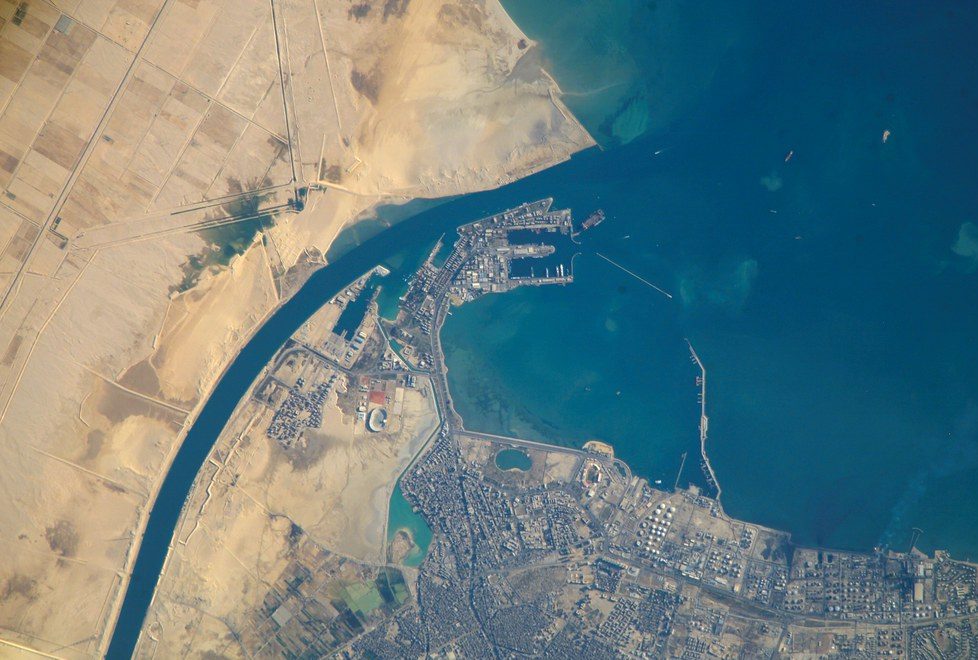
2026 marks the seventieth anniversary of the Suez Crisis, remembered as the British Empire’s last roar before its ignominious retreat from the world stage. The orthodox telling portrays Suez as little more than a cynical imperialist power grab; but this couldn’t be further from the truth.
The US’s daring and successful capture of Venezuelan autocrat President Maduro provides an interesting parallel to look back at a time when a British Prime Minister launched a similarly daring, militarily successful operation that was morally legitimate, but at odds with the established norms of the liberal rules-based international order.
Anthony Eden understood that dictatorships do not abide by international norms, and the autocratic retrenchment in the twenty-first century underlines the danger of pursuing a foreign policy that elevates restraint into principle, pacifying those who act against the strategic interests of Britain and the West.
Eden’s reputation has inevitably been judged against his decision to authorize military action in the Suez Canal, with the common charge levelled that he was a sabre-rattling imperialist, but even a cursory look at his distinguished political career shows him to be the exact opposite; a genuine internationalist who championed values and institutions of the very order that would, ironically, condemn him.
Nasser, by contrast, lauded in 1956 as a champion of anti-imperialism and defender of Egyptian sovereignty, governed as a rapacious autocrat. Seizing power via military coup, he oversaw the establishment of a police state, actively stoked antisemitism, and later employed chemical weapons against his enemies.
By nationalising the Suez Canal and denying passage to Israeli shipping, Nasser violated both the 1954 Anglo-Egyptian Treaty and the 1888 Constantinople Convention, representing a clear breach of international rules and a willingness to weaponise the Suez Canal, a vital international waterway, for domestic political ends.
After appealing to the UN Security Council and engaging with attempts at international mediation (that Nasser rejected) Eden resolved that force was the only option left open and we know how the story ended. The United States refused to support its closest allies, and as a sterling crisis gathered pace, the resulting run on the pound forced Britain to back down.
While Eden’s use of military action was not strictly in line with international law, Nasser had already demonstrated his unwillingness to abide by established norms governing international relations. Attempts to restore the Suez Canal to genuinely international control were not only morally justifiable but legitimate, issuing a strong signal to autocrats who break agreements that they would face consequences.
International rules, like all rules, can only function if violations carry credible reprisals. By refusing to back Britain over Suez, the United States emboldened a Middle Eastern dictator, thus weakening the very rules-based international order it was committed to upholding.
US President Eisenhower later, in a conversation with Richard Nixon, expressed regret over Suez: “Years later, after he had left office, I talked with Eisenhower about Suez. He told me that it was his major foreign policy mistake.”
Even one of the biggest critics of the Suez intervention was to eventually realise he was wrong to condemn it.
Suez exposed an enduring pattern: autocrats invoking the language of the rules-based international order to denounce Western actions as illegitimate, cloaking their arguments in rhetoric of anti-colonialism, while disregarding constraints when these conflict with their own domestic objectives.
The legacy of Suez has imbued Britain with a deep reluctance to act in any way perceived as contrary to the rules-based international order. Now, this is not to suggest that Western nations should have carte-blanche or moral legitimacy to violate international norms. Far from it.
The values enshrined in the UN Charter articulate a noble set of principles to which all states should aspire. Yet we have to be honest; international law is neither infallible nor a guarantor of moral outcomes, particularly in the absence of reciprocity.
While the rules-based international order provides a valuable framework of ideals, it cannot function as an absolute constraint especially when autocratic states selectively ignore obligations and exploit international institutions to delegitimise valid criticism.
It is often the most repressive regimes that invoke international law most aggressively, especially when it binds their opponents. In 1956, as the Soviet Union loudly condemned the Suez intervention, Khrushchev was simultaneously sending tanks into Hungary to crush popular demands for freedom, murdering thousands.
The contemporary international order now risks entrenching this imbalance. Procedures at the UN frequently penalise rule-abiding democracies while insulating authoritarian states.
International bodies produce reports, advisory opinions or resolutions and while democracies, rightly, feel compelled to engage, autocracies simply do not. They ignore findings and block enforcement. Reputational pressure only ever hits one side.
International institutions designed to restrain arbitrary power are increasingly only disciplining states already inclined towards restraint. If this dynamic continues unchecked, we risk facilitating a further hollowing out of the very institutions intended to preserve peace and stability.
So why does Suez still matter? It matters because it is remembered wrongly; and the lessons Britain has drawn from it have been wrong, with lasting implications for how we conduct foreign policy. The legacy of Suez has contributed to an over-cautious, reactive strain in British foreign policy, marked by a reluctance to act independently.
Far from being a fading empire’s last roll of the dice, the Suez intervention was a robust attempt to prevent the wrecking of international order.
That Nasser, however battered militarily, emerged triumphant politically mattered; not just for the Middle East, but for the wider rules-based international order.
As Eden himself commented later during the Cuban missile crisis:
“The US has been a prisoner of its own past. If it had given us firm support after Nasser seized the Suez Canal, he could have been called to order and international authority restored… however Nasser was allowed to get away with it. This encouraged the other petty dictators- now the US has a life-size decision upon its hands. We cannot envy them.”
Now, in 2026 seventy years on, one cannot help but envy the decisions the US has to take when deciding which petty dictators to bring to order. Had the US not pulled the rug out from under Eden’s feet, perhaps today the US would enjoy an ally equally willing to proactively share the burden of defending this rules-based international order.





![Donald Trump Slams Chicago Leaders After Train Attack Leaves Woman Critically Burned [WATCH]](https://www.right2024.com/wp-content/uploads/2025/11/Trump-Torches-Powell-at-Investment-Forum-Presses-Scott-Bessent-to-350x250.jpg)



![James Carville Admits Democrats Had No Shutdown Endgame, Mishandled Strategy [WATCH]](https://www.right2024.com/wp-content/uploads/2025/11/1763070634_James-Carville-Admits-Democrats-Had-No-Shutdown-Endgame-Mishandled-Strategy-350x250.jpg)