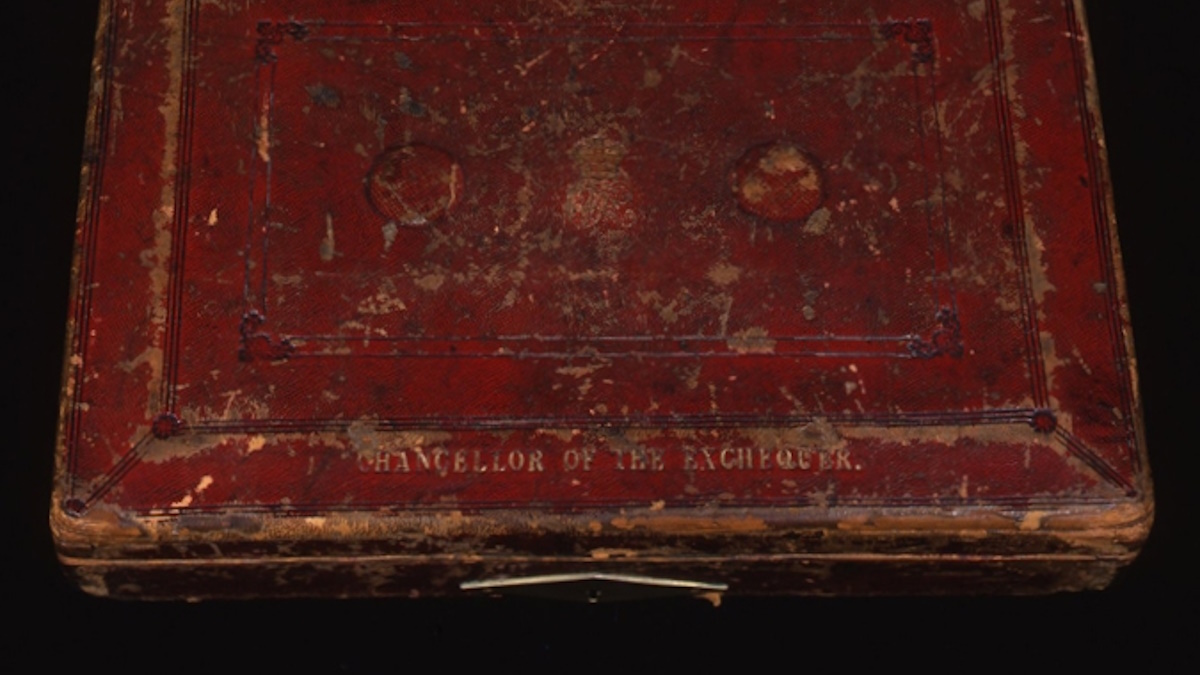
Mel Stride has written to Nikhil Rathi, the chief executive of the Financial Conduct Authority, to deprecate its decision not to investigate Rachel Reeves over potential ‘market abuse’ in the run-up to the Budget:
“The Conservatives had previously urged the FCA to look into “possible market abuse”, which is a civil offence, arising from the “inaccurate picture” painted by Ms Reeves, as well as “briefings, leaks and spin” from the Treasury. But Nikhil Rathi, the chief executive of the FCA, refused to launch an immediate investigation, insisting that the Government’s public communications were “a matter for Parliament through its accountability measures”.”
Now its tricky for any politician to restrain themselves when there is blood in the water, and nobody can blame the Conservatives for making the commendable effort to actually stay on the front foot after a big moment in the political spotlight. Even if the current pressure doesn’t actually bring down the Chancellor, it all helps to make Sir Keir Starmer’s main economic message-carrier that much less credible.
Yet one should always be mindful of reaching in opposition for convenient weapons which might a) come back to bite you in office or even b) conflict with one’s principles. Perhaps I’m misremembering, but I seem to recall quite a lot of various budgets getting leaked during the Tories’ period in office, as well as a general posture that the Conservatives were pro-Parliament and sceptical of quangos.
There was, at one point, so strong an omerta around the Budget that when the entire thing once fell prematurely into the hands of a newspaper it was returned to the Treasury unpublished. But that was some time in the past, and absolutely no effort was made to restore it over the past decade and a half. Admittedly the Conservatives did tend to approach leaking from a different direction; generally most of the nice things (bar one or two rabbits-from-the-hat) would be trailed in advance, leaving journalists with nothing to do after the big day but find the less nice things. But that was still leaking, and presumably it had some effect on the markets.
Perhaps it doesn’t come down to leaking per se, but something more specific. In his letter, Stride refers to “the clear possibility of market-moving unlawful disclosure of insider information and market-moving dissemination of false information by the Chancellor or Treasury officials”. Now “dissemination of false information” sounds, potentially at least, like something specific to Reeves, with her wilful misrepresentation of the Office for Budget Responsibility’s economic assessment. But “disclosure of insider information” sounds a lot like plain leaking.
Again, the instinct to pursue the Chancellor via every available avenue is perfectly understandable. Is it wise, however, to elide those two things?
Reeves’ lying to the nation about what the OBR was telling her was egregious; it is very hard to make a case for politicians to be able to lie at will about what independent forecasters are telling them.
Beyond that, however, you’re in much hazier territory. Whilst there is a conspiracy theory that the hints at an income tax hike were a deliberate strategy aimed at moving economic forecasts, insider accounts seem to confirm that the Government really changed its mind; it would be unusual to make that indirectly illegal.
As for attempting to make a criminal offence of leaking, well: there’s a reason that the absurdity of that enterprise provided the foundation for an entire series of The Thick of It. If nothing else, there may yet at some point be another Tory chancellor, and if past performance is any guide their budgets are going to leak. They would probably thank the current shadow treasury team for not establishing a new norm around criminalising such things.
One is reminded of the start of this Parliament, when the Conservatives likewise went after Reeves on bureaucratic grounds for bypassing normal appointments procedures and – clutch your pearls, readers – deciding to scrap the Winter Fuel Allowance without conducting an equality impact assessment! In reality, both these stories merely illustrated that the Tories could have done such things that they were in power, but didn’t, but in each case the decision to pursue the short-term hit will have increased the power of these things in the Conservative imagination, to the detriment of any future Conservative government.
Thankfully for we all-weather believers in the political constitution, however, the FCA seems minded in this case to show appropriate deference to the prerogatives of Parliament.



![Donald Trump Slams Chicago Leaders After Train Attack Leaves Woman Critically Burned [WATCH]](https://www.right2024.com/wp-content/uploads/2025/11/Trump-Torches-Powell-at-Investment-Forum-Presses-Scott-Bessent-to-350x250.jpg)
![CNN's Kaitlan Collins Fact-Checks Rep. Jasmine Crockett Over False Trump Ballroom Claim [WATCH]](https://www.right2024.com/wp-content/uploads/2025/10/1761954330_CNNs-Kaitlan-Collins-Fact-Checks-Rep-Jasmine-Crockett-Over-False-Trump-350x250.jpg)