
Vilnius, Lithuania, Dec 13, 2025 /
08:00 am
Caritas Lithuania has launched a new support initiative for individuals struggling with pornography addiction, responding to what staff describe as a marked surge in people seeking help as explicit content becomes increasingly unavoidable online.
The program, offered in Lithuanian, English, and German — both in person and remotely — provides counseling not only for those battling compulsive sexual behaviors but also for spouses and family members affected by them.
Caritas workers report a noticeable rise in referrals, with many parish priests now directing individuals in their care to the program, touching upon the growing need for coordinated pastoral and professional support.
Growing demand for help
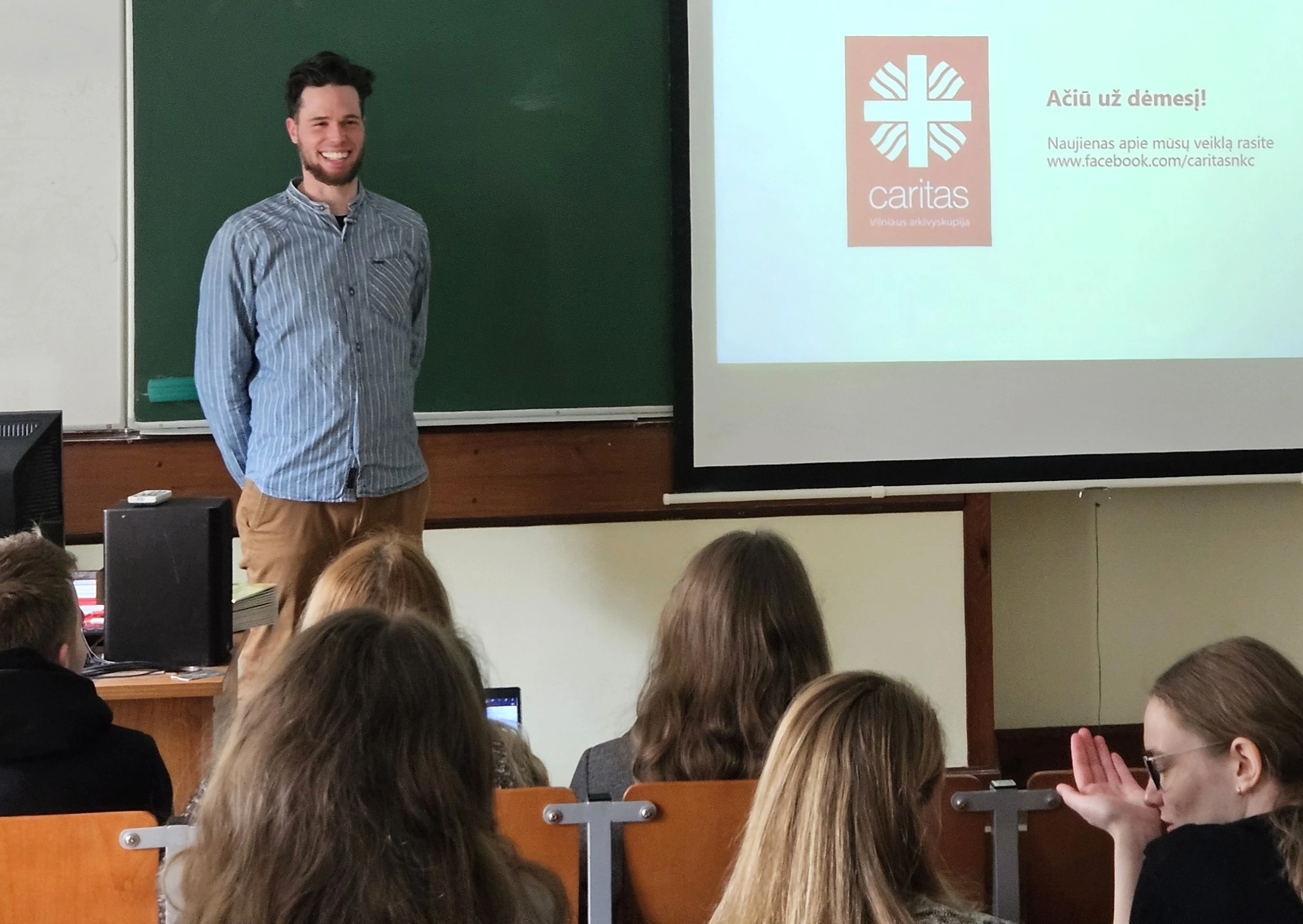
Simon Schwarz, head of the Caritas Vilnius Convicts Consultation Center and an addiction counselor, told CNA that the new program grew out of a steady rise in cases. “For the last seven years, people suffering from compulsive sexual behavior disorder [CSBD] have been coming to Caritas for help,” he explained.
The continued stream of cases in 2023 and 2024, he said, made it clear that “we needed to professionalize our work in this area.”
With the support of Caritas Vilnius leadership, Schwarz completed specialized training in treating compulsive sexual behaviors and sex addiction, certification the organization helped to fund. He said the need has grown rapidly in Lithuania, a “highly tech-oriented country” where even young children often have unsupervised internet access and where sexualized content is easily encountered across social media, advertisements, and video sites.
“You don’t even have to seek out pornography to be exposed to it,” he noted, explaining that early exposure significantly increases the risk of developing an unhealthy relationship with sexual content. Yet discussing these struggles remains difficult.
“The paradox is that we live in a highly sexualized society, but we shame anyone who cannot control their sexual behavior,” Schwarz added.
Program details and costs
As the initiative is still growing, Caritas Vilnius is continuing to develop its funding base, and for now, clients contribute to the cost of consultations. The support process begins with a free introductory consultation, during which individuals complete a brief screening for compulsive sexual behavior disorders.
Those unable to afford further sessions are directed to free or low-cost alternatives, including Sexaholics Anonymous groups or online self-help resources. A follow-up session then evaluates the person’s specific situation and sets a tailored plan, first to halt compulsive behaviors and later to address deeper issues such as stress, isolation, or anxiety.
Shifting demographics of clients
Before the initiative was formally launched, for several years those suffering with compulsive sexual behavior disorders had approached Caritas Vilnius for help and they were directed to Schwarz. Most of those early clients were well-educated married men between the ages of 35 and 55, employed in respected professions. But once the initiative became more widespread and local parishes began referring individuals, the profile shifted dramatically.
Today, nearly half of the clients are between 18 and 20 years old, with some already facing severe psychological consequences after years of pornography use beginning in early puberty.
Addressing stigma in Christian communities
(Story continues below)
Subscribe to our daily newsletter
A key aim of the initiative is to reduce the stigma surrounding these struggles within Christian communities.
“Research shows that Christians often feel more ashamed of their sexual acting out than nonbelievers, because their struggle carries a significant spiritual weight,” Schwarz explained.
He also challenged the common misconception that pornography use doesn’t affect one’s partner, explaining that many dismiss it as not “real” infidelity since it’s just on a screen. However, the discovery of a spouse’s addiction proves equally devastating.
Kristina Rakutienė, a well-known Lithuanian social activist involved in raising awareness about the harms of pornography, echoed those concerns. She said many people hesitate to publicly engage with educational posts on social media out of fear that others will assume they personally struggle with addiction. She also pointed to a lack of easily accessible information, leaving many unsure where to turn or unaware that support groups exist.
Women also affected
Rakutienė discussed that the issue affects women as well. “When talking face to face, many women tell me they face this struggle too, or that they feel betrayed when their spouses enjoy porn,” she said. She tries to reassure both addicts and spouses who feel wounded that “there is hope,” adding that healing is possible by relying on God’s mercy, which offers not only compassion but also true freedom.
CNA also spoke with Father Kęstutis Dvareckas, a priest at a Caritas rehabilitation center with more than 15 years of experience treating both substance-related and behavioral addictions. He confirmed that, even before the new program was formally established, the center had already seen a growing number of people seeking help for pornography addiction.
In explaining the psychological and spiritual consequences of the problem, he likened it to substance addiction in that victims often require increasingly extreme content to achieve the same stimulation, which can ultimately undermine their ability to form and sustain healthy relationships. This was due to people becoming desensitized and finding real relationships dull and unfulfilling.
Addressing such struggles pastorally, he noted, requires sensitivity rather than moral assessments or outright condemnation. “Only understanding and acceptance allow a person to recognize the extent of their illness and to seek help from God and from others,” he said.
“Effective support,” he added, “depends on close cooperation between priests and clinical professionals, including psychiatrists, psychologists, and addiction counselors.” He also highlighted the Church’s unique role in moving people from the isolation, denial, and self-blame of their addictions to the experience and closeness of God’s love as they overcome their vices.
Remarking on the critical distinction regarding responsibility, he said: “A person is not guilty of becoming ill, but they are guilty and responsible if they do not seek treatment for their illness.”

Bryan Lawrence Gonsalves is a UAE-born apologist and essayist currently living in Lithuania. His work focuses on Catholic social teaching, theology, human dignity, and contemporary social issues.