
Charlie Cole has a keen interest in British politics, with a focus on immigration.
Last week, the Office for National Statistics (ONS) released migration figures for the year-ending June 2025, the week prior, the ONS released several bulletins on updated methodologies for estimating immigration and emigration of British and EU nationals.
The ONS estimates that for the year-ending June 2025, 898,000 people entered the United Kingdom, with 693,000 people leaving, resulting in a net migration figure of 204,000 — the lowest since 2021.
This drop was expected, the Home Office publishes monthly visa applications and for work visas, these have dropped significantly since early 2024, though applications for student visas remain high and will be a key driver for immigration into the United Kingdom going forward.
Net migration is down 78 percent when compared to the peak of 944,000 in the year-ending March 2023, which is now higher than the previous estimate of net migration peaking at 906,000 for the year-ending June 2023, per the updated ONS estimates released in November 2025.

What may surprise many, is this reduction isn’t because of any policy changes introduced by Labour, at least yet. This reduction is the result of policy changes made by Rishi Sunak’s Government, in the final months of the 2019 – 2024 Conservative Government.
- From 1 January 2024 – Most overseas students were restricted from bringing family members (dependants) with them.
- From 11 March 2024 – Care workers were restricted from bringing dependants with them and all care providers sponsoring migrants were required to register with the Care Quality Commission.
- From 4 April 2024 – The salary threshold for those on the Skilled Worker visa was increased from £26,200 to £38,700.
- From 4 April 2024 – The Shortage Occupation List was replaced with a new Immigration Salary List and the 20 per cent going rate discount was abolished, this meant that employers could no longer pay an immigrant worker less than they could a British worker for occupations on the shortage list.
- From 11 April 2024 – The minimum income requirement to sponsor someone for a family visa was increased from £18,600 to £29,000.
By the time these changes filtered through into the net migration figures, which for the year-ending December 2024, were released in May 2025 and were later revised in November 2025, it was too little, too late. The Conservatives had already lost the general election, bled massive amounts of support to Reform UK and Labour command a massive majority, with the next general election potentially as late as August 2029.
It is staggering the Conservatives didn’t implement these changes sooner. If they had implemented these restrictions in late 2022 or early 2023, a reduction in net migration would have been observed much sooner. It’s conceivable that Rishi Sunak could have then gone into a general election in late 2024, having presided over substantial cuts to immigration.
The Conservatives did pledge a binding cap on migration in their 2024 election manifesto, with a “guarantee that numbers will fall every year”, but given the Conservatives pledged to reduce net migration in their 2010, 2015, 2017 and 2019 manifestos, and failing to delivery on every occasion, why would voters believe them?
If voters had seen migration actually be substantially cut, rather than simply talking about cutting it, this would have proven far more electorally popular than national service, the triple lock plus or a bunch of other promises voters simply wouldn’t have believed the Conservatives on – to be clear, the Conservatives probably would have still lost the general election, though perhaps not to the degree they did.
Suella Braverman, the former Home Secretary, recently appeared on an episode of heretics with Andrew Gold, during the episode, Suella claims she pleaded with both Liz Truss and Rishi Sunak to cut migration, outlining that cutting the number of work visas could quickly yield results. Rishi Sunak reportedly resisting such attempts, for fear it would hamper his ability to cut taxes. She says, and I quote:
“The reason it got out of control, is because there was a flawed belief, running through the Conservative party, which was, more immigrants into the country, is necessarily a good thing”
If true, this shows a fundamental disconnect between Conservative voters and Conservative politicians. Polling has consistently shown that an overwhelming majority of Conservative voters think immigration is too high, around the time of the 2024 general election, this stood at 91 percent of Conservative voters.
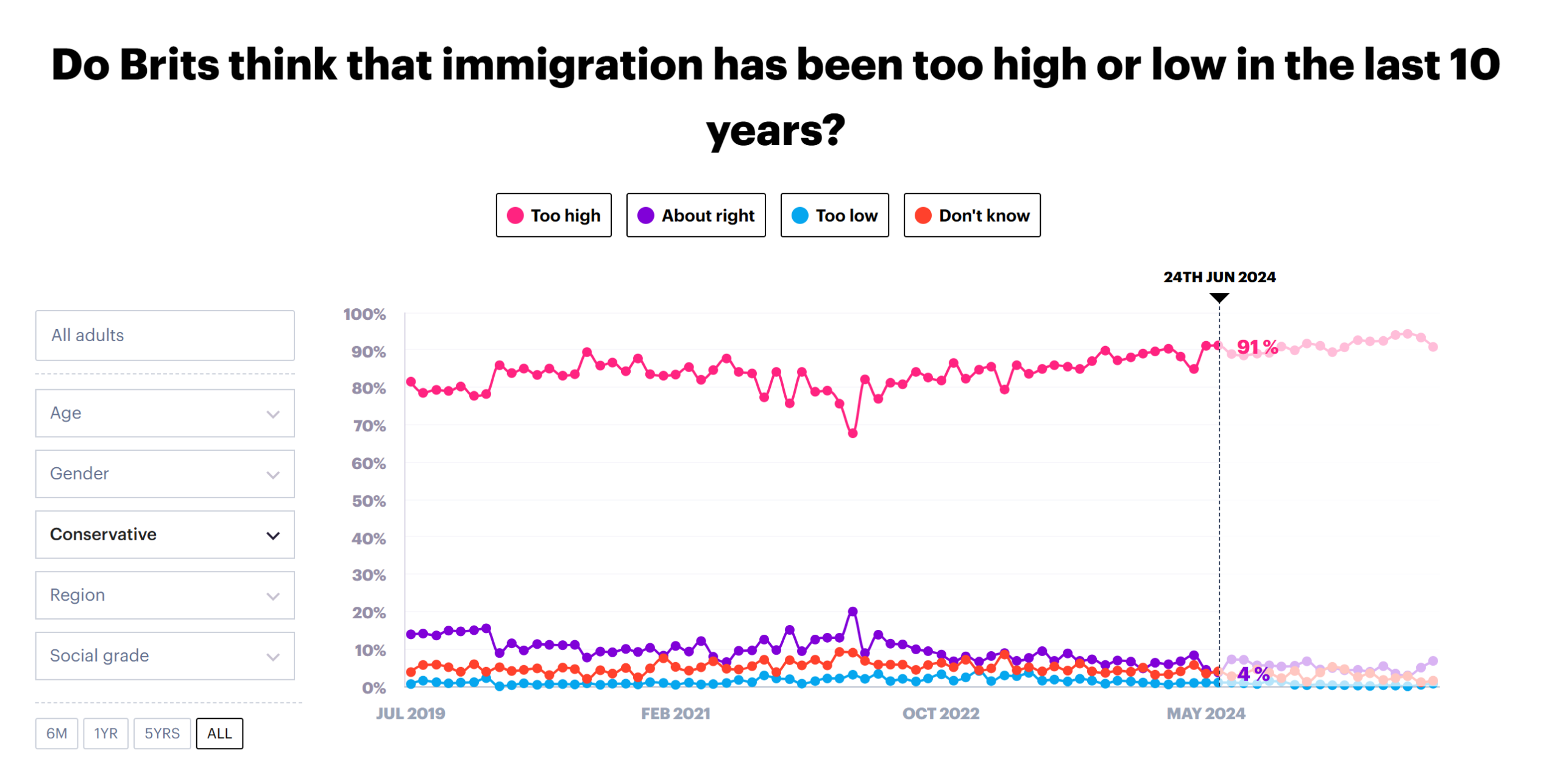
Even at the lowest point, in March 2022, 68 percent of Conservative voters thought immigration was too high, which is still a resounding majority that want lower immigration.
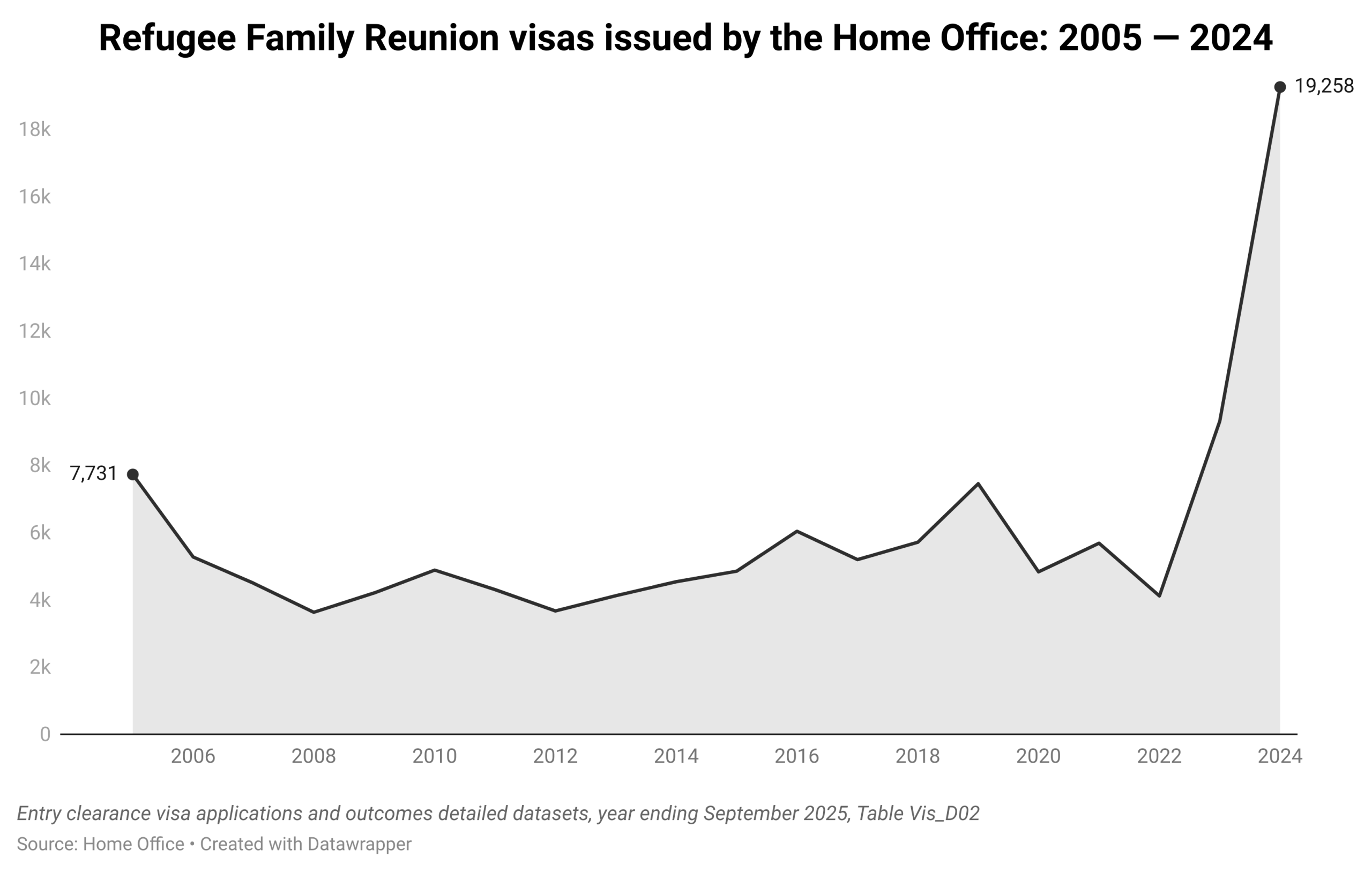
What will add extra salt to this, is net migration will fall further. In May 2026, we should get the migration figures for the year-ending December 2025, which will factor in the changes Labour made to the skilled worker visa in July 2025 and in September 2025, when they suspended refugee family reunification, something that the Conservatives completely ignored, despite massive increases under their watch.
If Labour implement other changes from the immigration white paper, including increasing the standard qualifying period for Indefinite Leave to Remain (ILR) from 5 years to 10 years and potentially even longer for low-skilled migrants and those who arrive illegally, increase English language requirements, tighten the number of jobs eligible for the skilled worker visa, increase the immigration skills charge, levy a fee on University income from international students, all of which they say they will do, then throughout the remainder of this parliament, we will see immigration decrease and emigration increase, substantially reducing net migration into the United Kingdom.



![Donald Trump Slams Chicago Leaders After Train Attack Leaves Woman Critically Burned [WATCH]](https://www.right2024.com/wp-content/uploads/2025/11/Trump-Torches-Powell-at-Investment-Forum-Presses-Scott-Bessent-to-350x250.jpg)



![Kamala Comes Unglued, Makes Bogus Claim About Her Landslide Loss to Trump [WATCH]](https://www.right2024.com/wp-content/uploads/2025/10/Kamala-Comes-Unglued-Makes-Bogus-Claim-About-Her-Landslide-Loss-350x250.jpg)