The war with Iran has opened a new chapter of violence for Lebanon, leaving the country once more in the familiar chaos, hardship, and uncertainty that accompanies every conflict.
For many Christians, the frustration runs deeper. For decades, they have lived with the reality of Hezbollah’s armed dominance, politically opposing and contesting, with limited impact, the “Axis of Resistance” doctrine led by an Islamist Iranian-backed militia.
Today, the consequences of Hezbollah’s military adventures and its entanglement in regional wars are unfolding once again, and Lebanon’s Christians must bear the cost as well.
For Christian villages in the south, the injustice is even starker. They opposed this path, yet geography has placed them directly in the line of fire. As evacuation orders sweep across southern Lebanon, residents are being told to leave their homes. However, despite the danger and the injustice of paying the price for a war they did not want, many have chosen their own kind of “resistance’’ — remaining where they are.
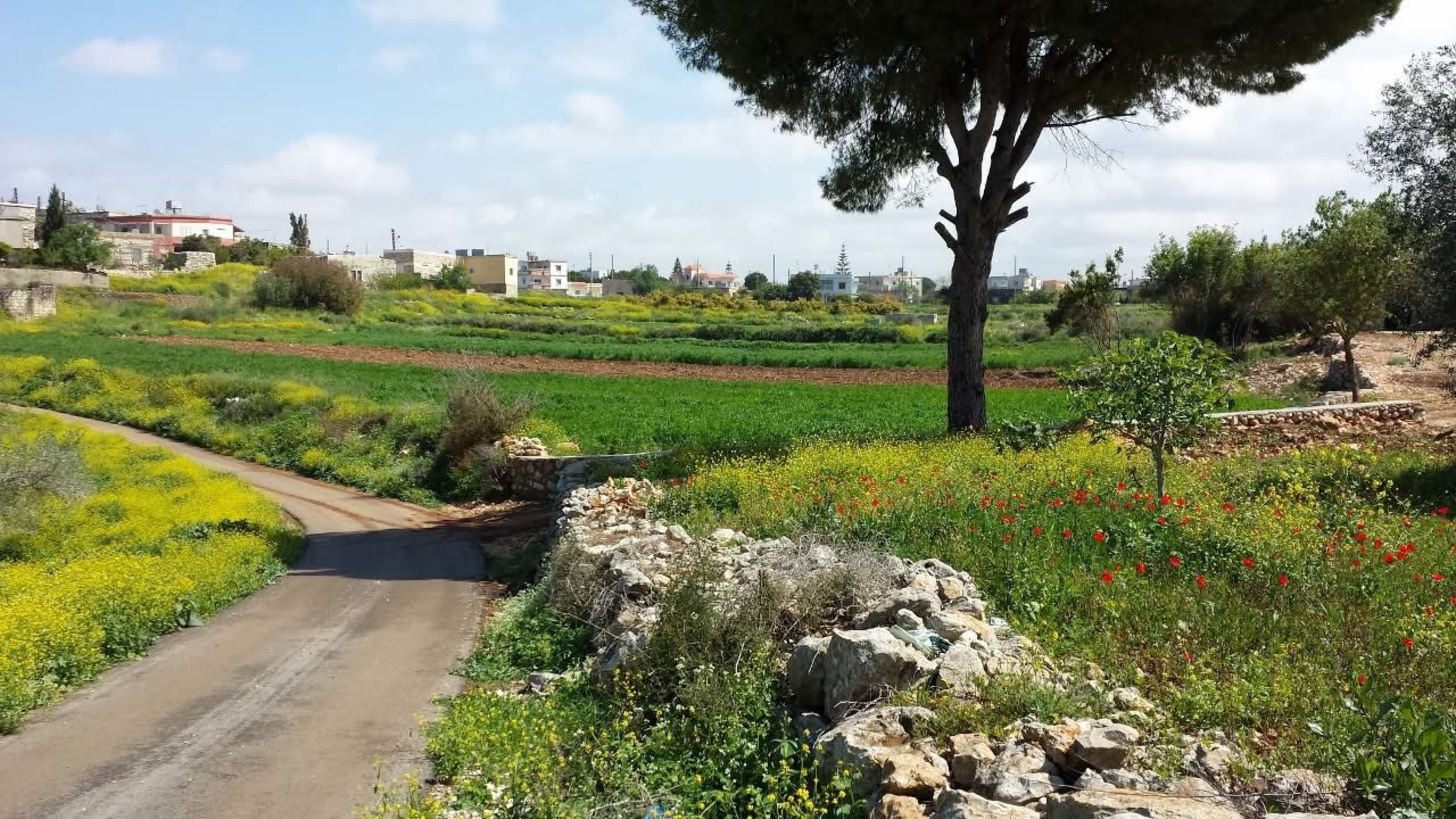
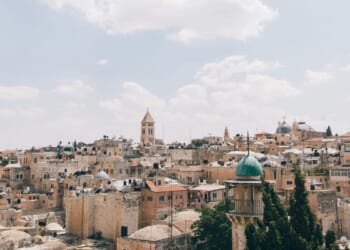
The Lebanese town of Alma al shaab. | Credit: Nabil Farah
Alma al-Shaab rings the bells of resilience
In the town of Alma al-Shaab, residents refused to leave their homes. They gathered in the square of Our Lady’s Church and rang the church bells. Videos circulating on social media showed villagers sending a clear message: They intend to remain in their village.
Charbel Sayyah, a law graduate and native of this southern Christian town, explained that Alma al-Shaab occupies a highly sensitive position along the border. “It has a strategic position for both Israelis and Hezbollah,” he said, noting that Hezbollah had attempted several times to acquire land in the village through affiliated associations, efforts residents opposed.
In a post on X, Sayyah wrote: “I am from Alma al-Shaab, from the beloved south that has nothing to do with the Iranians or their militias. I call on the president of the republic and the prime minister to declare my town, Alma al-Shaab, a zone free of any security or military activity by Hezbollah. I also call on the Lebanese army to intervene and protect the area from any attack. And if it cannot do so directly, then it should provide the people of the town with what they need to stand firm and defend themselves.”
Speaking to ACI MENA, the Arabic-language sister service of EWTN News, Sayyah also stressed the need for diplomatic efforts to make clear that these villages have no connection to any military activity.
“If you do not want to provide direct protection, at least give us what allows us to stand firm, support, supplies, ammunition, any form of assistance. How are we supposed to face this?” he said.
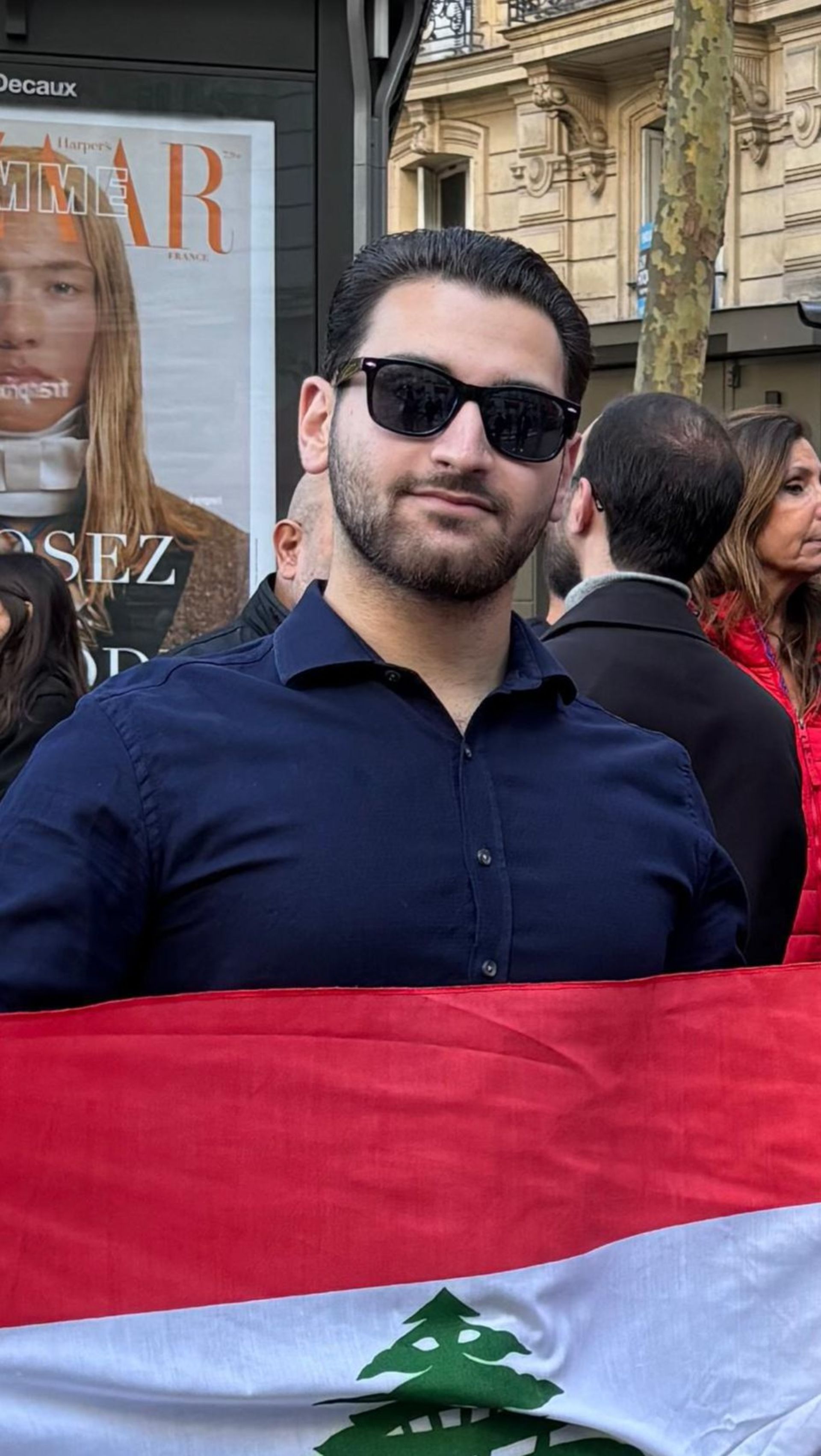
Charbel Sayah. | Credit: Photo courtesy of Charbel Sayah
Sayyah also emphasized that taking up arms is the last thing residents want. “We do not want weapons, and most people here do not even know how to use them. But we cannot be left like this… We will not accept for someone [Hezbollah] to launch rockets from our land, or for an Israeli soldier to provoke us, like when the Star of David was drawn on the Church of Our Lady. We cannot relive the same story every time. This is our town, and we want to remain in it.”
Sayyah also recalled the previous round of conflict in 2024, when Alma al-Shaab suffered significant damage. “The church was about half destroyed. Our family home was also damaged,” he said. “We never wanted the war in the first place. Yet we were forced to leave because of the crossfire. After the ceasefire, some residents began returning. But this time, despite the war, we do not intend to leave,” Sayyah said.
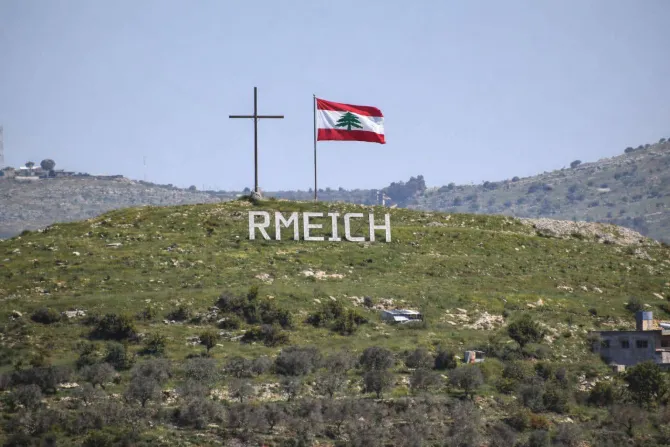
In Rmeish, church bells warn of danger
Christian Hajj, a native of the border town of Rmeish, told ACI MENA that his family has no intention of leaving. “They did not leave the village in any of the previous wars,” he said of his relatives. “They built their home from scratch. My grandmother’s house dates back to the 1960s.”
He explained that the main concern for his family and many residents is the possibility of an Israeli ground incursion, given that Rmeish sits directly on the border. However, he noted that the town itself was not harmed during last year’s hostilities.
Hajj also stressed that Rmeish has never allowed Hezbollah members to position themselves in the town. Addressing concerns that party members could infiltrate the village this time, he said the geography makes such movements difficult. “We are literally at the borders,” he explained. “We are surrounded by Israel on one side and by other villages on the other, which means the entrances are known.”
Men from the town have volunteered to organize watch rotations, he said, in coordination with the local church, whose bells are rung if any suspicious movement is detected. He added that what effectively functions as the town’s local police consists of off-duty Lebanese army soldiers from the village who help monitor the area.
Hajj also noted that the village is largely self-sufficient, though residents still depend on food supplies coming from nearby cities.

Christian El Hajj. | Credit: Photo courtesy of Christian El Hajj
Ein Ebel stands its ground
In Ein Ebel, another Christian village in the south, the same choice has been made: to stay.
A woman from the town, who asked not to be identified for security reasons, told ACI MENA that the presence of residents acts as a form of protection. “We want to protect the town through our presence and make sure that Hezbollah does not enter it or use it,” she said.
She explained that young men from the town are stationed at the entrances, though she remains concerned because the border is not limited to official entry points.
Despite reports circulating that the Lebanese army had withdrawn from Ein Ebel, she said the army remains present in the town. She also stressed that residents intend to stay in their homes even in the event of an Israeli ground incursion.
She recounted that a man suspected of being a Hezbollah member entered the village the previous day asking for shelter and appeared to have just come from a clash: His clothes were dirty and he showed visible signs of combat. Residents immediately contacted the municipal police, who escorted him out of the town.
“So far, he is the only one who has tried to enter, or at least the only one we know about,” she said.
A message to the Vatican and the world: ‘We will not leave’
The apostolic nuncio to Lebanon, Archbishop Paolo Borgia, was recently informed by a delegation representing residents of southern Christian towns Rmeish, Ein Ebel, Debel, and Alma al-Shaab that the inhabitants had made a final decision: They will not leave their land or their homes, regardless of the circumstances.
Members of the delegation reaffirmed their commitment to the Lebanese state, the Lebanese army, the Internal Security Forces, and the United Nations peacekeeping mission UNIFIL while rejecting displacement. They stressed that their towns do not host Hezbollah or any other armed presence that could serve as a pretext for attacks against them.
The delegation also asked the Vatican’s diplomatic channels to raise the issue in Washington and European capitals, seeking guarantees that residents of these border towns would not be targeted by military operations or pressured to leave their homes, something they say is out of the question.
Speaking on behalf of residents, Father Najib Al-Ameel, the parish priest of Rmeish, said: “We remain steadfast in our town. This is the position of most people in Rmeish, Ein Ebel, and Debel. We will not wander displaced on the roads; our homes are safer.”
Caught between the fear of Hezbollah’s exploitation of their villages and the threat of Israeli invasion, these communities face dangers they neither chose nor control. What sustains them is faith, love for their land, and a stubborn determination to stay.
This story was first published by ACI MENA, the Arabic-language sister service of EWTN News, and has been translated and adapted by EWTN News English.