Cllr Craig Smith is the Deputy Chairman of the Leicestershire Conservatives Area Executive and a councillor for Coalville North Division on Leicestershire County Council.
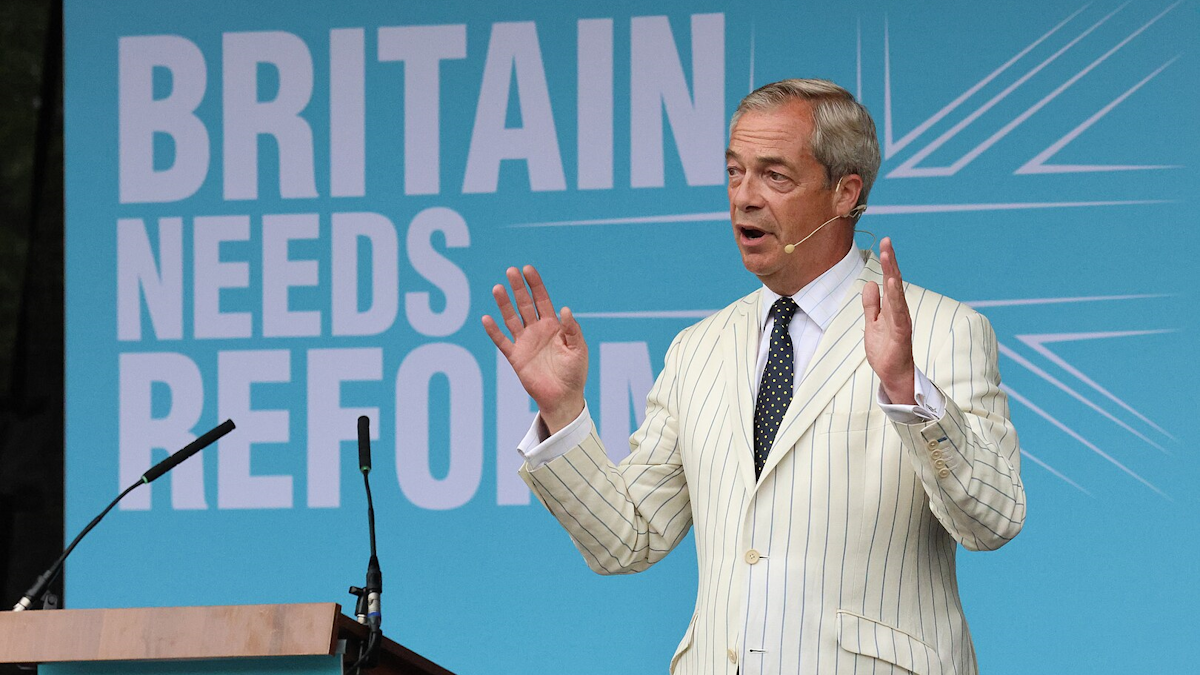
Six months on from May’s local elections, the experiment of Reform-led councils is already showing exactly what happens when populism is handed the steering wheel and expected to drive something more complicated than a Facebook thread. The public was rightly fed up. The country has felt like it’s been going downhill fast, and people wanted something to change urgently. Many didn’t vote for their local Reform candidate because they had no idea who the person even was. They voted for Nigel Farage, the political brand, the lightning rod, the man plastered across every media outlet as if Britain had collectively entered the Farage Cinematic Universe. People weren’t voting for individuals; they were voting for a symbol of frustration.
But the problem with populism is simple: it is brilliant at winning elections and usually catastrophic at everything that comes afterwards. Governing requires discipline, patience, understanding, experience, and a deep appreciation of what you can’t do, not just what you’d like to. Running a council isn’t a pub debate. It isn’t a rant on social media. It isn’t a promise scrawled on a leaflet. It is legal obligations, statutory responsibilities, safeguarding duties, multi-million pound budgets, procurement rules, employment law, social care pressures, and political accountability that don’t magically disappear because someone thinks “common sense” will solve it.
For years, Conservative administrations in places like Leicestershire and Nottinghamshire quietly absorbed that pressure. It wasn’t glamorous, but it was competent. They managed to keep vital services functioning despite brutal funding conditions. They balanced budgets, stabilised departments, worked constructively with officers, and kept residents safe through some of the toughest financial periods local government has ever seen.
Reform swept into these councils with candidates who, in many cases, had never held public office of any kind. Some had never worked with public-sector budgets, governance structures or policy frameworks. And unsurprisingly, the wheels started coming off almost immediately. Financial instability, public arguments, chaotic meetings, internal splits, and councillors resigning, defecting, being expelled or suspended at a rate that would be funny if it wasn’t happening to real communities. The list of councillors Reform has lost since May is now so long you need a scroll bar to get to the bottom of it. Suspensions, expulsions, resignations, independents, far-right WhatsApp groups, harassment charges, it’s all there, and all within six months. This isn’t the behaviour of a movement ready for national government. It’s the behaviour of a party discovering that reality is less forgiving than rhetoric.
Meanwhile, the idea that turning up to a meeting in a suit automatically earns you respect has been disproven more times than anyone can count. Some of the new councillors genuinely seem to believe they are Nigel’s foot soldiers first and councillors second, and that their real purpose is to wage permanent political war rather than actually run the authority they were elected to lead. You see it particularly online, the tone, the aggression, the lack of awareness that once you’re elected you are no longer an armchair commentator, you are the person responsible for the outcome.
And it’s not just political instability causing the cracks, it’s organisational damage too. In my own county council, we have seen a spate of senior officers leaving since May, taking with them decades of experience, expertise and organisational memory. This includes officers who understand the history behind decisions, the pressures behind budgets, the risks behind policies, and the internal machinery that keeps an authority of our size functioning smoothly. These departures, combined with the recent retirement of the Chief Executive, the most senior officer in the entire organisation, place enormous pressure on an already inexperienced administration. When the political leadership lacks depth and the professional leadership is hollowed out, the entire organisation becomes fragile. That fragility doesn’t stay theoretical; it hits residents directly through slower decisions, weaker oversight and reduced resilience in the face of crises.
This all flows from the same dangerous misconception that took root during the campaign: that anyone can run a council, that experience doesn’t matter, and that being angry is a substitute for being capable. It isn’t. Local government is not a protest movement. It is not a platform for online theatrics. It is the safety net, the infrastructure, the daily machinery that keeps society functioning. And when you put people into positions of responsibility who don’t understand that, the consequences arrive quickly.
But underneath it all, the most important point remains this: the public were right to be fed up. They were right to feel ignored. They were right to want real change. They were entitled to demand something different. But what these first six months have proven is that change without competence is not an improvement, it is deterioration. Anger can win elections. But only experience, seriousness and discipline can run a council. Six months in, the difference is painfully obvious.
Reform promised a revolution. What we have instead is a revolving door, a series of blunders, and councils struggling under the weight of inexperience. Residents deserve stability, competence and clarity, not turbulence layered on top of more turbulence. And if this is the early performance, it raises a worrying question: if this is what happens when Reform runs a council, what on earth would happen if they ever tried to run a country?






![Donald Trump Slams Chicago Leaders After Train Attack Leaves Woman Critically Burned [WATCH]](https://www.right2024.com/wp-content/uploads/2025/11/Trump-Torches-Powell-at-Investment-Forum-Presses-Scott-Bessent-to-350x250.jpg)

![Texas Trucker Busted with 23 Illegals Stuffed into the Cab of His Big Rig [WATCH]](https://www.right2024.com/wp-content/uploads/2025/12/Texas-Trucker-Busted-with-23-Illegals-Stuffed-into-the-Cab-350x250.jpg)