This content was produced via a partnership with KCPAC. The views and opinions expressed in this commentary are those of the authors and do not reflect the official position of the Daily Caller.
No Small Change
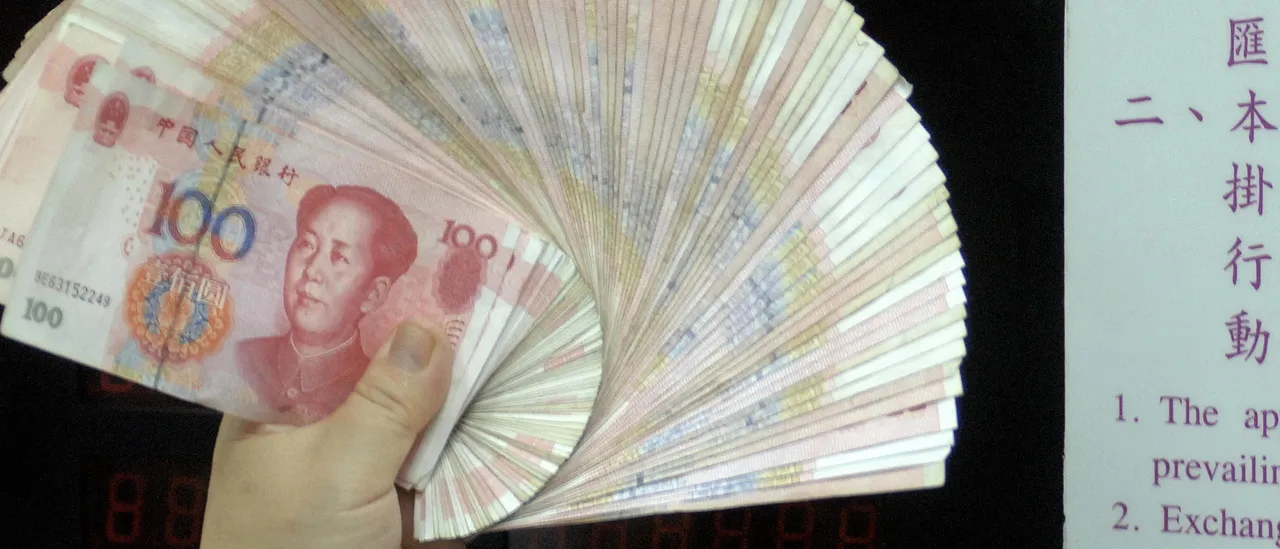
Imagine using a currency that knows where you are, what you buy and who you support politically. This currency can also be turned off by the state if you dissent for any reason. This is not science fiction. Welcome to China’s Digital Yuan (e-CNY). While the West endlessly debates the regulation of cryptocurrencies like Bitcoin, the Chinese Communist Party (CCP) has weaponized financial technology to build the ultimate tool for social control of its population. (RELATED: Stranglehold: The Story Of Silicon Capture In Asia)
The rapid expansion of the e-CNY has very little to do with economic efficiency. It is a strategic maneuver by the Chinese to export digital totalitarianism. South Korea has deep economic ties to China, so it is ground zero for this sinister experiment. Its aim is for South Korea’s financial infrastructure to become integrated with China’s digital ledger. If successful, the privacy of Korean citizens and the trading secrets of Korean corporations would effectively become the property of the CCP.
Absolute Power, Total Control
You may ask if e-CNY is a cryptocurrency. No, it is much more — cryptocurrencies decentralize power but the Digital Yuan creates an absolute power that provides total control over all transactions. We have found that the e-CNY gives Beijing an unmatched ability to monitor and manipulate the money supply in real time. It allows the state to bypass traditional banking channels and inject or withdraw liquidity at will. It has a terrifying surveillance capability because every transaction records a data trail that is visible to the People’s Bank of China.
In China, this technology is already being linked to their Social Credit System. If a citizen crosses a political red line then their ability to purchase train tickets or access their savings can be blocked instantly. Beijing is now working to export this authoritarian tech stack to its neighbors. By introducing the e-CNY into cross-border trade, China is exporting its surveillance state. Consequentially, the civil liberties of anyone using it are at risk.
A Poisoned Chalice
In November 2025, the Bank of Korea renewed a massive currency swap agreement with China worth worth many billions of dollars — and changing all the time. On paper, this provides the benefits of liquidity and stability for Korea, but in reality it is a poisoned chalice. We have warned South Korea that China intends to integrate the e-CNY into these cross-border swaps. If this happens, South Korean banks and corporations will be forced to adopt Chinese digital wallets for trade.
This invites financial vulnerability as Korean companies conducting business in China will expose their data to the CCP. Supply chain payments, sensitive vendor relationships, and capital flows will be revealed to Chinese intelligence. China could use this data to identify and sanction Korean firms that cooperate with U.S. defense initiatives or hold anti-China views. This corporate espionage will be regarded as legal by the Chinese and automated on a massive scale.
Killing the Dollar
The ultimate goal of the e-CNY is geopolitical dominance for the new currency. The Chinese hope to destroy the supremacy of the U.S. Dollar in the world’s business and trade transactions.
After watching the U.S. eject Russian banks from the SWIFT system in 2022, Beijing accelerated the development of its already existing alternative, known as the Cross-Border Interbank Payment System (CIPS). When CIPS is paired with the Digital Yuan, China will likely have a sanction-proof financial ecosystem.
This network allows China and its partners to trade without touching the U.S. Dollar or passing through American banks for many transactions. It restricts Washington’s ability to enforce financial sanctions on rogue states like North Korea, Iran or Russia. If South Korea is pulled into this developing Yuan bloc, then it will present a massive setback to the U.S. sanctions regimes in East Asia. Think of this development as China covertly building a secretive and exclusive dark web of global finance for authoritarian regimes. South Korea will become an unwitting participant if it is not careful. (RELATED: Money, Politics And The Wealth Of Nations)
Why This Matters to All of Us
The U.S. Dollar’s status as the global reserve currency allows Washington to project power without deploying troops. This soft power allows the U.S. to try and choke off funding for terrorism and tyranny because the substantial transactions are made in dollars, whose value and availability can be controlled by U.S. financial institutions.
If the e-CNY ever becomes the dominant settlement currency — in the Indo-Pacific region, say — then the U.S. loses this leverage over the financial activities of the countries in the region. Furthermore, if South Korea integrates its economy with China’s digital currency, it creates a data leak in the U.S.-South Korea Alliance. The result would almost certainly be that sensitive data from South Korea, a key U.S. partner, would flow directly to servers in Beijing. Obviously, this compromises the intelligence security of the alliance and weakens the collective economic security and well-being of the free world.
A Call to Action
We want to see the South Korean government reject any attempt to integrate the e-CNY into its domestic financial system. Strict firewalls should be established immediately to prevent Chinese digital payment systems from harvesting sensitive data on Korean citizens and corporations.
We would also like to call on the U.S. to actively engage in what could become an escalating global financial conflict. For example, the U.S. has strong diplomatic ties with Middle Eastern nations. These channels can be used to persuade these nations to dismiss China’s attempts to elevate the Yuan as an international trade settlement currency — particularly for oil transactions. Furthermore, selective economic sanctions and tariff policies can accelerate the devaluation of the Yuan. (RELATED: The One Hundred Billion Dollar Hostage)
The competition for the future of money has just begun in earnest with the choice of international currency at the forefront in people’s minds. Once again, the major combatant appears to be China. We advocate that the Digital Yuan should be stopped now. Otherwise the dominant currency of the 21st century could be a tool for surveillance and oppression. We cannot allow that to happen and we intend to vigorously oppose it.








![Donald Trump Slams Chicago Leaders After Train Attack Leaves Woman Critically Burned [WATCH]](https://www.right2024.com/wp-content/uploads/2025/11/Trump-Torches-Powell-at-Investment-Forum-Presses-Scott-Bessent-to-350x250.jpg)