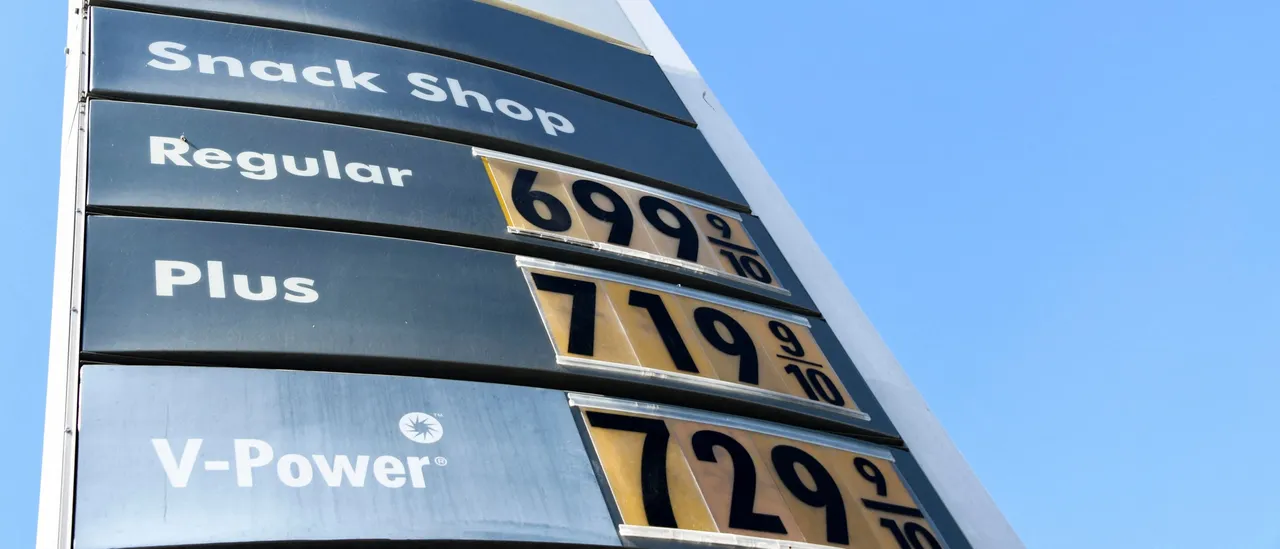
The world’s main focus related to the de facto closure of the Strait of Hormuz by the Iranian government over the last month has been its impacts on flows of oil. It’s a natural reaction given that fully 20% of global crude supplies exited the Persian Gulf via the Strait each day prior to Feb. 28. The denial of those oil flows has resulted in a historic price spike for oil and refined products like gasoline and diesel, along with shortages in an increasing number of importing countries.
While many other key products also must transit the Strait of Hormuz to flow into the world market, focus turns immediately to oil because the impacts hit billions of drivers in the pocketbooks almost immediately through a simultaneous increase in prices for gas and diesel at the pump. For drivers, periodically refueling your car is not optional: It’s a necessity of life and thus unavoidable. The rise in U.S. gas prices of $1 per gallon in the span of a month is not just an emotional hit to millions of Americans – it also amounts to a de facto regressive tax that hits hardest on those who can least afford it.
So, we focus on the oil impacts first because of their immediate financial hit. But make no mistake about it: Many other projects endemic to everyone’s daily lives also must transit the Strait in tankers or on bulk ships in big quantities. We will all eventually feel significant impacts from their loss should the closure remain in place for an extended time. (RELATED: Trump Offers No New Details In Primetime Address About Iran War)
Here’s a look at some of the big ones:
Liquefied Natural Gas: Prior to Feb. 28, Qatar supplied an estimated 17%-20% of global LNG needs to importing countries, mainly in Asian and European markets. Shortage of LNG supply means higher utility prices for consumers and higher emissions as utilities switch to coal.
Fertilizers: About half of the global supply of urea (high nitrogen solid fertilizer) comes from the Persian Gulf region. It will take longer to develop, but a severe shortage of fertilizer will inevitably create severe food shortages. A long-term loss of half the world’s supply of fertilizer will result in skyrocketing costs that will force many farming operations into bankruptcy.
Helium: Roughly 30-35% of global helium supplies also came from the Persian Gulf prior to the Iran Conflict. That helium is a crucial feedstock for the manufacturing of all sorts of products, perhaps most importantly computer chips. Even more problematic, almost all the Middle East’s helium has derived from the same Qatari LNG plants that were knocked out by Iranian missiles in the Conflict’s early days, and which Qatar says will be offline for three to five years.
Ammonia – A major feedstock for the production of fertilizers. Almost one-third of global supplies come from the Middle East. Gulf producers account for about 30 percent of worldwide ammonia exports.
Sulfur – A byproduct of oil/gas processing which is used in fertilizers, rubber, metals processing, and chemical manufacturing. Nearly half of the world’s traded/seaborne sulfur supply originates from the Persian Gulf region.
Broader fertilizers – Roughly 20 percent to 30 percent of the global non-urea fertilizer trade transits the Strait each day, with phosphate fertilizers making up most of that percentage.
Aluminum – The Middle East accounts for about 8 percent to 10 percent of global aluminum supplies. A significant majority of Gulf exports must transit the Strait.
Petrochemical feedstocks and derivatives – These include refined products like liquefied petroleum gas, naphtha, polyethylene and polypropylene precursors for plastics, packaging, and manufacturing. The Middle East supplies about 30 percent of global seaborne exports, roughly 40% of polyethylene, and more than 37 percent of naphtha flows to Asia.
In an interview on March 29 with Maria Bartiromo of Fox News, respected energy expert Daniel Yergin, Vice Chairman at S&P Global, said, “what the Iranians are really doing is waging war on the world economy.” He isn’t wrong.
We focus on oil first because the costs hit us the quickest. It will take time for shortages of most of these other commodities to cascade through the global supply chains, but everyone will eventually feel their impact, too.
David Bossie is the president of Citizens United and served as a senior adviser to the Trump-Pence 2020 campaign. In 2016, Bossie served as deputy campaign manager for Donald J. Trump for President and deputy executive director for the Trump-Pence Transition Team.
The views and opinions expressed in this commentary are those of the author and do not reflect the official position of the Daily Caller News Foundation.
All content created by the Daily Caller News Foundation, an independent and nonpartisan newswire service, is available without charge to any legitimate news publisher that can provide a large audience. All republished articles must include our logo, our reporter’s byline and their DCNF affiliation. For any questions about our guidelines or partnering with us, please contact licensing@dailycallernewsfoundation.org.







![CNN's Kaitlan Collins Fact-Checks Rep. Jasmine Crockett Over False Trump Ballroom Claim [WATCH]](https://www.right2024.com/wp-content/uploads/2025/10/1761954330_CNNs-Kaitlan-Collins-Fact-Checks-Rep-Jasmine-Crockett-Over-False-Trump-350x250.jpg)