David Gauke is a former Conservative Justice Secretary and was an independent candidate in South-West Hertfordshire at the 2019 general election. He is a vice-chair of Prosper UK.
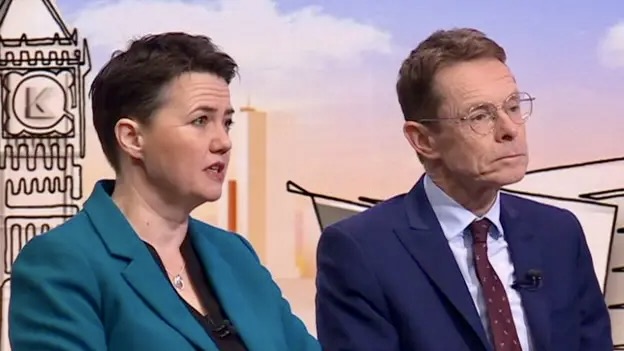
Prosper UK launched today. Chaired by Andy Street and Ruth Davidson, in essence it makes three arguments.
The first is that a strong economy should be the nation’s priority. It is only through a strong economy that we can improve living standards, increase the opportunities for future generations, fund our public services, and enable us to adequately defend ourselves.
Second, the centre-right is best placed to deliver that strong economy. We need a thriving private sector; hard work and innovation should be rewarded; our tax and regulatory environment should make us internationally competitive; we should pursue free trade not protectionism; our public finances should be sustainable; markets matter; strong, independent institutions provide the stability and certainty that businesses need to invest; and Governments have to think about the long term. These are all attributes of the centre right at its best.
Third, the centre right, focused on the economy, is the political space the Conservatives should occupy. If it does, the party will prosper electorally.
I have written enough columns for ConservativeHome to know that this latter claim will be challenged.
It will be argued that the centre ground no longer exists. The country can be divided into a left block (who will never voter Conservative) and a right block and, therefore, what is needed are policies aimed solely on that right block, designed to squeeze out Reform.
But that is not what the polling, commissioned by Prosper UK and undertaken by More in Common, found. They asked people to place themselves on the political spectrum. The polling reveals that 22 million consider themselves to be in the centre or the centre right. Nearly a third of those people – 7 million – consider that no political party adequately represents their views. To put that in context, at the last General Election, the Conservatives received fewer than 7 million votes.
Some will argue that the future of right-of-centre politics should be about defending our national identity and that the biggest single issue facing the country is immigration.
No one is arguing that it is a matter that should be ignored. Immigration has to be controlled and the levels reached under Boris Johnson’s premiership were unsustainable. But it is also true that some of the language about immigration and immigrants used by some right-wing politicians is deeply divisive. It might be popular with some voters, but it puts off others. As net migration falls, and the repercussions will be complex and not entirely positive, this would be the wrong issue upon which the Conservative Party should base its appeal.
In contrast, the economy is an issue of increased salience. Since last year’s party conference, Kemi Badenoch has focused on the matter, and it is beginning to bear fruit. Her ratings have improved and the gap between the Tories and Reform has diminished. When it comes to the economy, the Conservatives are now the most trusted of all the political parties.
It should also be acknowledged that the other parties have helped. Labour came to office promising to be the party of growth. They have had some bad luck (courtesy of President Trump) but they lacked a coherent plan for growth and have too often prioritised their core support resulting in higher spending paid for by higher business taxes. In all likelihood, leadership instability will drive them further leftwards.
The Liberal Democrats are failing to cut through. They had a political opportunity to consolidate their position as the party of the Home Counties by becoming the voice of the business-minded and aspirational. But that is not in their DNA. Their purpose is to provide a means of defeating the Tories where Labour has little presence. The membership is centre left and – if the reports are true of dissatisfaction with Ed Davey are correct – the party is more likely than not to also move leftwards.
(No doubt someone in the comments below will say that those of us involved in Prosper UK belong in the Lib Dems. They demonstrate a complete failure to understand the nature of the Liberal Democrats or, indeed, us.)
On the shoulder of both centre left parties is a resurgent far-left party in the form of the Greens. Their policies would be catastrophic for the economic future of the country and the prospect of them influencing a future minority Labour government is an under-appreciated concern.
As for Reform, they have disavowed their ludicrous manifesto of 2024, but there is still no sign of any serious economic thinking. Nigel Farage was an enthusiast for the 2022 mini-budget, has Trumpian protectionist instincts and has spoken warmly of Jeremy Corbyn’s economic thinking. At some point or other he has embraced almost every bad economic idea going.
There is a huge space that needs to be filled. There is a yearning for politics that is serious, realistic, and pragmatic. It is focused on the economy and willing to face up to trade-offs. It understands that business matters, as does credibility with investors.
This should all be natural territory for the Conservatives. But there are too many centre right voters who have stopped voting Tory.
For voters in their 20s and 30s, some of them have never supported the party. They share our economic instincts but are bruised by their experience of the Tories in recent years. Prosper UK wants to give them a voice that cannot be ignored. And we believe that a Conservative Party that listens to that voice is party that can succeed at the next election and provide the Government the country needs.




![Donald Trump Slams Chicago Leaders After Train Attack Leaves Woman Critically Burned [WATCH]](https://www.right2024.com/wp-content/uploads/2025/11/Trump-Torches-Powell-at-Investment-Forum-Presses-Scott-Bessent-to-350x250.jpg)

![James Carville Admits Democrats Had No Shutdown Endgame, Mishandled Strategy [WATCH]](https://www.right2024.com/wp-content/uploads/2025/11/1763070634_James-Carville-Admits-Democrats-Had-No-Shutdown-Endgame-Mishandled-Strategy-350x250.jpg)