David Gauke is a former Justice Secretary and was an independent candidate in South-West Hertfordshire at the 2019 general election.
The short-term economic prospects for the UK are grim. Inflation is going to rise and, in response, so will interest rates.
Growth was already expected to be meagre, now we will be fortunate to avoid a recession. Unemployment will likely rise, tax receipts fall and borrowing increase. We might be in circumstances where Rachel Reeves’ fiscal rules are suspended (when she determines that there has been a major economic shock) but, if not, she may need to increase taxes or cut spending for the third autumn budget running to meet her fiscal rules.
For all the mistakes the Government has made (such as failing to grip welfare spending, refusing new oil and gas licenses in the North Sea) or those of its Conservative predecessor (the public finances were not in good shape when the Tories lost office), the blame for the sudden and significant deterioration in the economic outlook belongs firmly with one man – President Trump. It further underlines the political foolishness of implying that the UK would back him come what may. As for those politicians who backed Trump in 2024 as being good for Britain (Boris Johnson, Liz Truss, Nigel Farage, Robert Jenrick, and Jacob Rees-Mogg being the most prominent), some contrition is called for.
We should not hold our breath.
Allocating blame in one thing, but the question policymakers face now is how to respond to rising prices and falling living standards. And the challenge here is that there two truths here which should guide the policy response, but which will be deeply unpopular.
The first truth is that there is no money to bail people out. Perhaps, that is a little too stark. A more precise formulation is that the public finances – prior to the Iran fiasco – were already pushing at the limits of credibility and a significant fiscal loosening risks exceeding those limits.
Debt stands at approximately 100 per cent of GDP, the annual debt interest bill exceeds £100bn a year, the Government appears to have no capacity to control spending or implement a broad-based tax increase, and the bond markets have undergone frequent moments of jitteriness in recent years. Now throw in an economic downturn plus higher defence spending, our prospects look worse. An expensive energy support package could be enough to panic the markets.
The problem for the Government is that public expectations of support have grown.
The reaction to the Global Financial Crisis was to find the resources to bail-out the banks. This was necessary not just to save the banks but to protect the public from the collapse of the financial system, but it contributed to the view that we can borrow our way out of all problems. Then came Covid and, again, borrowing was used to protect the public from the short-term consequences of the pandemic. Two years later came Russia’s invasion of Ukraine and higher energy costs. Again, the State came forward – in the form of Prime Minister Truss – with measures to protect the public.
Each intervention can be justified because it reduced hardship. But each intervention left our public finances more vulnerable and there was not the time or political willingness to rebuild the position before the next disaster struck. Yes, we are unlucky that a third external disaster has struck in six years (on top of one self-inflicted disaster ten years ago) but, whatever the cause, the fundamentals remain the same. We cannot afford to spend multiple tens of billions of pounds protecting the public from higher energy costs without risking the confidence of those who lend to us.
The most obvious response, which is where the Government is heading, is to target support at those that need it most. For some, an increase in energy costs of, say, £400 a year is a minor irritation, for others it is crushing. It is hard to argue against the principle of targeted support, but it comes with challenges of implementation, cliff edges, and hard cases. In the context of growing concerns about bloated welfare spending, the argument will be made – as we have heard from Kemi Badenoch – that this only encourages a dependency culture, although this begs the question as to whether the support should be for everyone or for no one.
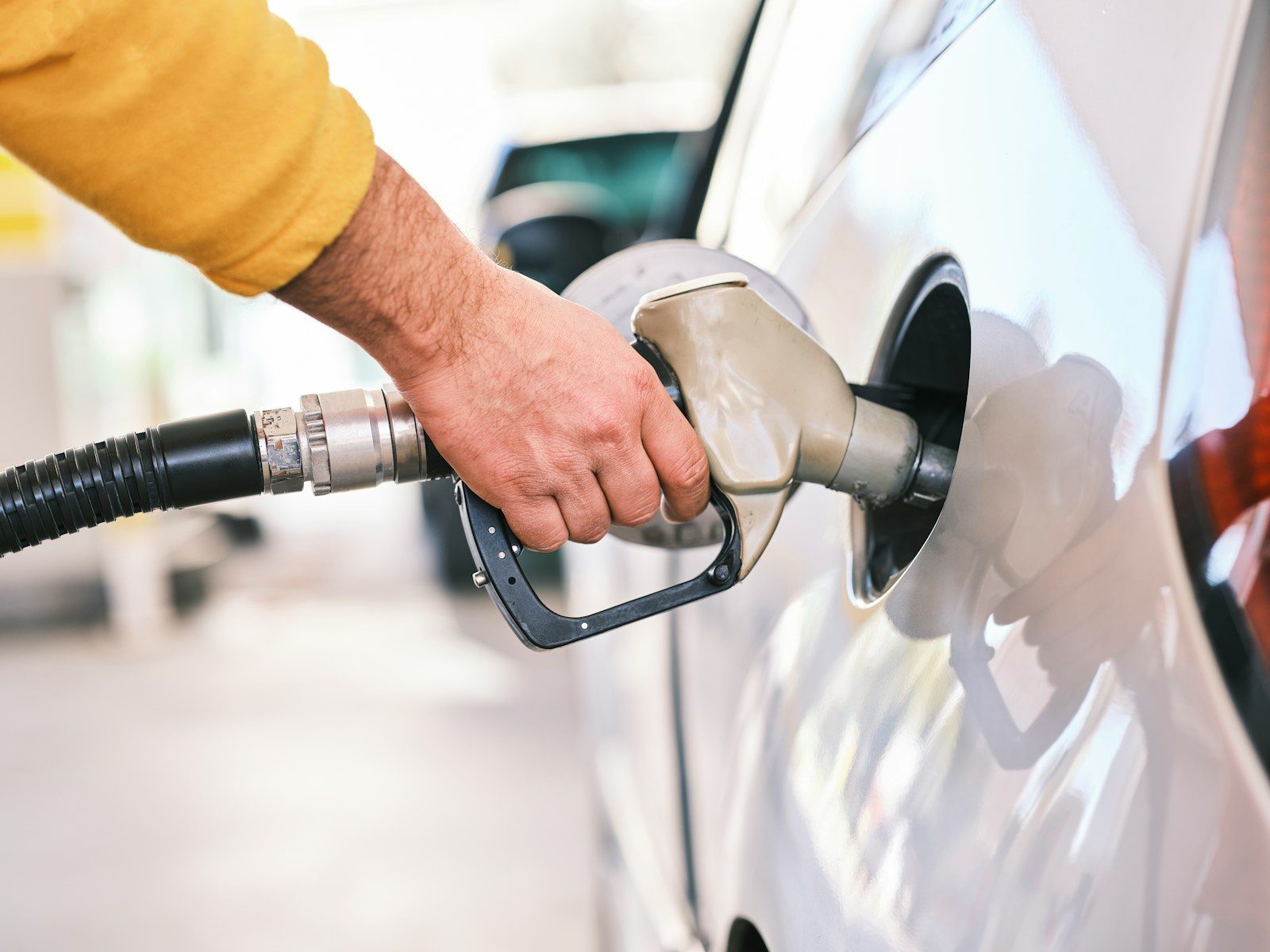
One mitigating policy which is clearly advocated by the Conservatives – and which is not means related – is to postpone the fuel duty increase of 5p a litre currently scheduled for September. This, of course, is reversing a temporary cut introduced in March 2022 in response to the Ukraine crisis. Reversing this “temporary” cut was part of the plans for the public finances bequeathed by the Conservatives in 2024. A further year’s delay will come at a cost of £2-2.5bn but kick the can a year down the road until the Government finds the money to announce another postponement. The Tories campaign will almost certainly prevail and, as such, is a smart piece of politics. But the whole four-year episode (and we are not done yet) is not a good example of coherent policymaking. It is another case of not facing up to the realities of the public finances.
The second truth which guides good policy, but can be bad politics, is that the price mechanism is important and useful. Blunting price signals comes at a cost.
The world has less access to oil and gas than it thought it did, so there is less to go round. To cope with this, we need people to change their behaviour to use less of it. This might mean conserving energy, it might mean finding alternative sources of energy. We could come up with a long list of meddlesome regulations to achieve these objectives (and we probably will) but higher energy prices will get us there if given the chance. Demand for heat pumps and solar panels, for example, have soared in recent days in expectation of higher oil and gas prices.
The problem is that market forces, particularly at times of sudden scarcity, are not popular. We quickly get to the position when there are calls for price caps, with energy providers expected to subsidise consumers. The Government – hoping to change the subject from the scheduled fuel duty rises – have been quick to accuse fuel retailers of “price gouging” and “profiteering” even though there is no evidence to support the claim. It reveals an anti-business instinct that no doubt chimes with many of the public, who resent paying more to fill their tank, but better should be expected of ministers who should understand the economic and commercial realities.
The country faces a crisis that is not, on this occasion, of its own making. But we can – and probably will – make matters worse. If we spend money that we do not have, and we try to set prices that ignore the new realities on supply, we could lose the confidence of the bond markets, face higher interest rates and debt servicing costs, and adapt less effectively and efficiently to the new circumstances.
To avoid those mistakes, however, will require considerable political bravery.





![James Carville Admits Democrats Had No Shutdown Endgame, Mishandled Strategy [WATCH]](https://www.right2024.com/wp-content/uploads/2025/11/1763070634_James-Carville-Admits-Democrats-Had-No-Shutdown-Endgame-Mishandled-Strategy-350x250.jpg)
![Two Dead, 14 Injured After Gunfire Erupts Following College Football Game in Alabama [WATCH]](https://www.right2024.com/wp-content/uploads/2025/10/Two-Dead-14-Injured-After-Gunfire-Erupts-Following-College-Football-350x250.jpg)