Cllr David Rogers is the Deputy Leader of the Conservative Group on Cherwell District Council.
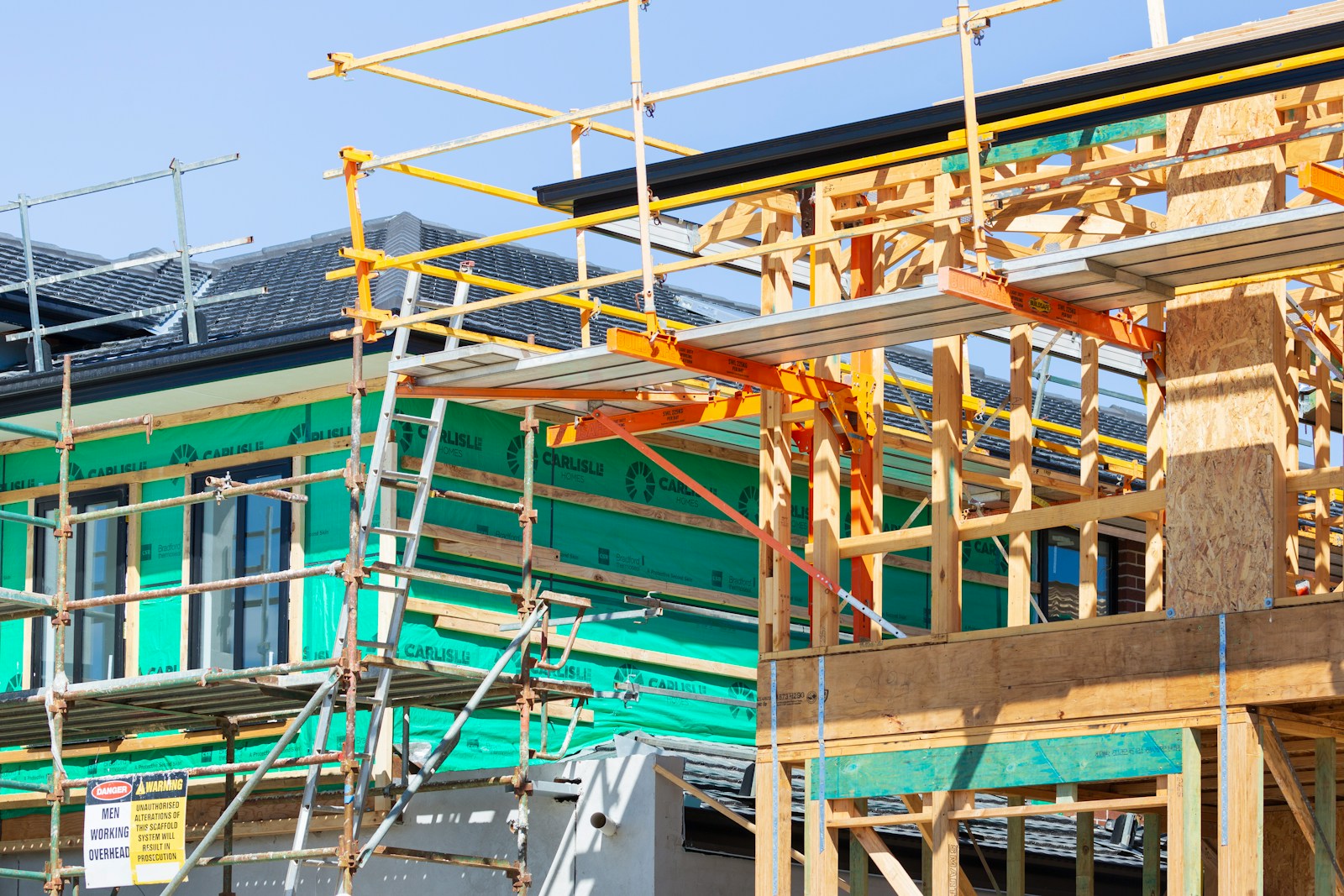
For all the talk of “localism” and “empowering communities,” the planning system is now driven by a structural bias toward development, regardless of local priorities, infrastructure capacity, or long-term spatial strategy. Planning Committees are increasingly obliged to permit developments that are known to cause harm, will not be built for years, will simply be land-banked, and will not count towards five-year housing land supply figures because they cannot be delivered in a timely fashion.
This council, when Conservative-run, did not shy away from building houses. It proudly promoted schemes such as Graven Hill, focused growth around the market towns, and protected rural communities by permitting only limited development. We produced a local plan that provided a clear vision to meet our housing obligation in a controlled and sympathetic manner. Now that we have a Liberal Democrat–run council, the common-sense plan review we began has been adopted by our successors and submitted for inspection. All the other local plans in Oxfordshire have fallen, and it remains to be seen whether the plan we initiated will survive the inspectors’ rose-tinted scrutiny.
Neighbourhood plans, once heralded as the cornerstone of genuine community control, have also become collateral damage in this tilted system. Communities invest years in preparing them—gathering evidence, consulting residents, shaping a cohesive vision for local growth—only to find that the presumption in favour of sustainable development can sweep them aside. Instead of empowering villages to shape their future, neighbourhood planning has too often become an expensive, exhausting exercise.
At the heart of this new planning dynamic is the “presumption in favour of sustainable development,” a deceptively simple phrase that has acted as a crowbar for opening up sites never intended for major growth. In practice, it has become a powerful tool for developers to bypass local democratic processes entirely. Once the presumption is engaged, the planning balance shifts dramatically. Policies protecting character, safeguarding agricultural land, limiting sprawl, or managing infrastructure strain carry far less weight. Even well-considered local plans, often shaped through years of consultation, become vulnerable to being overridden.
The result is a system in which the theoretical “plan-led” approach is increasingly a myth. Local plans are rejected, delayed, or neutered because the rules reduce them to technical compliance documents rather than strategic expressions of local vision. They must align with central housing calculations that may bear little resemblance to local needs or market dynamics. If they fail to satisfy these centrally determined metrics, they are treated as out-of-date, no matter how democratically legitimate they may be. Labour have unleashed developers to build what they want, where they want. For us, the reality is that our villages are being hammered by development after development, irrespective of the harm these poorly conceived countryside carbuncles represent.
Planning committees, meanwhile, are increasingly reduced to pantomime – performing the rituals of local decision-making while exercising little real discretion. Case officers’ reports frequently warn councillors that refusal risks losing on appeal due to the tilted balance, meaning elected representatives are pressured into approving schemes they may fundamentally oppose. Members know that a refusal may be overturned, along with the possibility of cost awards against the authority. Faced with those pressures, committees err on the side of approving controversial, unwelcome and unpopular schemes, even when local opposition is substantial and material considerations weigh against the proposal.
Developers are fully aware of this leverage. Their behaviour is predictable: choose sites where the council lacks a five-year supply; commission assessments asserting “sustainable development”; propose schemes that superficially tick national policy boxes; and emphasise economic uplift and housing delivery. Even when councils contest such applications, the Planning Inspectorate often finds in favour of the developer, citing the need to boost housing supply. And to compound the damage, the awarding of costs to developers’ strains budgets further, turning what should be a reasoned, balanced planning process into a challenge to our stretched finances. In our area, limited developer resource is channelled into large, high-value executive homes on the edges of villages—maximising profit on sites that can be built while also securing permissions on larger schemes that cannot commence until foul water and electricity constraints are resolved.
Nor is help forthcoming from the Secretary of State who, despite the “Build Baby Build” mantra, appears to have little grasp of detail, little interest in answering technical questions, and no understanding of the impact a tilted balance has on rural communities. When Steve Reed attended the Local Government Association Councillors’ Meeting in London, he displayed charm and wit, but no substance.
All of this erodes public trust. Residents see local plans overturned, neighbourhood plans ignored, decisions made under duress, and appeals upheld in ways that feel opaque, unfair, and costly. Councils are blamed for outcomes they are structurally powerless to prevent, and the democratic legitimacy of planning—already complex and technocratic—is further strained.
The core issue is not that housing is unnecessary; the shortage is real, and delivering new homes is essential. But the current system conflates “more housing” with “housing anywhere,” allowing development patterns to be driven by short-term commercial logic rather than long-term public interest. A genuinely plan-led system would empower localities to shape growth strategically, align it with infrastructure, and deliver quality rather than mere quantity. Instead, the planning framework has become a permissive regime that grants developers remarkable freedom while constraining the very democratic bodies meant to guide development rationally and sustainably.
Until the balance is re-calibrated—restoring certainty to local and neighbourhood plans, reforming the five-year supply mechanism, and ensuring national policy supports rather than supplants local judgement—the system will remain structurally tilted. And planning committees, once the lynchpin of community-based decision-making, will remain sidelined by a framework that favours development wherever developers wish to build.
As a rural Conservative, I believe in protecting what makes this country special. That includes safeguarding our countryside and preserving the character of our towns and villages. It means ensuring our farmers have a secure future—able to grow the food that sustains us without facing threats to their livelihoods.
Let’s plan for that.




![Donald Trump Slams Chicago Leaders After Train Attack Leaves Woman Critically Burned [WATCH]](https://www.right2024.com/wp-content/uploads/2025/11/Trump-Torches-Powell-at-Investment-Forum-Presses-Scott-Bessent-to-350x250.jpg)