Social Security has long been known as the third rail of politics, given that every attempt to fix the program over the past 30 years has proven politically toxic — but a valiant group of senators is plowing ahead anyway
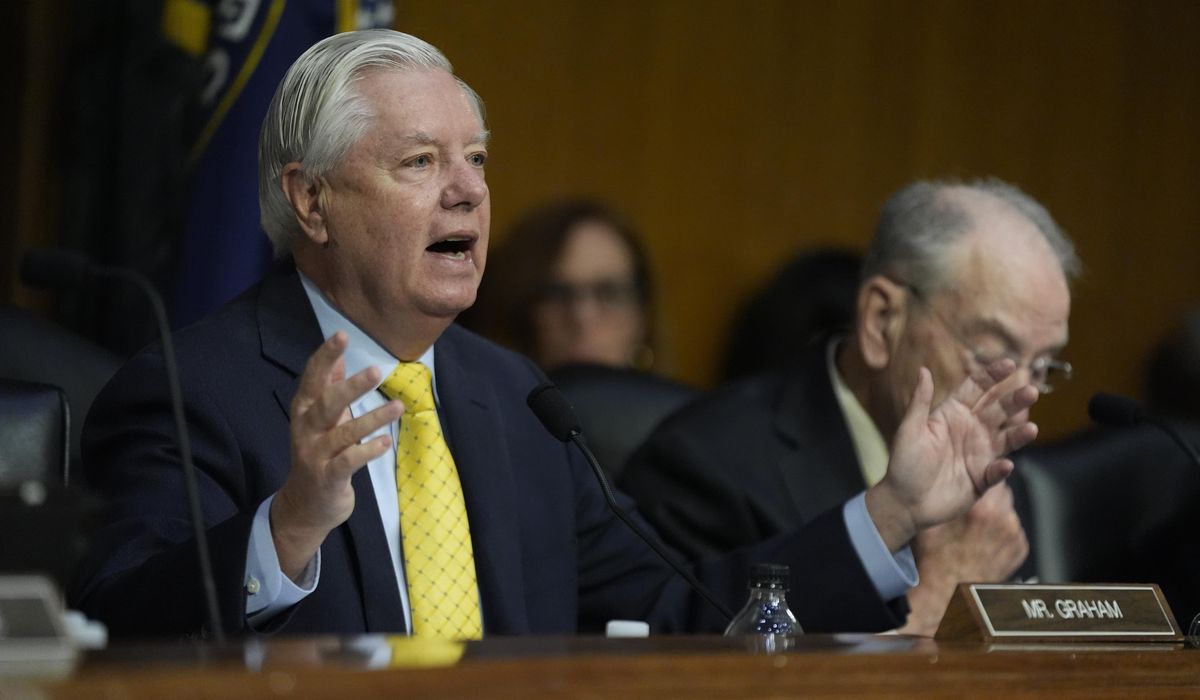
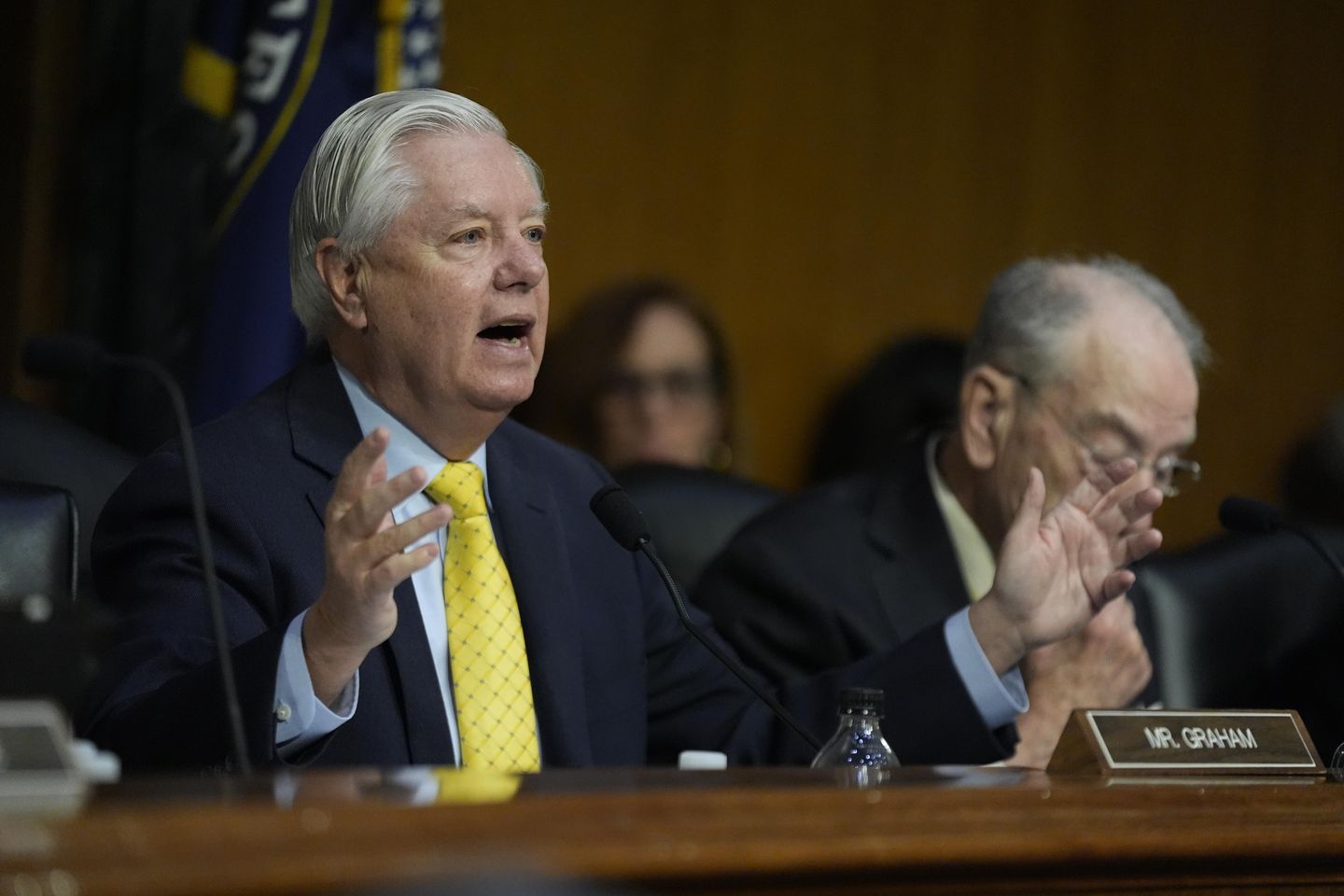
Led by Sen. Lindsey Graham, the Senate Budget Committee kicked off a renewed conversation Wednesday about what it would take to prevent the program from hitting its trust fund insolvency early in the next decade.
And amid the political posturing came a surprising amount of honesty, and even some common ground.
Mr. Graham, South Carolina Republican, said at least some Americans are going to be asked to pay more, and some are likely to be asked to get less back, in order to make the numbers work.
“My belief is you can’t tax your way out of this, but you do need more revenue. My belief is that means testing’s time has arrived. My belief is maybe you adjust the [retirement] age one more time,” he said. “The bottom line is you’re going to have to do an all-of-the-above approach.”
Analysts from Social Security, the Congressional Budget Office and the Congressional Research Service laid out the grim numbers facing the program: Without major changes, at some point from 2032 to 2034 the main fund for retirees will no longer be able to pay out full benefits.
At that point, the program will be able to pay out only what’s coming in the door, which under current law would mean a cut of roughly 25% in every benefit check.
To fix things, Congress needs to cut benefits by that much, raise revenue by about 33%, or do a bit of both.
“The math is simple,” said Karen Glenn, Social Security’s chief actuary.
Sen. Jeff Merkley, Oregon Democrat, said he’s been polling constituents at his town halls and found some clear winners and losers in the battle for fixes.
The most popular idea — with 95% support — was raising the cap on income subject to the Social Security payroll tax. Currently, Americans only pay on about the first $185,000 of their salary or wage income, so someone making that much pays the same as someone making a million dollars a year.
Reducing benefit checks for the wealthy earned 64% support in Mr. Merkley’s town halls, and taxing investment income — which right now is exempt from the payroll tax — won 55% support.
Raising the payroll rate itself was less popular, with just 32%, and hiking the retirement age even less so, at 16% support.
Reducing benefits all around was a nonstarter, in the low single digits.
Raising the retirement age was a critical part of the last major Social Security rescue mission in 1983, going from age 65 to 67. But some Republicans said that won’t work this time.
“There is no scenario in which I would support increasing the retirement age of Social Security,” Sen. Bernie Moreno, Ohio Republican, told colleagues, drawing some nods.
He said he would, however, be open to hiking the cap on taxable earnings and to means-testing.
The analysts who testified Wednesday said the 1983 deal was supposed to put the program on a firm footing for 75 years, but came in about 25 years short.
One big issue is that the economy has performed worse than anticipated since 1983 — with the Great Recession from 2007 to 2009 particularly hurting, along with the sluggish recovery from it.
The country’s earnings look different, too.
Mr. Merkley said the 1983 deal was designed to subject 90% of collective earnings to the payroll tax. The massive explosion of earnings among the wealthy, combined with the cap on income subject to the tax, has skewed that.
Sen. Ron Johnson, Wisconsin Republican, said the demographics are also an issue.
In 1945, there were more than 40 workers for every person getting benefits. In 1965, it was four workers per beneficiary. Today, that ratio is 2.7 workers per recipient.
Mr. Johnson said whatever Congress decides, it will shatter myths about Social Security, which was set up in the 1930s as a “forced savings plan”: Americans paid in and generally got something back over time.
The changes being talked about — means testing to limit benefits for the wealthy while asking them to pay more into it — will make Social Security more like a traditional welfare program, he said.
He suggested lawmakers form a working group to start kicking ideas around.
“We have an enormous problem. The sooner you address it, the better off,” Mr. Johnson said.