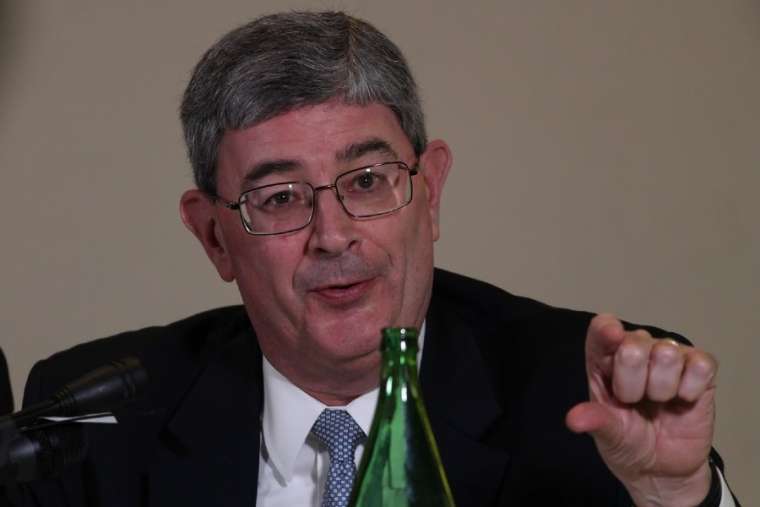
In a conference marking the 80th anniversary of Soviet Russia’s suppression of the Ukrainian Greek Catholic Church, John Paul II’s official biographer argued that Orthodox-Catholic relations could see a revival.
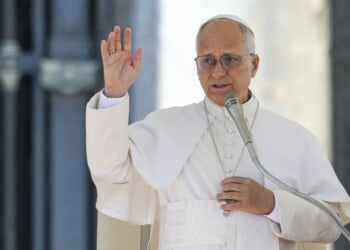
While previous popes had carried experiential “baggage” with respect to the Orthodox church into their pontificates, Weigel said Pope Leo XIV “gets it in terms of what is actually going on” and predicted renewed promise for Orthodox-Catholic relations under his pontificate.
While he acknowledged Leo has only been pope for less than 11 months, Weigel said: “This is a deliberate man. I believe that he will work deliberately to try to reformulate this, but we’re going to have to give him time.”
Weigel’s remarks came during a panel at an event organized by the Center of Ukrainian Studies at The Catholic University of America, the Ukrainian University, and the St. Gabriel Institute titled “The Pseudo-Sobor 80 Years Later: The Persecution Continues.”
Weigel said in his own interactions with the Holy Father, he has suggested that the approach to dialogue with Orthodox churches should not center on theological primacy as heavily as in the past.
Rather, he said, it should focus on the fact that Orthodoxy “does not have a credible 21st-century church,” with a fully formed approach to church-state relations, particularly in light of the Russia-Ukraine war.
“It needs to get one,” he said. “And the people who actually have a fully developed social aspect are the Catholics, and that should be where the focus should be,” Weigel said.
“It would be a matter of Rome saying, ‘Look, it took us 200 years at least to figure out the post-Constantinian period to understand religious freedom within our own theological framework as a fundamental human right … Maybe we can help you with this. Maybe we can learn something from you,” he said.
Weigel said the dialogue will need to happen outside of formal settings and that with Leo, he believes “there will be over time an opening” to such discussions.
Under this approach, he said, Rome can move on from previously unsuccessful efforts to engage with the Orthodox church.
The panel discussion comes amid the 80th anniversary of the 1946 Pseudo-Sobor on March 8–10.
After Ukraine came under Soviet control during World War II, the Stalin regime began a campaign against the Ukrainian Greek Catholic Church (UGCC), arresting its leader, Metropolitan Josyf Slipyj, in April 1945 along with other bishops in the Slovak territory, panelist Katerina Budz recounted.
With their bishops imprisoned and faced with their own arrest if they refused to comply, priests and lay members of the UGCC were summoned by a Soviet initiative group to participate in the 1946 Pseudo-Sobor, in which a vote was cast to officially sever ties with the Vatican and “reunify” with the Russian Orthodox Church.
“Imagine,” Budz said, “your bishop is imprisoned, and unless you agree to join the initiative group, most likely you will be too. After your arrest, the church will be closed, your parishioners will have no pastoral care, and your wife and children will no longer be able to count you as a family provider.”
“It was in this particularly challenging environment that the Greek Catholic clergy had to make life-changing decisions,” she said, noting the clergy also faced backlash from the nationalist underground forces and from their parishioners.