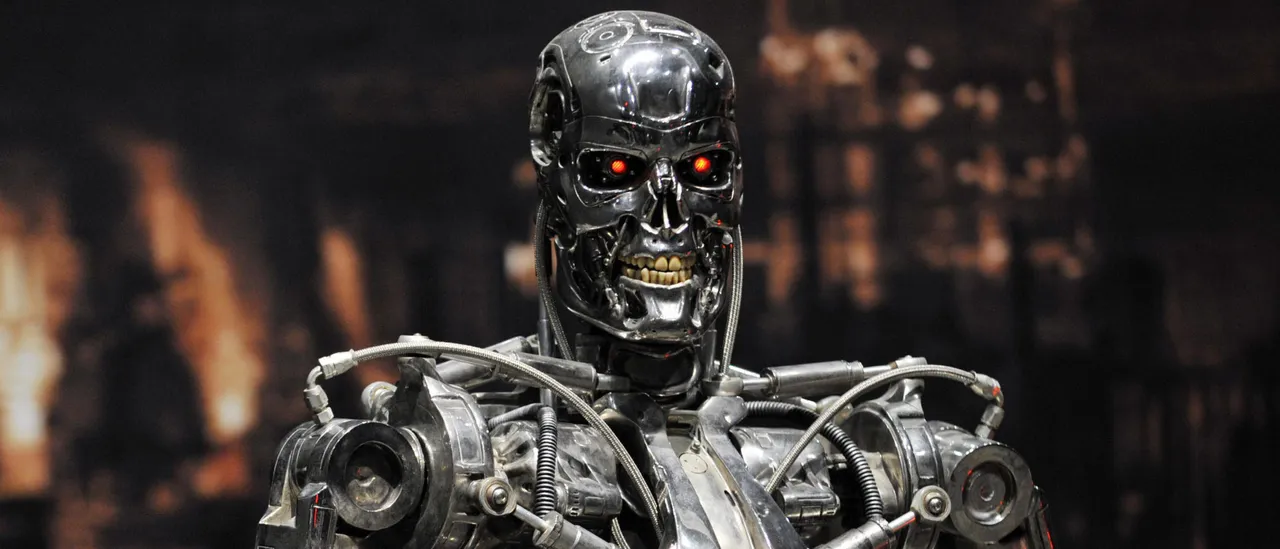
A real-life dystopian sci-fi movie is quietly unfolding in classrooms all across America.
YouTuber Vanessa Wingårdh, who investigates the “dark side of tech,” released a video Sunday breaking down some of the effects AI is having on kids and educators. According to Wingårdh and the teachers she featured in the video, young kids are severely struggling to read, some can’t even read to begin with, and many teachers are quitting because of the effects that AI and other technologies have had on the classroom. (RELATED: Republicans, Democrats Unite Against Common Foe That’s Driving Up Americans’ Electric Bills)
One teacher whose TikTok was included in Wingårdh’s video explained that AI should not be compared to a calculator. Before AI, kids would learn how to reason through a problem, and then the calculator was the cherry on top, the little tool that helped them compute and manipulate numbers. Not before, of course, they learned how to solve the problem, and what math concept was being applied.
Now, kids can’t even sit still long enough to learn math. They see it as a pointless exercise because AI can do it all for them.
“I’m going to start with saying that teachers are not afraid of AI because we hate technology. We are scared because we are watching critical thinking disappear in real time,” the teacher said in the video.
“When I was in high school, my math teachers would say, ‘You got to know how to do this because you’re not going to have a calculator in your pocket.’ Well, guess what? I have a calculator in my pocket at all times.
But what I’ve realized is that it’s not a fair comparison because calculators replace computation after we learned how math worked. AI shows up before students ever learn how to think through a problem. What we are witnessing is that students are now incapable in sitting in any kind of intellectual discomfort. And that’s concerning.”
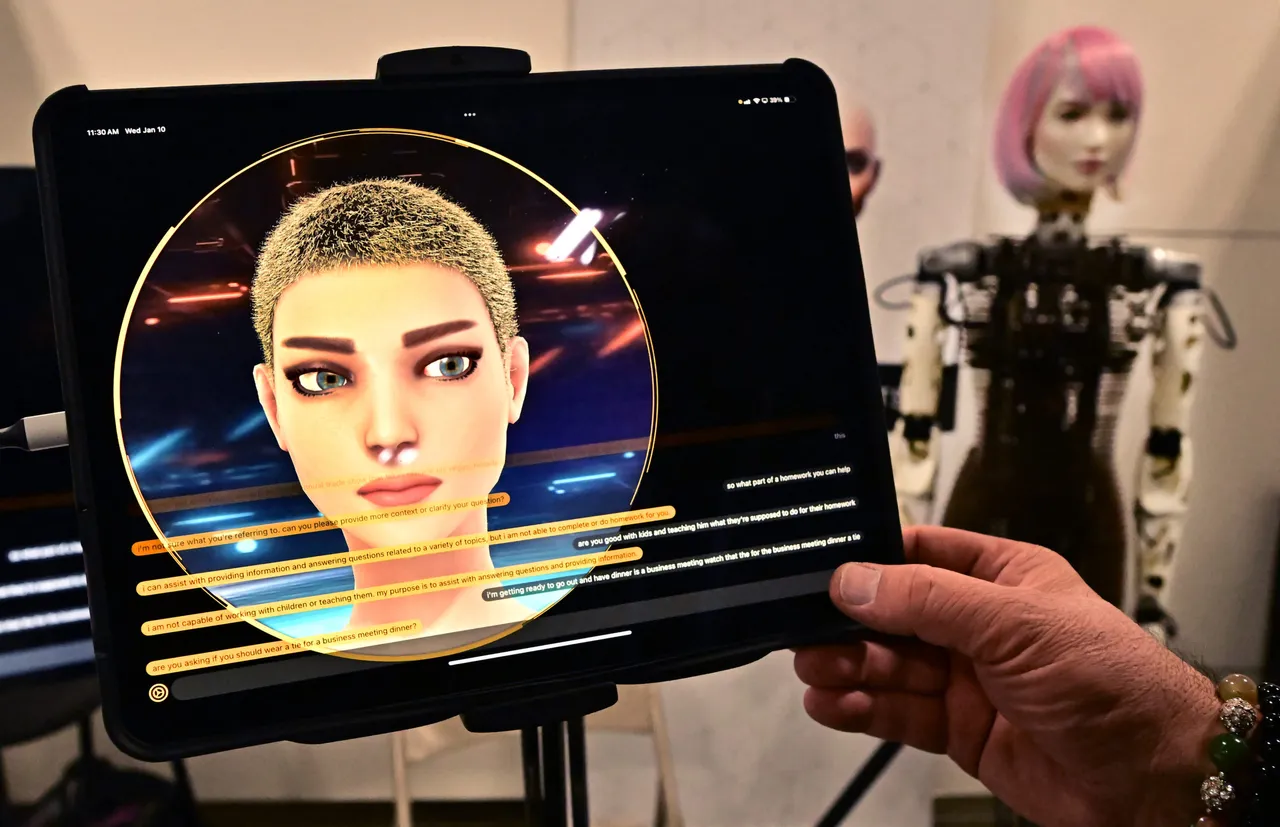
A person has a conversation with a Humanoid Robot from AI Life, on display at the Consumer Electronics Show (CES) in Las Vegas, Nevada on January 10, 2024. (Photo by Frederic J. BROWN / AFP)
There is an argument to be made that a lot of what we learn in school is useless. You learn far more in life by stepping outside of a classroom or a library and actually observing and experiencing things in the real world. I would go so far as to say that much of the math curriculum should be geared toward personal finance, what interest is, “balancing a checkbook.” Of course, the most gifted kids should have the opportunity to learn calculus, but most kids who won’t be using math in their future majors or careers should really spend at least a year of high school or college learning basic finance. The financial system, retirement, healthcare, etc., has gotten so complex that most adults, not just kids, struggle to navigate it once they are employed. I count myself as one of those people.
But then again, seemingly useless math classes are also teaching kids critical thinking skills, heuristics, and other soft skills. Solving a tough math problem can give kids confidence and sense of worth. There are psychological benefits to learning math and other hard subject matters like chemistry that we cannot begin to measure. Kids addicted to technology and AI are missing out on these soft skills, and it’s all taking place during a crucial development period of their lives.
Relying on AI so young might also become habitual throughout their adulthood. They may never learn to think independently or learn the benefits of walking to stimulate creative thoughts. They are slowly turning into automatons, easily fooled and manipulated by all the information at their fingertips. Not only is the technology stifling thought and creativity, but it’s also suppressing action. It’s making everyone, not just kids, more passive.
What’s most revealing, though, is that some executives in Silicon Valley do not let their kids use the technology that they helped release into the world. They know how dangerous it is for kids. They know how addictive it is, as addictive as slot machines. They know that it is capable of stunting emotional growth and cognitive development.
The rest of us peons will be stuck with it, though. And in the future, all the things we took for granted — books, art classes, drawing, finger-painting, summer camps — may become luxury goods. AI will be leveraged by a tiny sliver of the population — doctors, for example — to really boost productivity, while everyone else will use it as basically a search engine on steroids that can also make images and videos. For kids, though, it will be a machine that replaces learning; that replaces childhood.





![Donald Trump Slams Chicago Leaders After Train Attack Leaves Woman Critically Burned [WATCH]](https://www.right2024.com/wp-content/uploads/2025/11/Trump-Torches-Powell-at-Investment-Forum-Presses-Scott-Bessent-to-350x250.jpg)