Emma Revell is External Affairs Director at the Centre for Policy Studies.
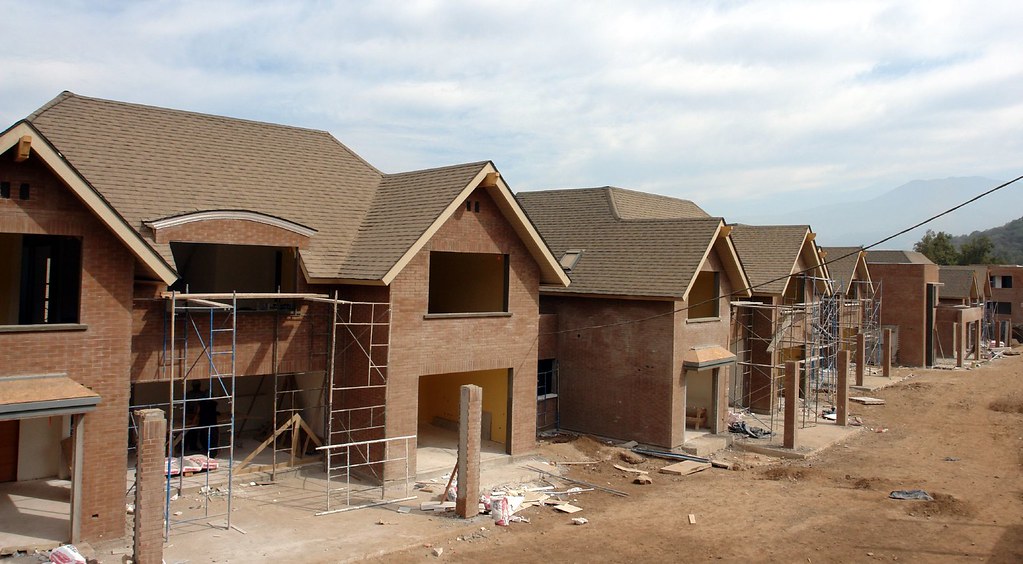
Building more homes is the defining problem of our age. Britain has – according to calculations by my colleagues at the Centre for Policy Studies – a shortfall of over 6.5 million homes compared to our European neighbours. In an ideal world, all parties would be committed to policies which will make serious and sustained progress in getting more homes built in the places that need them most.
The fact that Labour are committed to tackling this crisis – after several years in which the Conservatives, after making significant progress on housing, reversed course by pandering to the worst instincts of their most cantankerous activists – is one of the few things about this government’s agenda to be genuinely positive about.
On Tuesday, Housing Minister Matthew Pennycook unveiled the latest version of the National Planning Policy Framework (NPPF). Stung by criticism that its housing policies have so far failed to move the needle, the Government is clearly making a big swing, rewriting swathes of existing planning guidance in what experts say is probably the biggest shake-up since David Cameron’s reforms in 2012.
Now, this is a big, complicated reform. The NPPF is a monster document. How it interacts with other local and national planning policies is a fiendishly complicated business, one which has kept an entire industry of extremely wealthy planning lawyers in gainful employment for decades. The difference between giving something “substantial” rather than “significant” weight and or changing a “limited” to “very limited” can add up to tens of thousands of houses getting built or not built over the years.
But judging by the reaction on the Opposition benches, Pennycook might as well have turned up and drop-kicked Margaret Thatcher over the Despatch Box.
Shadow Housing Secretary Sir James Cleverly accused the government of “preparing to bulldoze through local democracy”, of wanting to “concrete over the countryside” and “throwing communities under the bus”.
Mark Francois, MP for Rayleigh and Wickford, called the announcements “a slap in the face for local democracy”. (According to Rightmove, homes in Rayleigh sold for an average of £434,275 last year, and in Wickford for £394,665, perhaps because the constituency is 70.6 per cent green belt land.)
Coverage in The Telegraph sounded the alarm over the belief that “planning inspectors will be able to impose top-down demands” and accused Labour of ripping up green belt protections.
It’s true that the NPPF does take power away from councils. But that’s because leaving power with councils has been an utter mess. Britain’s planning system is meant to be “plan-led” – ie, each council produces local plans setting out where they will build. But loads of councils simply haven’t – not least because the last government gave them the nod and the wink that they didn’t need to build houses anyway.
The new NPPF tries to slim down local plans in favour of higher-level spatial strategies, which set the course of development for an area. It embeds – or tries to embed – the simple principle that you shouldn’t have multiple levels of planning guidance covering the same thing. If something is stated in national policies, or building regulations, there’s no need for councils to have their own bespoke approach.
It’s a big change. It may or may not work. But it’s also not the kind of thing you can give a snap verdict on, a few minutes after the guidance is published, in knee-jerk defence of an existing system which absolutely isn’t delivering – and which makes it far easier to block than to build.
Or take some of the other things the new NPPF tries to do. First, it seeks to strengthen the ‘default yes’ – the presumption in favour of new development – to explicitly include sites within 800m of existing public transport hubs. This will benefit towns and cities, but more importantly it will apply to well-served train and Tube stations sitting in green belt land. These new developments will have minimum density requirements, with higher requirements for busier stations, in a bid to avoid accusations of urban sprawl.
This may upset people. But we need to build the houses somewhere. And right next to busy stations is probably a pretty good place. Britain Remade’s Sam Dumitriu cites evidence from similar policy changes in New Zealand which one study suggested cut Auckland’s rents by nearly a third. If the same happened in the capital, the average Londoner would save £9,000 each year.
Similarly, the NPPF gives stronger backing for better use of existing development through mansard extensions, granny flats, and the like can help add additional capacity to our housing stock without any truly new development needing to take place. Here local objections will carry more weight, the impact on neighbours’ privacy and access to light will need to be considered. But Create Streets has highlighted how council-backed guidance on mansard development led to nearly 300 extra bedrooms being built in Tower Hamlets alone.
Now, it may be that Labour have got the detail wrong. Some in the Yimby movement are claiming that the wording is so mangled, and the number of existing duties so conflicting, that the NPPF won’t change much at all – though it’s worth noting that most housing experts seem to disagree, with Lichfields predicting that the station policy alone could unlock scope for roughly 650,000 houses.
But here’s the bigger point. The Tories are meant to be the party that tells the truth to the voters. And retreating to knee-jerk Nimbyism is the opposite of truth-telling.
Yes, it’s true – as the party keeps pointing out – that we need to build many, many more homes in London, where housebuilding has collapsed. My Centre for Policy Studies colleague Ben Hopkinson recently wrote a gruesome briefing on the state of housebuilding in the capital, appropriately titled ‘The City That Doesn’t Build’.
But telling voters that we can build all the homes we need in London, that not a centimetre of the precious green belt will be touched, is exactly the playbook that the Tories have already tried. It doubtless contributed to their worst election defeat in a century, and to a situation where people under 30 are about as likely to vote Conservative as they are to walk naked through the streets.
The country has under-built for decades and all parties need to bear responsibility for that.
The result has been to push up the cost of housing for vast swathes of the population and to turn home-ownership into a pipe dream for millions. It is also a fact that those for whom that is not the case are more likely to vote Conservative. But if the Conservatives want to form a future government they need to broaden their voter base and help relieve the housing crisis. Maybe even try being a builder, not a blocker.




![Donald Trump Slams Chicago Leaders After Train Attack Leaves Woman Critically Burned [WATCH]](https://www.right2024.com/wp-content/uploads/2025/11/Trump-Torches-Powell-at-Investment-Forum-Presses-Scott-Bessent-to-350x250.jpg)


![Kamala Comes Unglued, Makes Bogus Claim About Her Landslide Loss to Trump [WATCH]](https://www.right2024.com/wp-content/uploads/2025/10/Kamala-Comes-Unglued-Makes-Bogus-Claim-About-Her-Landslide-Loss-350x250.jpg)