From the moment Elon Musk began musing about buying Twitter in 2022, the left began warning that his pledge to restore free speech to the social media platform was a threat to democracy. To most Americans this claim had a distinctly Orwellian ring and very few voters shared the fear that the platform could be used by conservative extremists to spread “disinformation” that would present a danger to the republic. What the left really feared, of course, was that Musk would reveal that Twitter was an integral part of the censorship-by-proxy strategy used by the government to silence inconvenient speech. And their worst nightmare came true when Musk released the notorious Twitter files.
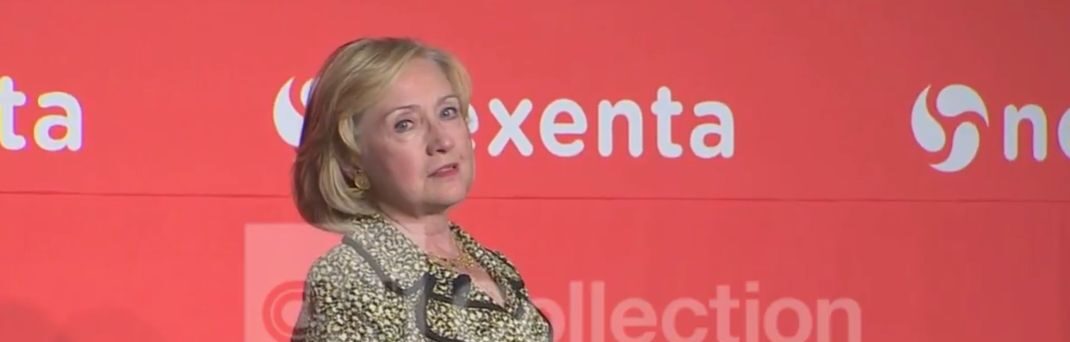
“[W]hether it’s Facebook or Twitter X … if they don’t moderate and monitor the content we lose total control.”
Those revelations did not, however, stop people like Hillary Clinton from continuing their quest to impose censorship on the American people. As early as April of 2022, Clinton urged the EU to beef up its censorship regime: “For too long, tech platforms have amplified disinformation and extremism with no accountability. The EU is poised to do something about it. I urge our transatlantic allies to push the Digital Services Act across the finish line and bolster global democracy before it’s too late.” The EU took her advice. The Digital Services Act (DSA) was approved by the European Parliament in July of 2022 and went into effect in November of 2022. Inevitably, the very first DSA investigation targeted X.
The European Commission has opened formal proceedings to assess whether X may have breached the Digital Services Act (DSA) in areas linked to risk management, content moderation, dark patterns, advertising transparency and data access for researchers … If proven, these failures would constitute infringements of Articles 34(1), 34(2) and 35(1), 16(5) and 16(6), 25(1), 39 and 40(12) of the DSA. The Commission will now carry out an in-depth investigation as a matter of priority. The opening of formal infringement proceedings does not prejudge its outcome.
How is it possible for a federation of foreign countries like the EU to investigate and eventually fine an American corporation for $140 million based on a nebulous infraction like “transparency breaches”? According the European Commission’s website, “If the Commission definitely establishes a breach of the DSA, it may adopt a decision imposing fines up to 6 percent of the global turnover of the VLOP [Very Large Online Platform] or VLOSE [Very Large Online Search Engine] concerned, and order that provider to take measures to address the breach of the deadline set by the Commission.” The fine levied on X does not come to 6 percent of its “global turnover” but it is more than three times the amount Musk paid for X.
Consequently, Musk was clearly less than pleased. In one X post he wrote, “The EU imposed this crazy fine not just on X but also on me personally, which is even more insane!” The fine levied against X also angered members of the Trump administration. Vice President JD Vance posted: “The EU should be supporting free speech not attacking American companies over garbage.” Secretary of state Marco Rubio posted: “The European Commission’s $140 million fine isn’t just an attack on X, it’s an attack on all American tech platforms and the American people by foreign governments. The days of censoring Americans online are over.” One of the DSA’s harshest critics, Michael Shellenberger, echoed Secretary Rubio’s point.
Many Americans may rightly wonder why they should care about what the European government is doing. President Donald Trump shut down much of the U.S. censorship industrial complex, including by the DHS. The reason we should care is that the goal of the European Commission, like that of the governments of Britain, Brazil, and Australia, is to censor the American people … Moreover, the EU is now in direct violation of the NATO Treaty, under which the U.S. is militarily obligated to defend Europe. The NATO Treaty requires member states to have free speech.
The DSA has been billed by its EU authors as a badly needed legal tool that will finally make it possible to render order out of the chaos that characterizes social media. Unfortunately, like the many censorship projects launched in the United States by the Biden administration, the DSA’s ostensible purpose is to “protect our democracy” from the seemingly omnipresent menace of disinformation, misinformation, malinformation and of course “hate speech.” Moreover, it can and does indirectly contrive to foist its draconian censorship regimen on the U.S. by demanding that large American-owned corporations such as Amazon, Google, Meta, Microsoft and X abide by its absurdly elastic terms. But what should worry us is its supporters.
This brings us back to Hillary Clinton. In this clip, posted by Shellenberger, our erstwhile Secretary of State delivered herself of the following remarks: “We should be, in my view, repealing something called Section 230, which gave platforms on the internet immunity because they were thought to be just pass-throughs, that they shouldn’t be judged for the content that is posted. But we now know that was an overly simple view, that if the platforms, whether it’s Facebook or Twitter X … if they don’t moderate and monitor the content we lose total control.” That word “control” is the tell. Content moderation is censorship, and it’s always about controlling what people say and hear. All they want to hear from you is silence.
READ MORE from David Catron:
The Filibuster Must Be Euthanized Now



![Donald Trump Slams Chicago Leaders After Train Attack Leaves Woman Critically Burned [WATCH]](https://www.right2024.com/wp-content/uploads/2025/11/Trump-Torches-Powell-at-Investment-Forum-Presses-Scott-Bessent-to-350x250.jpg)

![James Carville Admits Democrats Had No Shutdown Endgame, Mishandled Strategy [WATCH]](https://www.right2024.com/wp-content/uploads/2025/11/1763070634_James-Carville-Admits-Democrats-Had-No-Shutdown-Endgame-Mishandled-Strategy-350x250.jpg)
![Two Dead, 14 Injured After Gunfire Erupts Following College Football Game in Alabama [WATCH]](https://www.right2024.com/wp-content/uploads/2025/10/Two-Dead-14-Injured-After-Gunfire-Erupts-Following-College-Football-350x250.jpg)